Grand Lake St. Marys Visitor Guide: What to Know Before You Go
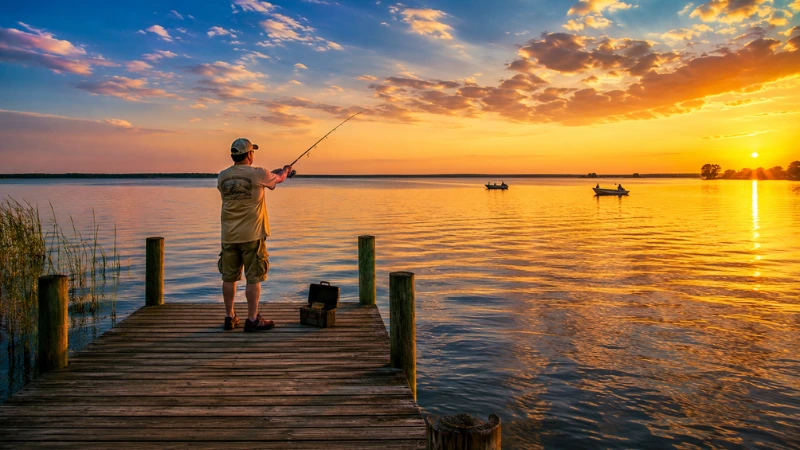
Most people show up to Grand Lake St. Marys expecting a straightforward lake day and leave either pleasantly surprised or mildly confused about why nobody warned them to check the water advisory first. At 13,500 acres, it is Ohio’s largest inland lake, and it genuinely delivers on fishing, boating, and sunsets. But it also has a long-documented algae history that no honest visitor guide should gloss over.
This Grand Lake St. Marys visitor guide covers everything you need to plan a solid trip: what to do on and off the water, when to go, where to stay, what to eat, how to get out on the lake, and what nearby towns are worth a side trip. If you’re also planning time in the area, the best restaurants in Celina Ohio and the best things to do in Celina Ohio are worth reading before you finalize your itinerary.
What Is Grand Lake St. Marys?
Grand Lake St. Marys sits in west-central Ohio, straddling Auglaize and Mercer counties just west of the town of St. Marys and southeast of Celina. The lake was originally constructed by hand between 1837 and 1845 as a feeder reservoir for the Miami and Erie Canal. German and Irish immigrants built it using shovels, pickaxes, and mule-pulled sleds for around 30 cents a day.
At completion it was the largest man-made lake in the world. It held that title for decades, and today it remains the largest reservoir ever built without machinery. The lake became an Ohio State Park in 1949 and now draws visitors for fishing, boating, bird watching, camping, and summer festivals.
The lake is wide but very shallow, averaging around seven feet in depth, which matters when it comes to water quality (more on that below) and the kind of recreation that works best here.
The Water Quality Reality (What You Should Know First)
Grand Lake St. Marys has had recurring harmful algal bloom (HAB) advisories for many years. Agricultural runoff from surrounding farmland delivers phosphorus into the shallow lake, feeding cyanobacteria blooms that can produce microcystin, a toxin dangerous to people and pets. The Ohio Department of Health monitors water quality at the main beach locations (Main West, Main East, Windy Point, and Camp) throughout the recreational season and issues advisories when toxin levels exceed safe thresholds.
What this means practically:
- Check advisories before you go. The Ohio Department of Health posts current water quality status at odh.ohio.gov. Check it the day before your visit, especially in summer.
- Fishing is generally safe. There is no advisory against eating fish from the lake even during bloom periods. Anglers are not typically affected.
- Boating is fine. You can boat, kayak, and water-ski during many advisory periods; the main concern is skin contact and swallowing water. Rinsing off after water contact is recommended.
- Swimming is the highest-risk activity. Avoid swimming with children and pets during active advisories.
- Fall and spring tend to have lower bloom levels than peak summer, so those seasons often mean cleaner water and more reliable beach access.
This isn’t a reason to skip Grand Lake, but it’s a reason to plan smarter than competitors of this guide suggest.
What to Do at Grand Lake St. Marys
Fishing
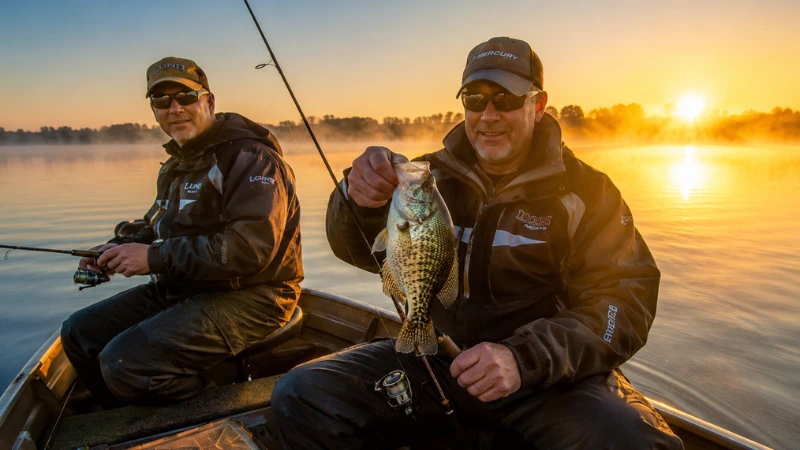
Fishing is the single strongest reason to visit Grand Lake, and the water quality situation does not affect it. The lake supports year-round fishing for crappie, bluegill, yellow perch, bass (largemouth), walleye, saugeye, and channel catfish. Crappie fishing in particular has a strong reputation here, and several organized fishing tournaments run throughout the year.
The St. Marys Fish Hatchery on the lake’s eastern shore (one of only three state hatcheries in Ohio, and the only one that raises largemouth bass) actively stocks the lake with walleye, saugeye, catfish, and bass. That stocking program keeps the fishery healthy despite the lake’s ongoing water quality challenges.
Bank fishing access exists at several points around the lake. Handicap-accessible fishing piers and docks are also available. If you want a guided trip, Matt Tuttle’s Crappie Guide Service operates on the lake and provides all tackle and equipment.
Boating and Water Sports
Grand Lake is one of the few Ohio lakes with no horsepower limit for powerboats, which makes it a go-to for speedboats, pontoons, and jet skis. There are five state-operated launch ramps and additional private ramps at marinas around the lake. Sailing and jet ski rentals are available through area marinas.
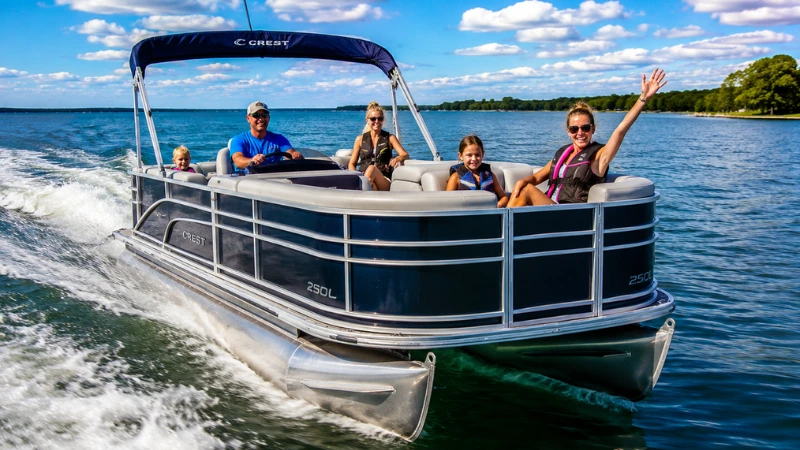
A 300-foot no-wake zone runs along the shore for safety and shoreline protection. Outside that zone, you can open it up.
Kayaking clubs operate on the lake as well, and quieter inlets offer a slower way to explore the edges. Canoe and kayak rentals are available through select outfitters near the park.
Swimming
The state park maintains several public swimming beaches: Main West, Main East, Windy Point, and a campground beach reserved for registered campers. A newer pool and splash pad at the campground are popular with families and are not subject to lake water quality conditions, making them a reliable option regardless of bloom status.
Always check the beach advisory before planning a swim day.
Hiking and Biking
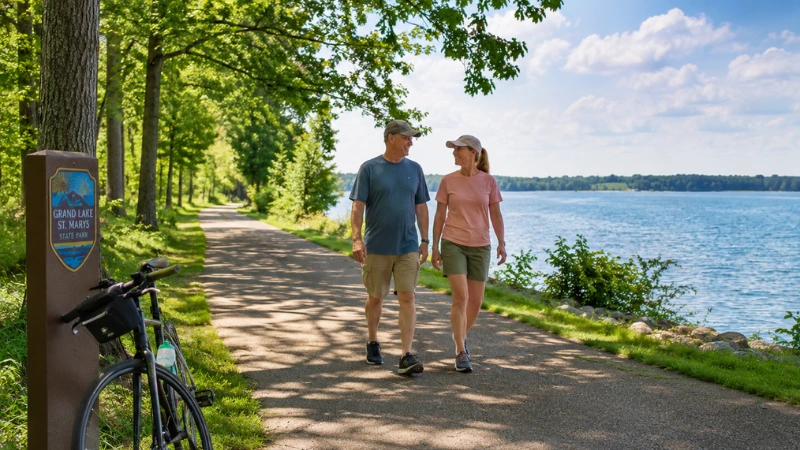
The park has three main trails:
- West Bank Multi-use Trail (1.2 miles, paved, accessible)
- East Bank Multi-use Trail (1.4 miles, paved, accessible)
- Red Wing Hiking Trail (0.65 miles, easy loop in the campground area)
Cyclists can also ride the roads around the campground and through the park. Bike rentals are available at the full-service camp store. The nearby Miami-Erie Trail connects to the broader Buckeye Trail system and passes within about a mile and a half of the park.
Bird Watching
Grand Lake sits along one of the country’s major waterfowl migration routes, which makes it a legitimate destination for birders. Species spotted regularly include Canada geese, ducks, swans, herons, egrets, loons, cormorants, ospreys, and grebes. Three pairs of nesting bald eagles have established territory at the wildlife refuge on the lake’s southwest corner. A waterfowl refuge with observation decks and trails gives birders dedicated viewing access.
Lighthouses and Photography
Three lighthouses are situated on the lake, which is unusual for an inland Ohio lake and makes for strong photography. The lighthouse near the Northwood Drive and Paulus Drive intersection (between Celina and St. Marys) is a popular stop.
Summer Events and Festivals
Lakeside concerts run most summer weekends. Fireworks over the water on major holidays are a consistent draw, best watched from a boat or the shoreline. Hydroplane racing events pull significant crowds in season. Check the Greater Grand Lake Visitors Region calendar at seemore.org for current event listings.
Where to Stay at Grand Lake St. Marys
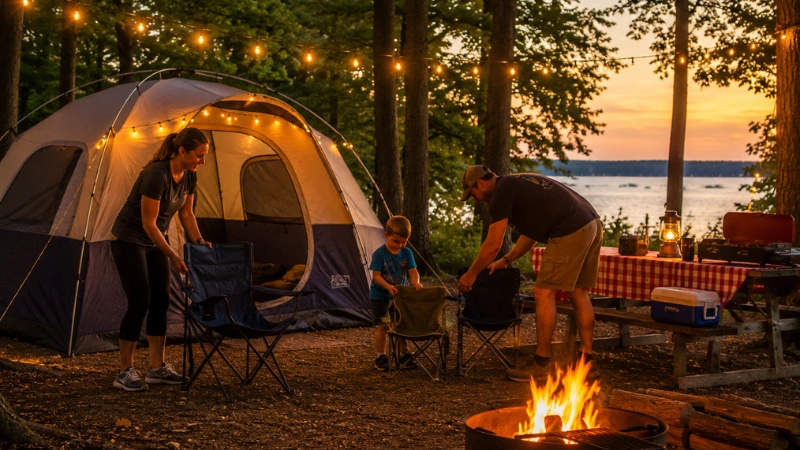
State Park Campground: The main campground on Edgewater Drive in St. Marys offers 216 campsites (135 with electric hookups), a campers-only swimming beach, boat tie-ups, horseshoe pits, sand volleyball, basketball, a tennis court, a 9-hole mini golf course, an outdoor movie theater, and a full-service camp store. Cabins are also available. Reservations can be made up to six months in advance online or by calling (866) 644-6727. Two fenced dog parks are on-site; pets are not permitted inside the cabins.
Private Campgrounds and Cabins: Several private campgrounds and cabin rentals operate around the lake’s perimeter. The west side of the lake has private options including lakefront cabin rentals with dock access.
Hotels and Motels: Celina and St. Marys both have standard hotel options within a short drive of the water. For more dining and lodging variety, the area along the lake includes over a dozen restaurants and bars accessible by boat dock.
Getting There and Getting Around
The lake sits roughly 80 miles northwest of Columbus, about 35 miles from Lima, and around 90 miles from Dayton. Most visitors arrive by car. US-33 is the main corridor from Columbus; take Exit 26 and head south on Koenig Road toward the lake.
Parking at the state park campground is free for day visitors near the bike rental station. Campsite parking is limited to two vehicles per site.
The lake perimeter runs about 52 miles of shoreline. Having a boat or at least a bike makes getting around significantly easier; the park is spread out and most of its best access points require short drives between them.
Day Trips and Nearby Attractions
The Greater Grand Lake region is worth more than one day if you extend your trip into the surrounding towns.
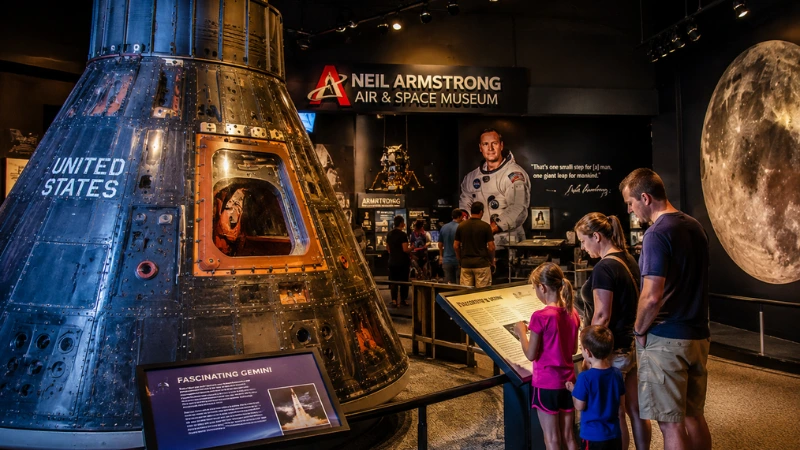
Wapakoneta (about 20 miles east): The birthplace of Neil Armstrong. The Armstrong Air and Space Museum holds four of Armstrong’s actual aircraft, an Apollo 11 moon rock, multiple spacesuits, a moon-landing simulator, and an infinity room with an immersive star field. The museum is small but genuinely well-done. Each July, the six-day Summer Moon Festival takes over downtown with a Moon Market, 60-plus vendors, food trucks, and live music. The historic Wapa Theatre (built 1904) still shows first-run films.
New Bremen (roughly 10 miles southeast): One of the cleanest small towns in Ohio, home to the Bicycle Museum of America, the largest cycling history museum in the world with over 250 bicycles on display. The upscale restaurant 17 West is next door and worth a reservation.
Fort Recovery (west of the lake): A reconstructed fort with two-story blockhouses and log cabins on the site of a significant Revolutionary-era battle; worth the drive for history travelers.
Maria Stein Shrine (south of the lake): A place of prayer and pilgrimage with a collection of holy relics; draws visitors for its quiet, contemplative grounds.
Celina (directly on the west side of the lake): The largest town on the lake, with more dining options, shopping, and the Memorial Covered Bridge and Belle of St. Marys canal boat. If you are spending more than a day at the lake, checking out the things to do in Celina Ohio fills a half day easily, and the best restaurants in Celina Ohio is worth a look before you plan dinner.
What to Eat Near Grand Lake St. Marys
More than a dozen restaurants around the lake offer dock access for boaters. Options range from classic lake bars to pizza joints and Mexican food. Frequent visitors point to Beer Barrel Pizza and Grill and JT’s Brew and Grill for casual lakeside meals. Xcaret Mexican Restaurant in St. Marys gets consistent local mention for a different option. For a nicer dinner, 17 West in New Bremen is worth the short drive.
For wine, Vineyard at Evergreen Farm in nearby Coldwater is a father-daughter-owned winery with a refurbished chicken barn tasting room and a covered patio for summer evenings.
Best Time to Visit Grand Lake St. Marys
Spring (April and May): Water quality tends to be better before algae season ramps up. Fishing picks up after winter. Bird migration peaks, making this the best season for birders. Crowds are minimal. Campsite availability is much easier.
Summer (June through August): Peak season for all water sports and events. Most festivals and concerts happen between June and August. Hydroplane races and fireworks draw the biggest crowds. This is also when algae advisories are most likely; check water status before swimming. Book campsites well in advance.
Fall (September and October): A strong season that most visitors overlook. Algae levels often decrease after summer heat. Fishing remains excellent. Fall foliage around the lake and canals is quiet and underrated. Fewer crowds, lower campsite competition.
Winter (November through March): Ice fishing is a real draw when conditions allow. Snowmobiling is permitted under appropriate conditions. The park stays open in reduced capacity with electric hookups available in the first loop.
Practical Tips
- Check Ohio Department of Health beach advisories before any swim day, especially May through September
- Reservations for campsites open six months in advance; summer weekends fill fast
- The camp store rents bikes and loans fishing gear to registered campers at no extra charge
- No-wake zones extend 300 feet from shore; watch for swimmers near beaches
- Dogs are welcome on the trails and in the dog park; keep them away from the water during active algae advisories
- The Nature Center is open most Saturdays at noon in summer; good orientation stop for first-time visitors
- For fishing licenses, pick one up online through the Ohio DNR before you arrive