Weekend in Island Park: 2-Day Yellowstone Gateway Itinerary
Most people planning a Yellowstone weekend spend their mental energy on what to see inside the park and forget entirely about where they’re sleeping outside it. That decision matters more than you’d think. The choice between West Yellowstone and Island Park, Idaho, a 30-minute drive south, affects your cabin prices, your elbow room, and how you structure both days.
This 2-day Yellowstone itinerary is built around the West Entrance, which puts you closest to the geyser basins and Old Faithful on Day 1 and the Grand Canyon of Yellowstone and Lamar Valley on Day 2. It uses Island Park as your base, though the day-by-day plan works equally well from West Yellowstone. You’ll also find honest notes on parking, crowd timing, what gets cut at 2 days, and what Island Park itself has to offer if you squeeze out a bonus morning before heading home.
Why Island Park Makes a Smarter Base Than West Yellowstone
West Yellowstone is the obvious choice, and for good reason: it sits a mile from the West Entrance, it’s full of restaurants and gear shops, and it’s what shows up first in every search. But in summer, that convenience comes with real costs. Lodging prices in West Yellowstone run high through July and August, availability evaporates months out, and the town can feel more like a tourist depot than a basecamp.
Island Park sits about 30 miles south on US-20, a straight shot through the lodgepole pines. The town is slower, quieter, and significantly cheaper to sleep in. Cabin rentals here tend to have more space and better availability than anything comparable in West Yellowstone, and the drive to the West Entrance is easy and scenic. Many travelers find that staying in Island Park rather than West Yellowstone saves real money without adding much drive time, and the comparison between the two is worth thinking through before you book.
| Island Park, ID | West Yellowstone, MT | |
|---|---|---|
| Distance to West Entrance | ~30 miles (45 min) | ~1 mile (5 min) |
| Cabin/rental availability | Generally better | Books out months ahead |
| Price range | Lower | Higher |
| Town atmosphere | Quiet, outdoor-focused | Busy, tourist-heavy |
| Best for | Families, cabin stays, extra days | Shortest possible drive to the gate |
If you’re arriving Friday evening, Island Park is worth the extra 25 minutes of drive time. If you’re doing a single overnight with a tight Saturday schedule, West Yellowstone’s closeness to the gate has real value.
Before You Go: What to Know About the West Entrance
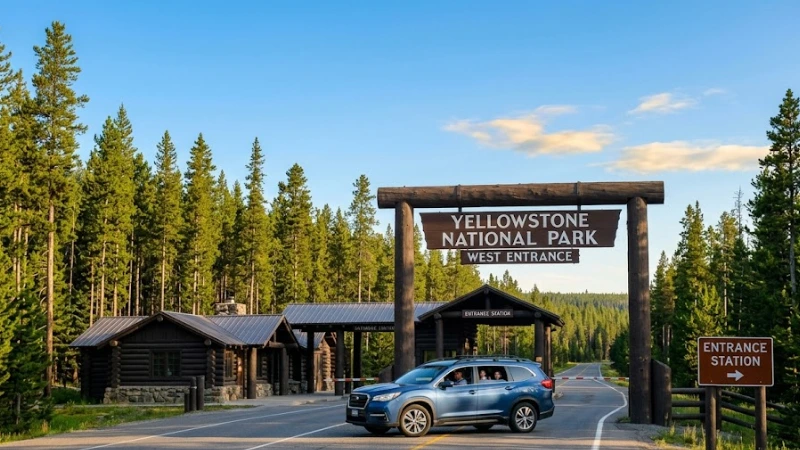
Yellowstone’s entry fee covers a 7-day pass, and America the Beautiful annual passes are accepted. In summer, the West Entrance can back up early on weekend mornings. If you’re entering between 8 and 10 a.m. on a Saturday or Sunday, plan for a possible wait at the gate. Arriving earlier solves most of this.
Inside the park, speed limits range from 25 to 45 miles per hour and are actively enforced. More practically, wildlife jams, construction delays, and bison herds crossing roads make every drive take longer than the map suggests. A route that looks like 20 minutes often takes 35. Build that buffer into both days.
Day 1: The Geyser Basins and Old Faithful
The geyser basins sit in the southern half of the park, which makes them a natural first stop when you’re coming from the West Entrance. This is also the most crowded section of Yellowstone, so starting before 8 a.m. is the single biggest advantage you can give yourself. Parking at Grand Prismatic and Old Faithful gets brutal by mid-morning.
Start Early at Grand Prismatic Spring (Midway Geyser Basin)
From the West Entrance, head east on the Grand Loop Road toward Madison Junction, then turn south toward Midway Geyser Basin. The turnoff is well-signed, and the parking area fills faster than most people expect.
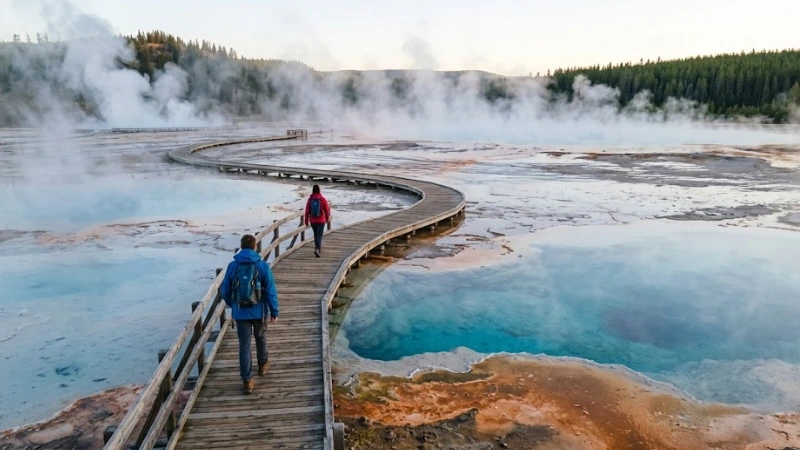
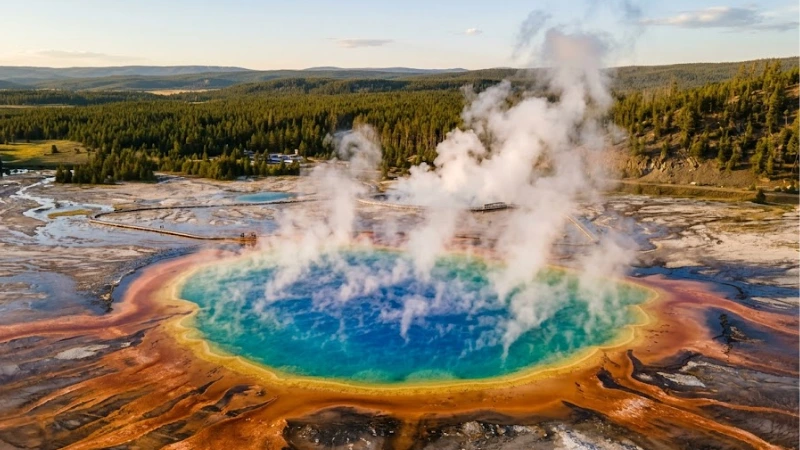
The boardwalk at Midway loops around Excelsior Geyser Crater and Grand Prismatic Spring, the largest hot spring in the United States. The colors shift from deep cobalt blue at the center through rings of green, yellow, and orange as you move outward, and the steam rising off the surface on a cool morning is one of those visuals that doesn’t translate well to photos but stays with you regardless. Walk the full loop and give yourself time to stop at each section.
The Grand Prismatic Overlook Trail
What most visitors miss, and what makes the stop genuinely complete, is the Grand Prismatic Overlook. Drive south past the Midway Geyser Basin toward Old Faithful and park at the Fairy Falls trailhead. The trail to the overlook splits off to the left, climbs a short hillside, and delivers the elevated perspective of the spring that’s become iconic in every Yellowstone photo collection. The whole detour from parking to overlook and back takes under 45 minutes. It’s the view that finally makes the scale and the color pattern legible.
Upper Geyser Basin and Old Faithful
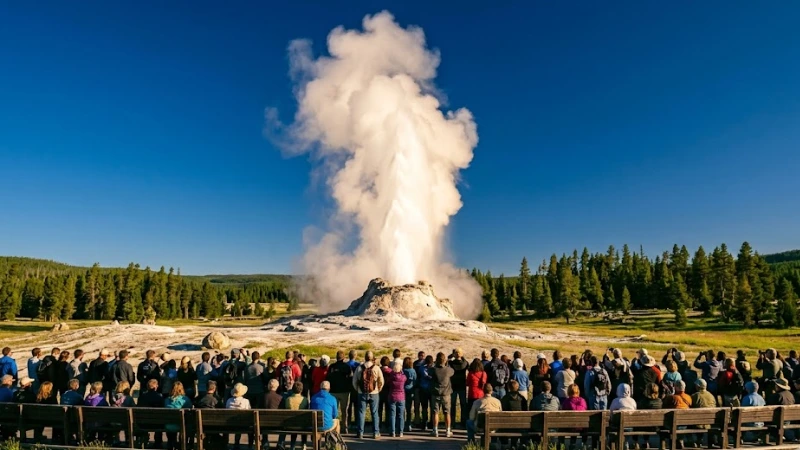
Continue south to Old Faithful. The visitor center posts predicted eruption times, which lets you plan your visit around the window rather than standing around. After watching an eruption, the boardwalk trails through the Upper Geyser Basin deserve your attention. This is the largest concentration of geysers anywhere on earth, and walking even a mile of the loop trail puts you in front of features like Castle Geyser, Morning Glory Pool, and Riverside Geyser that most visitors skip entirely because they’re focused on getting back to their car. Families with kids who enjoyed Old Faithful often find this section just as engaging because the geyser activity here is less predictable and therefore more surprising.
Afternoon: Drive North to Mammoth Hot Springs
After lunch at the Old Faithful Snow Lodge or the adjacent cafeteria, start north toward Mammoth Hot Springs. The drive from Old Faithful to Mammoth takes about 45 minutes to an hour, often longer if you haven’t driven this section before. The road passes through the Norris Geyser Basin area, and if you want a quick detour, Norris is the hottest and most dynamic geyser basin in the park.
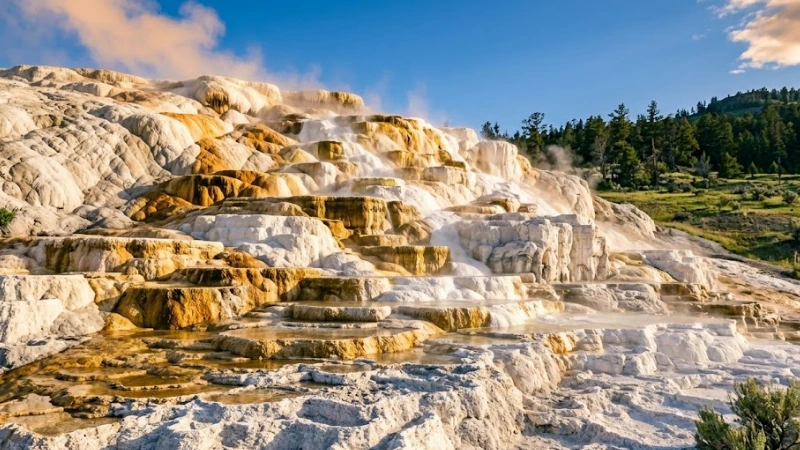
Mammoth Hot Springs is defined by its travertine terraces: white and orange layered mineral formations that look more like something from a science fiction film than a natural landscape. The Upper Terraces have easier vehicle access and some of the most dramatic formations. The Lower Terraces are more walkable and include Canary Spring, where bright yellow and orange microbial mats create concentrated color you won’t see anywhere else in the park.
From Mammoth, the practical move if Island Park is your base is to drive back through the park to the West Entrance and down US-20, about 90 minutes under normal conditions.
Where to Stay After Day 1
If you’re based in Island Park, the cabins along the Henry’s Fork corridor through Mack’s Inn and Last Chance offer direct river access and a very different feeling from a roadside motel. Good cabin options in Island Park run significantly cheaper than West Yellowstone for equivalent space, and availability tends to hold longer into the summer booking season.
West Yellowstone alternatives for a single night include the Kelly Inn and Under Canvas Yellowstone, a glamping property that books up early but sits in a quieter, more scenic spot than the downtown motel strip.
Inside the park, the Old Faithful Inn is the landmark option and worth the price if it’s available. Book many months ahead through the official Yellowstone lodges site at yellowstonenationalparklodges.com.
Day 2: Grand Canyon of Yellowstone and Lamar Valley
Day 2 covers the north and northeast sections of the park, which means a longer drive from the West Entrance before you start seeing anything. Leave your base by 7 a.m. to hit the Grand Canyon of Yellowstone before the crowds build and to give yourself a proper window in Lamar Valley around dusk.
Grand Canyon of Yellowstone (Artist Point + Brink of Lower Falls)
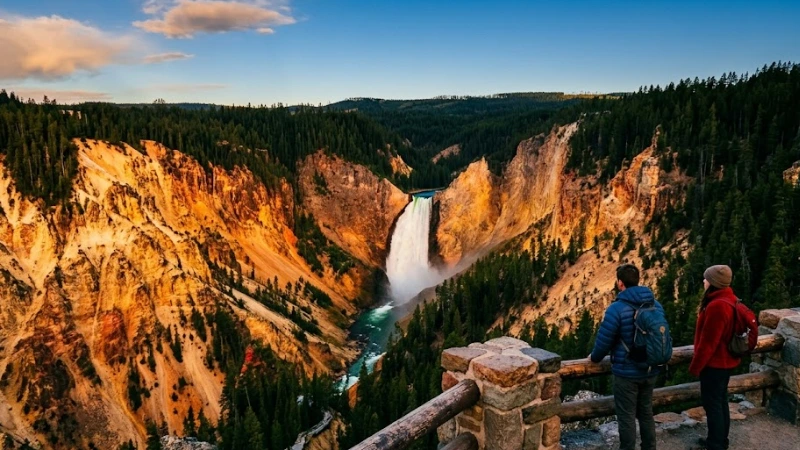
From the West Entrance, drive east through Madison Junction, north through Norris, and then toward Canyon Village. The Grand Canyon of Yellowstone is accessed from Canyon Village, about 12 miles north of Norris Junction.
Start on the South Rim at Artist Point. This is one of the most photographed viewpoints in the park, a wide overlook that frames the Lower Falls and the deep yellow-orange canyon carved by the Yellowstone River. The parking lot here fills by mid-morning, so earlier is better.
From Artist Point, drive around to the North Rim for the Brink of the Lower Falls trail, a switchback descent of roughly 300 vertical feet to a platform at the rim of the falls. The falls drop about 308 feet, and the sound and spray at the bottom of the stairs are significantly more powerful than anything you experience from the upper viewpoints. It’s a short but real hike and worth every step.
Lamar Valley: The Best Wildlife Window in Yellowstone
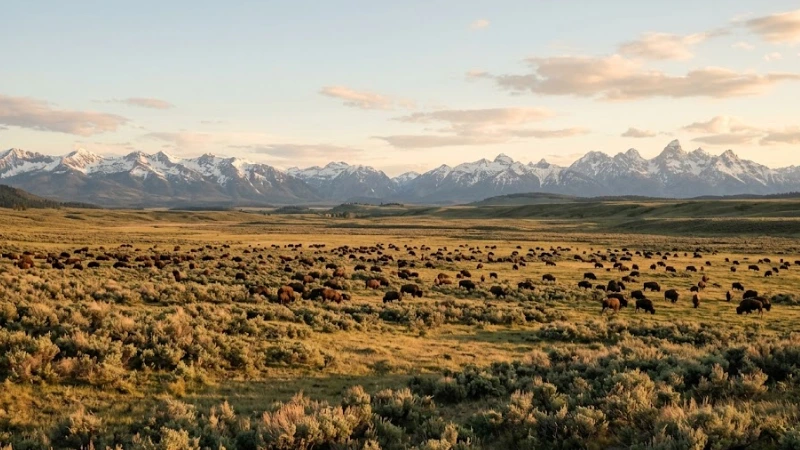
From Canyon Village, the drive to Lamar Valley takes about an hour following the road northeast through Tower-Roosevelt. This crossing winds through terrain worth watching closely, with open ridges and river valleys that frequently hold elk and pronghorn before you even reach the valley floor.
Lamar Valley is where most of Yellowstone’s bison herds concentrate, and it’s the best place in the park to spot wolves and bears. Dawn and dusk are the productive windows, which is why staying in Lamar Valley through the evening matters more than a quick afternoon pass.
Bring binoculars or a spotting scope, scan the ridgelines above the valley floor, and watch for clusters of vehicles pulled over on the roadside, which almost always signal an active sighting. Frequent visitors to this valley emphasize that a 15-minute drive-through rarely delivers, but 90 minutes of patient watching regularly does.
What Gets Cut at 2 Days
Two days in Yellowstone is enough to hit the highlights and leave wanting more. Here’s what you’ll likely miss and why it’s okay.
Norris Geyser Basin: The most thermally active basin in the park. If you’re passing through on Day 2 with an extra 45 minutes, a quick stop adds real depth without costing the rest of the day.
Hayden Valley: A wildlife area south of Canyon Village that rivals Lamar for bison and bird sightings. If you reach Canyon Village early on Day 2, it’s a worthwhile morning detour before the Grand Canyon.
Yellowstone Lake: Beautiful and vast, but given where you’re spending your two days, the lake tends to get passed on the road rather than visited intentionally.
The Northeast Entrance and Beartooth Highway: One of the most scenic drives in the country. Save it for another trip.
What you’ve covered by the end of Day 2 hits every major experience category: geothermal features, waterfalls, a canyon, and wildlife. You’ll come back for the rest.
Bonus: Island Park After Yellowstone
If you’re leaving Sunday afternoon rather than Sunday morning, you’ll find the area has enough going on to fill another full day on its own. The things to do in Island Park extend well beyond being a Yellowstone gateway, and most visitors who stay here leave wishing they’d scheduled the extra time.
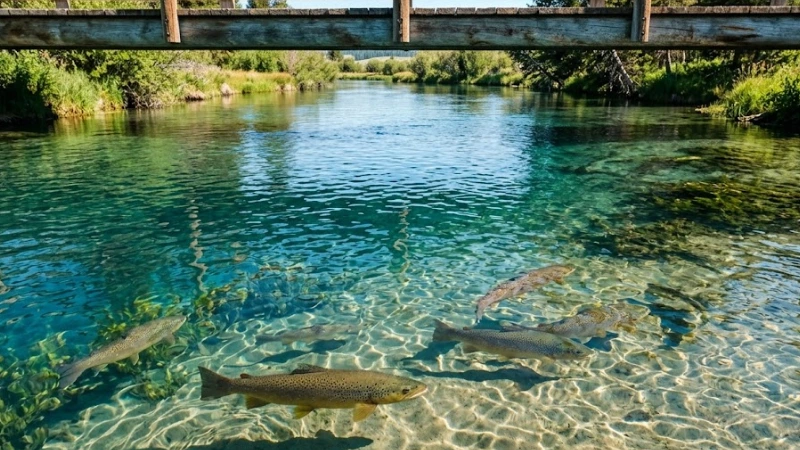
Big Springs is the first stop. One of the largest natural springs in the United States, it pumps out a remarkable volume of crystal-clear water daily, forming the headwaters of the Henry’s Fork of the Snake River. The trout here are large, unhurried, and clearly visible through the water. The nearby Johnny Sack Cabin, built in the 1930s by a German immigrant craftsman, takes 20 minutes to visit and is oddly memorable.
From Big Springs, the Mesa Falls Scenic Byway runs south through meadows, pine forest, and canyon. Upper Mesa Falls drops about ten stories over hardened lava, and the viewing boardwalk gets you close enough to feel the mist. It is one of the most undervisited natural features in the Greater Yellowstone area and takes about an hour to visit properly. On the way back north, Harriman State Park along the Henry’s Fork has gentle nature trails and excellent birdwatching, particularly for sandhill cranes and trumpeter swans in summer.
Many travelers who stay in Island Park end the evening with a sunset kayak float on the Henry’s Fork through Mack’s Inn, which rents kayaks and runs a shuttle to the put-in near Big Springs. The float takes about two hours and runs through a clean, wildlife-rich river corridor that reminds you why people keep coming back to this part of Idaho.
How to Plan Your Weekend in Island Park
Getting the most out of 2 days at Yellowstone comes down to two things: arriving early and driving realistically. The geyser basins are genuinely impossible to enjoy if you show up at 10 a.m. on a summer Saturday. Lamar Valley is genuinely transformative if you’re there at dusk.
| Season | Conditions | Best For |
|---|---|---|
| Summer (June-August) | Crowded, warm, all roads open | First-timers, families; requires early starts |
| Spring (April-May) | Uncrowded, unpredictable weather, some road closures | Wildlife viewing, photographers |
| Fall (September-October) | Best balance of weather and crowds, elk rut in September | Repeat visitors, wildlife watchers |
| Winter | Roads mostly closed to vehicles; snowcoach access only | Geothermal features, very different trip |
For most travelers doing a first Yellowstone weekend, summer or early fall gives you the most access with the least logistical risk. Bring layers regardless of season, binoculars for Lamar Valley, and a downloaded park map because cell service inside Yellowstone is largely nonexistent.
Frequently Asked Questions
How long is the drive from Island Park to Yellowstone’s West Entrance?
About 40 to 50 minutes via US-20 north through West Yellowstone. Add 10 minutes if you’re leaving during peak summer morning traffic.
Can you realistically see wolves in 2 days?
Possible, but unpredictable. Spend dusk in Lamar Valley with binoculars and watch for cars pulled over on the roadside. That’s your best shot in a weekend.
Do I need a reservation to enter Yellowstone?
As of 2026, no timed entry reservations are required. Check nps.gov/yell before your trip since the policy has changed before.
Is Island Park worth a stop if you’re not into fishing?
Yes. Big Springs, Mesa Falls, Harriman State Park, and the Henry’s Fork kayak float have nothing to do with fishing and are genuinely excellent.