New Orleans Itinerary: The Perfect 1, 2, or 3-Day Plan (2026)
Most New Orleans itineraries assume you have three full days and build everything around that. If you’re flying in for a long weekend or squeezing in a single day between meetings, those plans fall apart fast, front-loading Day 1 with things that actually belong on Day 3.
This New Orleans itinerary scales instead of assuming. Start with the one-day core if that’s all you have, add Day 2 for the Garden District and museums, and extend to Day 3 only if you want a plantation day trip or a deeper dive into the music scene. Every version keeps the French Quarter as day one, since that’s genuinely the most efficient use of a first morning regardless of trip length.
Quick Answer: Which Itinerary Fits Your Trip?
| Trip Length | Focus | Best For |
|---|---|---|
| 1 day | French Quarter only, tight loop | Layovers, business trip add-ons |
| 2 days | French Quarter + Garden District/WWII Museum | Long weekends, most first-timers |
| 3 days | Adds a plantation day trip or Marigny/Tremé deep dive | Full weekend trips, repeat visitors |
If You Only Have 1 Day in New Orleans
One day means staying inside the French Quarter and not fighting the clock with a streetcar ride across town. Start early at Café du Monde for beignets before the line builds, then walk to Jackson Square and the St. Louis Cathedral while the morning light is still soft for photos.
Spend the mid-morning wandering the French Market and Royal Street’s antique galleries, then break for a Creole lunch at one of the Quarter’s sit-down restaurants rather than a quick counter stop. Afternoon is for Bourbon Street by daylight, which is far more walkable and interesting than its nighttime reputation suggests, plus a stop at the Cabildo or the Presbytère museum if history interests you.
End the day with dinner and live music. Frenchmen Street sits close enough to the Quarter to walk, and it gives you a real taste of the city’s music scene without needing a second day to reach it.
The Perfect 2-Day New Orleans Itinerary
Two days is the sweet spot most first-timers land on, and it’s enough to get past the postcard version of the city into something with real texture.
| Day | Morning | Afternoon | Evening |
|---|---|---|---|
| Day 1 | Café du Monde, Jackson Square, French Market | Royal Street galleries, Cabildo/Presbytère | Dinner and live music on Frenchmen Street |
| Day 2 | St. Charles streetcar to the Garden District | National WWII Museum | Dinner in the Warehouse District |
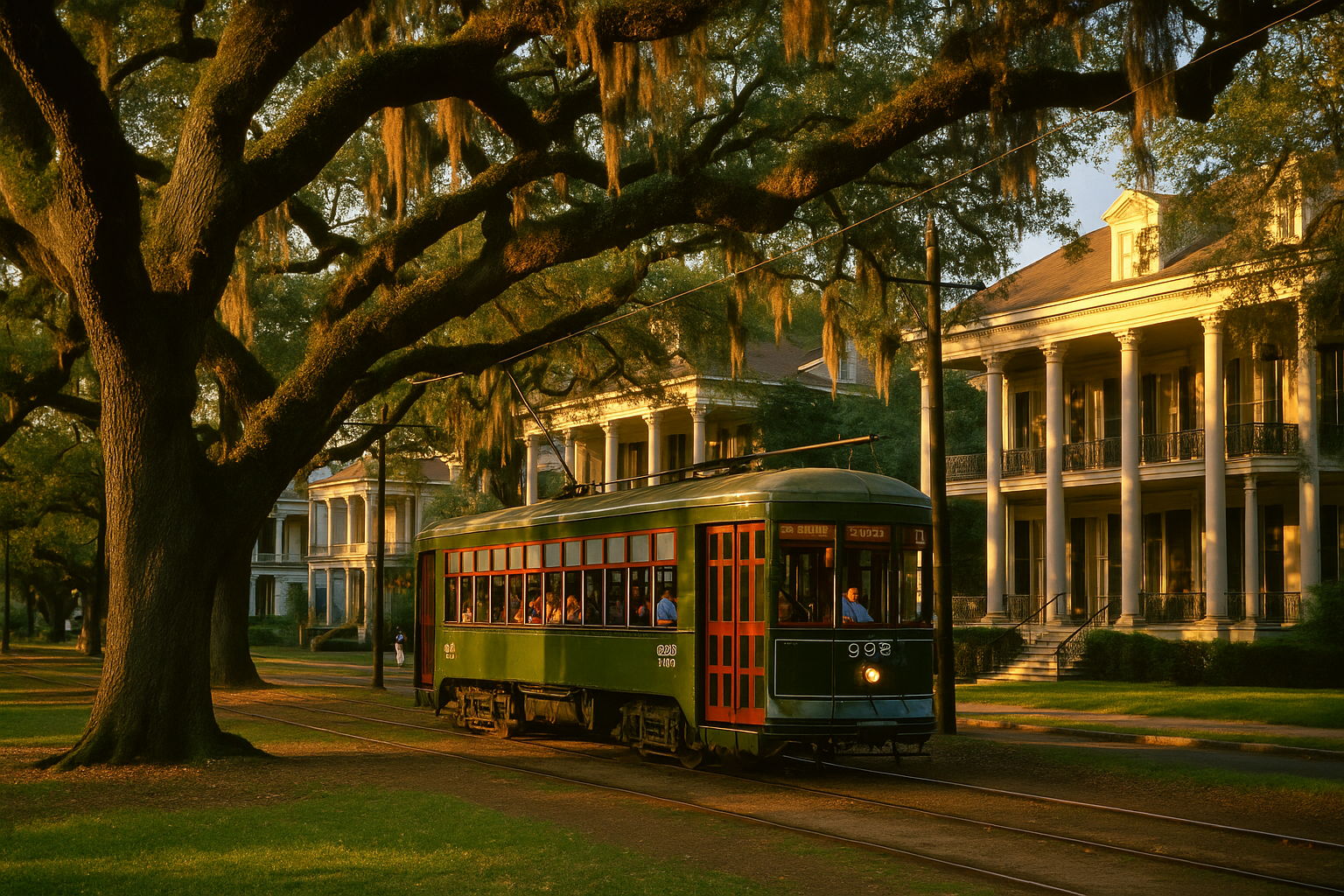
Day 1 follows the same French Quarter core as the one-day plan above. Day 2 shifts gears entirely. Ride the St. Charles Avenue streetcar into the Garden District, one of the most photographed residential neighborhoods in the country, and give yourself at least ninety minutes to wander Magazine Street’s shops before lunch.
Save the afternoon for the National WWII Museum, which routinely runs three to four hours if you actually read the exhibits rather than speed-walking them. Book timed tickets in advance, especially if your dates land during spring festival season when the museum sees its heaviest crowds.
Adding a Third Day: Plantation Day Trip or Deeper Local Time
A third day splits into two genuinely different directions, and which one you pick depends on what you didn’t get enough of on Days 1 and 2.
If the history and architecture pulled you in, a half-day trip to Oak Alley Plantation, about an hour west of the city, adds a different chapter of Louisiana history entirely. Book a guided tour rather than driving yourself if you want the full historical context rather than just the photo of the oak allée.
If the music and food are what you’re chasing, spend Day 3 without a car at all. Walk deeper into Marigny and Bywater past Frenchmen Street, catch a daytime meal at a neighborhood spot rather than a tourist-facing one, and treat the evening as unstructured wandering rather than another checklist. Repeat visitors tend to prefer this version once they’ve already done the plantation trip once.

Getting Around: Walking, Streetcar, or Rideshare
The French Quarter and Marigny are entirely walkable on their own, and trying to drive through the Quarter usually costs more time than it saves. The St. Charles Avenue streetcar is the right call for the Garden District and Uptown, running frequently enough that waiting rarely costs more than ten minutes.
Rideshares make the most sense late at night or when moving between neighborhoods that aren’t connected by the streetcar line, like from the CBD out to City Park. If you’re staying somewhere outside the French Quarter, check Where to Stay in New Orleans for how each neighborhood connects back to this itinerary before you lock in a hotel.
What to Skip If You’re Short on Time
Every itinerary benefits from knowing what to cut, not just what to add. On a one or two-day trip, the swamp tours and plantation day trips are the first things to drop, since they eat four to six hours that a short trip doesn’t have to spare.
Bus tours are the second cut. They cover ground efficiently but trade away the walking pace that makes the French Quarter and Garden District worth visiting in the first place. If your time is genuinely limited, a focused walking route beats a broader bus loop every time.
Frequently Asked Questions
Is 2 days enough for New Orleans?
Yes, for a solid first look. Two days covers the French Quarter and Garden District comfortably, though a third day adds real depth if your schedule allows it.
Do I need a car for a New Orleans itinerary?
No. The French Quarter, CBD, and Marigny are walkable, and the streetcar covers the Garden District and Uptown. A car only helps for a plantation day trip.
Should I book the WWII Museum in advance?
Yes, especially for spring visits. Timed tickets prevent long entry lines and guarantee you get through the full exhibit in the time you’ve planned.
What’s the best neighborhood to base an itinerary from?
The French Quarter keeps Day 1 fully walkable. Staying elsewhere works too, as long as you budget streetcar or rideshare time into each day’s plan.
Building Your Own New Orleans Itinerary
The right length isn’t really about how much time you have, it’s about how deep you want to go. One day gets you the French Quarter at its best. Two days adds the Garden District and real museum time. Three days lets you choose your own direction, whether that’s plantation history or another night on Frenchmen Street.
Whichever version you build, check Best Time to Visit New Orleans before locking in dates, since festival weekends change both the pace of this itinerary and how far ahead you need to book the WWII Museum and dinner reservations.