What Is the Best Time of Year to Travel Italy? A 2026 Guide

Wondering what is the best time of year to travel Italy? For most travelers, April to May and September to October offer the best balance of pleasant weather, manageable crowds, and reasonable accommodation prices. These months are ideal for exploring historic cities, enjoying the countryside, and spending time outdoors without the intense summer heat.
However, the right time depends on what you want from your trip. Summer is excellent for beach holidays and long evenings, while winter can be a better choice for budget-conscious travelers, Christmas markets, and skiing in the mountains.
This guide breaks down Italy’s seasons, compares every month, and explains when to visit different regions so you can plan a trip that suits your interests and budget.
What Is the Best Time of Year to Travel Italy?
The best overall time to visit Italy is usually April, May, September, or October. Spring brings blooming gardens and comfortable sightseeing weather, while early autumn offers pleasant temperatures, seasonal food, and opportunities to explore the countryside.
These months can also be less expensive than the busiest summer period, although popular cities and major holidays can still attract large crowds. Prices depend on the destination, local events, and how far ahead you book.
Here’s a quick guide to choosing your travel dates:
- Best overall: April, May, September, and early October
- Best for beaches: June and September, with July and August offering hotter weather
- Best for sightseeing: April, May, September, and October
- Best for budget travel: January, February, and November, depending on your destination
- Best for food and wine: September and October
- Best for skiing: January and February, depending on snow conditions
- Best for Christmas markets: Late November and December in selected cities and northern regions
If your trip includes several regions, spring and early autumn are often the easiest seasons for balancing city sightseeing, countryside visits, and outdoor activities.
Also Read : 15 Best Things to Do in Amalfi, Italy for First-Time Visitors
Best Time to Visit Italy by Season
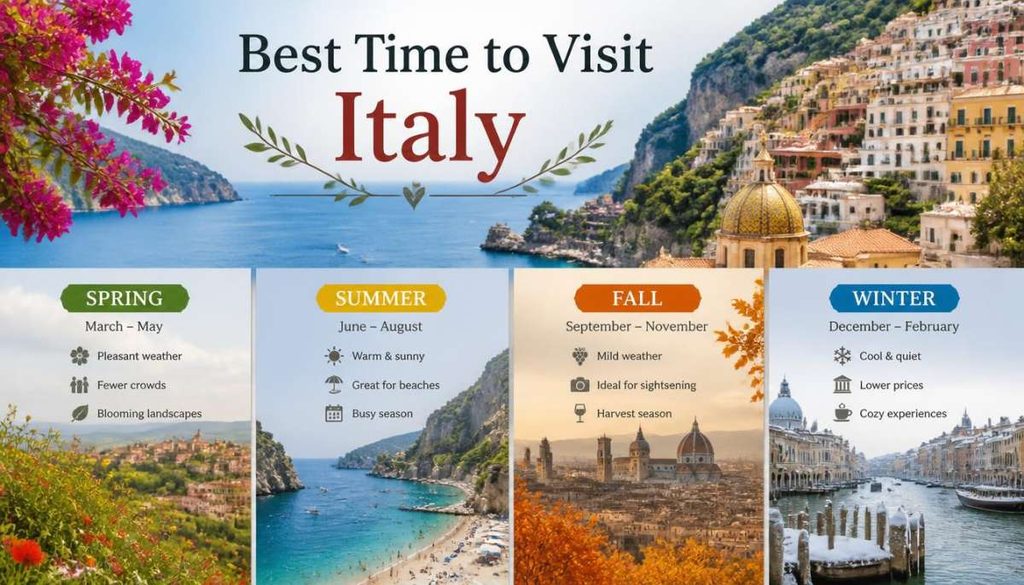
Italy experiences four distinct seasons, but the weather can vary considerably between the Alps in the north and the warmer southern coast. Understanding these differences helps you decide which season fits your plans.
Spring in Italy (March to May)
Spring is one of the most rewarding times to explore Italy. Temperatures gradually rise, gardens and countryside landscapes become greener, and outdoor sightseeing becomes more comfortable than during the hottest months.
March can still feel cool, especially in northern Italy, and rain is possible. April and May generally offer better conditions for walking through historic neighborhoods, visiting museums, exploring Tuscany, and enjoying outdoor cafés.
Why visit in spring?
- Comfortable conditions for exploring cities on foot
- Blooming gardens and attractive countryside scenery
- Good opportunities for photography and outdoor activities
- Often more manageable crowds than in peak summer
April and May are particularly appealing, but public holidays can affect hotel prices and visitor numbers. April 25, Italy’s Liberation Day, and May 1, Labour Day, may create busier travel periods around those dates.
Pack comfortable walking shoes, a light jacket, and a compact umbrella. Spring weather can change during the day, so layers are more useful than relying entirely on warm-weather clothing.
Summer in Italy (June to August)
Summer is the main holiday season in Italy. Days are long, coastal destinations are lively, and outdoor dining, festivals, and beach activities become major attractions.
June can be a good compromise for travelers who want summer sunshine without the most intense heat of the season. July and August are generally hotter, and temperatures in cities such as Rome can become uncomfortable during the afternoon. Southern regions may experience temperatures above 90°F (32°C), with occasional heatwaves pushing temperatures higher.
Summer is best suited to travelers who enjoy warm weather and do not mind busy attractions. Popular destinations such as Venice, Florence, the Amalfi Coast, and the Italian Riviera can become crowded, while accommodation prices often rise.
Things to consider before traveling in summer:
- Book popular attractions and accommodation in advance.
- Plan outdoor sightseeing for early morning or later afternoon.
- Carry water and take breaks during very hot weather.
- Reserve beach clubs and popular restaurants where necessary.
- Check local opening hours around the August holiday period.
August includes Ferragosto, a major Italian summer holiday around August 15. Some family-run businesses in cities may close or reduce their hours, although many tourist areas and beach resorts remain active and can be especially busy.
Fall in Italy (September to November)
Autumn is another excellent time to visit Italy, particularly in September and October. Summer temperatures often begin to ease, the countryside takes on autumn colors, and food and wine experiences become especially attractive.
September is popular because many coastal destinations still have warm conditions, while city sightseeing can feel more comfortable than in midsummer. October is often a great month for exploring Tuscany, visiting vineyards, and enjoying seasonal dishes.
Crowds may gradually decrease after the summer peak, but September remains busy in many popular destinations. November is generally quieter and can be more affordable, although rain becomes more common and daylight hours are shorter.
Why choose autumn?
- Comfortable conditions for city walks and countryside trips
- Grape harvest activities and seasonal food experiences
- Beautiful autumn landscapes in rural areas
- Potentially lower prices after peak summer dates
If you plan to visit coastal towns, check seasonal schedules before booking. Some beach businesses, ferries, and hotels reduce their services as autumn progresses, especially toward November.
Winter in Italy (December to February)
Winter is often the quietest season for city sightseeing, although Christmas and New Year can bring a noticeable increase in visitors and prices. Rome and Florence remain worthwhile destinations for museums, architecture, and indoor attractions, provided you are prepared for cooler weather and occasional rain.
Northern Italy can be cold, with snow possible in the mountains. The Alps and Dolomites attract skiers and winter sports enthusiasts, while selected cities host Christmas markets and seasonal celebrations.
Coastal destinations can be less convenient in winter. Some hotels, restaurants, boat services, and seasonal attractions may close, so check availability before planning a trip around the Amalfi Coast or Cinque Terre.
Winter is a good choice if you want:
- A quieter city break outside major holidays
- Potentially lower accommodation costs
- Museums, galleries, and historic attractions
- Christmas markets and winter festivals
- Skiing and snow-covered mountain scenery
Bring a warm coat, layers, and comfortable shoes that can handle wet streets. If you want a traditional beach holiday, winter is usually not the best season for most Italian coastal destinations.
Best Time to Visit Italy by Month
Every month offers something different. The table below provides a general guide, but remember that temperatures, crowd levels, and prices vary by region and specific travel dates.
| Month | General conditions | Crowd and cost expectations | Best for |
|---|---|---|---|
| January | Cold in the north, milder in the south | Often quieter after New Year | Museums, city breaks, skiing |
| February | Cool, with winter sports in mountain regions | Usually quieter, except during major events | Skiing, winter city trips |
| March | Early spring, with changeable weather | Crowds begin increasing | Museums, early sightseeing |
| April | Mild in many regions, with some rain | Increasing demand, especially around holidays | Historic cities, gardens |
| May | Generally pleasant and increasingly warm | Popular travel month | Countryside, sightseeing, walking |
| June | Warm, sunny, and longer days | Rising crowds and prices | Beaches, outdoor dining |
| July | Hot in many cities and southern areas | Peak-season crowds and prices | Coastal holidays, festivals |
| August | Often very hot | Busy resorts; some local businesses close | Beaches, mountain escapes |
| September | Warm in many regions, especially early in the month | Still busy, gradually easing | Food, wine, beaches |
| October | Cooler, with autumn scenery and possible rain | Often more manageable than summer | Tuscany, city breaks, countryside |
| November | Cooler and wetter in many areas | Generally quieter | Museums, budget-conscious trips |
| December | Cold in the north; milder in parts of the south | Busier around Christmas and New Year | Christmas markets, winter city breaks |
For many first-time visitors, May and September are strong choices because they balance outdoor comfort with a wide range of available activities. If you prefer quieter cities, consider January, February, or November, while checking local conditions and holiday schedules first.
What Is the Best Month to Visit Italy for Different Travel Styles?
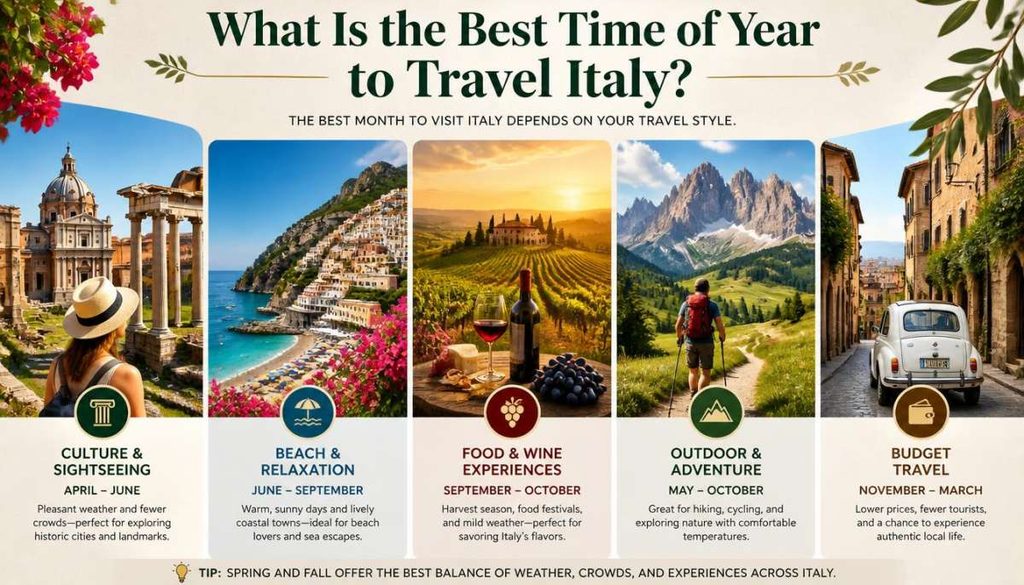
The best month depends on how you want to spend your time. A beach holiday requires different weather from a museum-focused city break or a walking trip through the countryside.
Best Time for Sightseeing
April, May, September, and October are generally excellent for sightseeing. Temperatures are often more comfortable for walking between landmarks, exploring historic streets, and spending time outdoors.
Rome, Florence, and Venice can all attract large numbers of visitors during these months, so book major attractions ahead when timed entry is available. Start outdoor sightseeing early to make the most of cooler hours and avoid the busiest periods.
Best Time for Beaches
June and September are good choices for many Italian beach destinations. The weather is often warm, and September can offer a pleasant balance between beach conditions and easing summer crowds.
July and August are also popular for swimming and seaside holidays, but they are usually busier and hotter. If you want to visit smaller coastal towns, check whether your preferred hotels, restaurants, and boat services operate during your travel dates.
Best Time for Couples and Honeymoons
May, June, September, and early October can work particularly well for couples. You can combine scenic towns, relaxed dinners, countryside stays, and cultural attractions without relying entirely on peak summer weather.
For a romantic trip, consider a mix of destinations rather than moving hotels every night. Spring is lovely for gardens and countryside, while early autumn can be appealing for vineyards and seasonal food experiences.
Best Time for Budget Travelers
January, February, and November can offer better value for accommodation and flights, especially outside major holiday periods. However, the lowest prices do not guarantee the best experience for every destination.
Some coastal towns have limited seasonal services, and winter weather can affect outdoor plans. Compare the total cost of transport, accommodation, and attractions rather than choosing travel dates based on hotel prices alone.
Best Time for Food and Wine Experiences
September and October are especially attractive for travelers interested in Italian food and wine. Depending on the region, autumn brings grape harvesting, seasonal produce, truffles, and local food festivals.
Tuscany and Piedmont are popular areas for countryside and culinary experiences, but events and harvest activities vary from year to year. Reserve winery visits and popular restaurants ahead if you have specific places in mind.
Best Time for Hiking and Outdoor Adventures
Late spring and early autumn are often suitable for hiking in many parts of Italy. May and June can be appealing for countryside walks, while September and early October offer pleasant conditions on many lower-elevation trails.
Mountain conditions are different. High trails in the Alps and Dolomites can retain snow into late spring, and some mountain huts and lifts operate seasonally. Check local trail conditions, opening dates, and weather forecasts before setting out.
Best Time to Visit Italy’s Most Popular Regions
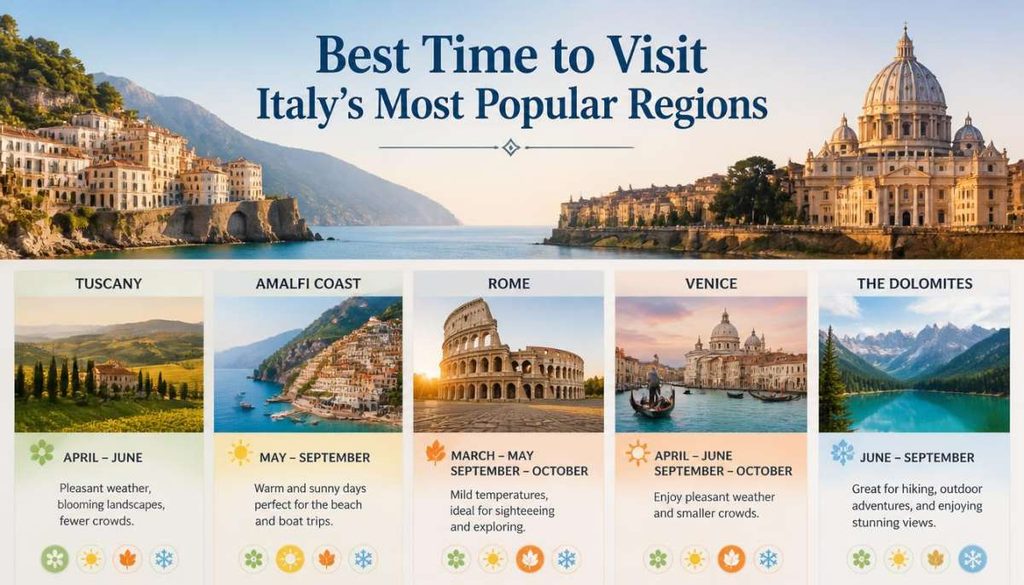
Italy’s regions have different climates, landscapes, and seasonal schedules. If you already know where you want to go, choosing the right month for that specific area can be more useful than following a nationwide recommendation.
Rome and Central Italy
April, May, September, and October are generally good choices for Rome and central Italy. These months are often more comfortable for walking between ancient sites, churches, museums, and historic neighborhoods.
Summer can bring intense heat and long queues at popular attractions. Winter offers opportunities for quieter sightseeing, although rain and cooler weather can affect outdoor plans.
If Rome is part of a longer itinerary, allow enough time for major landmarks instead of trying to see everything in one day. Booking timed-entry tickets for popular attractions can also help you plan your schedule.
Tuscany and the Italian Countryside
May, June, September, and October are appealing months for Tuscany. Spring brings green landscapes and flowers, while early autumn offers vineyards, harvest activities, and seasonal food.
September and October can be particularly rewarding for visitors interested in wine, rural villages, and local cuisine. Summer is also beautiful, but rural sightseeing can feel hot during the middle of the day.
A rental car may be useful for reaching smaller villages and countryside accommodation. If you prefer not to drive, base yourself in a well-connected town and arrange local tours or public transport where available.
Venice and Northern Italy
Late spring and early autumn are generally good periods for visiting Venice and other northern Italian cities. April, May, September, and early October can offer a useful balance between sightseeing conditions and seasonal activity.
Venice can be crowded throughout much of the year, especially around major events and busy weekends. Winter is quieter at times but colder, and high-water conditions can occasionally affect access around the city.
If your trip includes the Dolomites or other mountain areas, research those destinations separately. Summer is often suitable for hiking, while winter is popular for skiing, but lift and trail availability changes with the season.
The Amalfi Coast and Southern Italy
May, June, and September are often good months for the Amalfi Coast and southern Italy. Conditions are usually warm enough for coastal sightseeing, and travelers can enjoy boat trips, seaside restaurants, and scenic walks when services are operating.
July and August bring hot weather and heavy demand, especially in well-known towns. September can be a particularly attractive alternative, although popular destinations may remain busy.
October can still be enjoyable, but rain and reduced seasonal services become more likely as the month progresses. Before booking an autumn or winter trip, confirm that your chosen accommodation, ferry routes, and activities will be available.
The Italian Alps and Dolomites
The best time for the Italian Alps and Dolomites depends on whether you want hiking or winter sports. June through September is generally the main period for many summer hiking activities, although high-altitude routes may open later depending on snow and weather.
January and February are popular for skiing in many mountain resorts, subject to snow conditions and resort schedules. December and March can also work, but conditions vary from one year to another.
Check lift operations, mountain hut opening dates, trail difficulty, and local forecasts before traveling. Mountain weather can change quickly even when the forecast looks pleasant in nearby towns.
When Should You Avoid Visiting Italy in 2026?
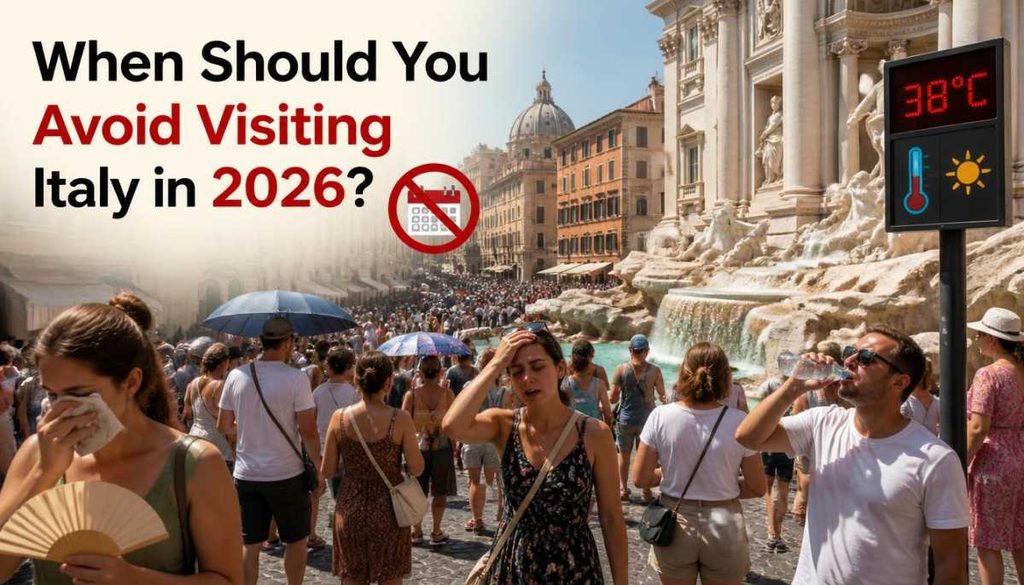
There is no single month everyone should avoid, but certain periods may be less suitable depending on your plans.
July and August can be challenging for travelers who dislike heat, queues, and high accommodation prices. Major cities may feel uncomfortable during the afternoon, and popular beaches can become crowded.
Major holidays and event dates can also affect costs and availability. Easter, April 25, May 1, and the Ferragosto period in August may bring heavier demand in some destinations. Check your exact dates before booking hotels and transport.
November through winter in seasonal coastal towns may not suit travelers expecting full beach services or frequent boat trips. Some businesses close for part of the winter, and bad weather can affect outdoor excursions.
That does not mean these periods are bad choices for every trip. Winter can be excellent for museums, skiing, and quieter city breaks, while summer can be ideal for travelers who prioritize beaches and long sunny days.
Is $5,000 Enough for a Trip to Italy?
Yes, $5,000 can be enough for a trip to Italy, but it depends on how many people are traveling, the length of the stay, your departure location, and your preferred accommodation.
For one traveler, this budget may cover a comfortable trip with advance planning. For two people, it may still be workable, but flights, hotel choices, restaurant spending, and the number of destinations will make a significant difference.
To estimate your budget, account for:
- Flights: Compare fares from your departure city and check baggage fees.
- Accommodation: Prices vary considerably by city, season, and location.
- Food: Balance restaurants with cafés, bakeries, markets, and casual meals.
- Transport: Include trains between cities, local transit, and any rental car costs.
- Activities: Budget for museums, guided tours, boat trips, and major attractions.
- Extra expenses: Allow for travel insurance, shopping, and unexpected costs.
Traveling in shoulder or low season can help you save, although some destinations remain expensive year-round. Booking transport and accommodation early can also make it easier to stay within budget.
What to Wear in Italy During Different Seasons
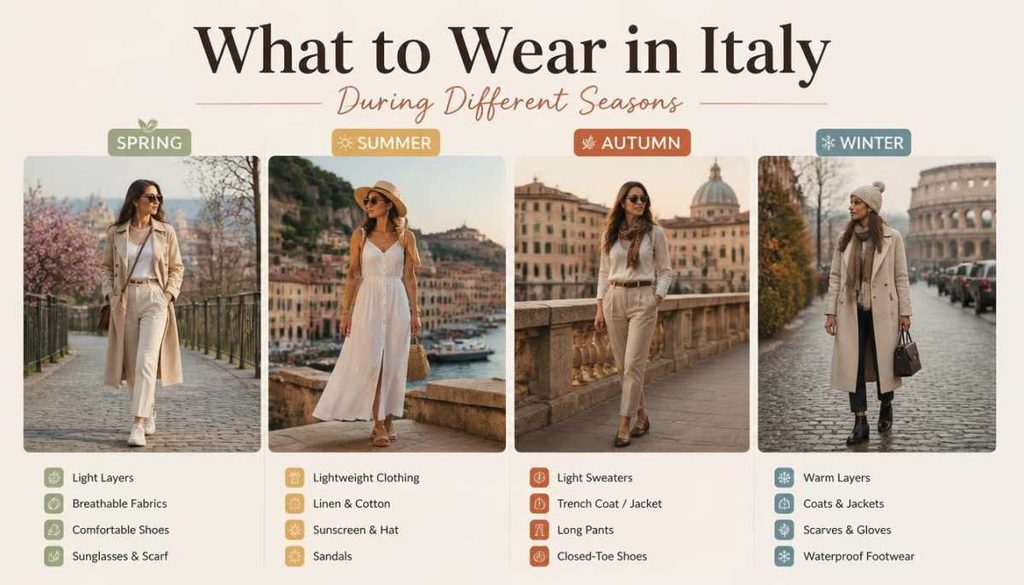
Packing for Italy is easier when you prepare for the season and the places you plan to visit. City sightseeing often involves many hours of walking, so comfort matters as much as style.
Spring: Pack layers, comfortable walking shoes, a light jacket, and rain protection. Temperatures can change throughout the day, particularly in northern regions.
Summer: Choose breathable clothing, comfortable sandals or walking shoes, sunglasses, and sun protection. A light layer is useful for air-conditioned interiors, cooler evenings, and visits to religious sites with dress requirements.
Autumn: Bring layers, a medium-weight jacket, and an umbrella. September can still feel summery, while October and November are more likely to bring cooler days and rain.
Winter: Pack a warm coat, sweaters, closed shoes, and weather-appropriate accessories. Northern cities and mountain destinations generally require warmer clothing than many southern coastal areas.
Do Ladies Wear Jeans in Italy?
Yes, women wear jeans in Italy. Straight-leg, slim, wide-leg, and other denim styles are all practical choices for everyday sightseeing.
You do not need an entirely new wardrobe to fit in. Well-fitting jeans paired with a simple top, comfortable shoes, and a jacket can work well for city walks, cafés, and casual dinners.
The most important consideration is comfort. Choose shoes suitable for cobblestone streets, and check dress requirements before visiting churches or religious sites.
Tips for Choosing the Right Time to Visit Italy
A little planning can make a significant difference to your trip, especially if you want to visit multiple regions.
- Check the weather by region. Northern mountain destinations and southern coastal areas can have very different conditions during the same month.
- Book popular attractions early. Major museums, historic sites, and guided tours may sell out for preferred dates.
- Compare weekdays and weekends. Accommodation and transport prices can vary with demand and local events.
- Check public holidays. Holidays can affect opening hours, crowds, and hotel availability.
- Confirm seasonal operations. Coastal ferries, mountain lifts, beach clubs, and some hotels operate on seasonal schedules.
- Avoid an overloaded itinerary. Travel between Italian cities takes time, so leave room to enjoy each destination.
- Plan for changing weather. Keep some flexibility for rain, heat, or unexpected changes to outdoor activities.
If you are visiting Italy for the first time, choose a season that supports your main activities, then build your itinerary around that decision. It is usually more enjoyable than trying to cover every region in one trip.
Frequently Asked Questions
What is the nicest month to go to Italy?
May and September are two of the best months for many travelers. Both can offer pleasant sightseeing conditions, outdoor activities, and a good range of destinations, although prices and crowds vary by location.
Is $5,000 enough for a trip to Italy?
It can be. The budget depends on the number of travelers, trip length, flights, accommodation, and activities. Traveling during shoulder or low season and booking ahead may help reduce costs.
Do ladies wear jeans in Italy?
Yes. Jeans are common everyday clothing in Italy. Pair them with a comfortable top and walking shoes, and choose outfits suited to the weather and activities planned.
When should you avoid Italy in 2026?
If you dislike extreme heat and heavy crowds, July and August may be less comfortable for visiting major cities. If you want beach services and coastal boat trips, check seasonal schedules before traveling from late autumn through winter.
Is April or October better for visiting Italy?
Both can be excellent. April offers spring flowers and increasingly pleasant weather, while October brings autumn scenery and seasonal food experiences. April may be cooler and more changeable in some areas, while October can bring more rain and reduced coastal services.
What is the cheapest month to visit Italy?
January, February, and November can offer lower prices in many destinations outside major holidays and special events. However, costs vary by city, and seasonal closures may limit activities in some coastal areas.
How many days do you need in Italy?
Around 7 to 10 days can provide a good introduction to two or three destinations, depending on your pace. Two weeks gives you more flexibility to combine major cities with the countryside or coast without spending too much time in transit.
Choose the Best Time for Your Italian Trip
For most travelers, April, May, September, and early October offer an appealing combination of sightseeing weather, outdoor experiences, and seasonal variety. Spring is ideal for exploring cities and gardens, while early autumn is especially attractive for countryside trips and food experiences.
Summer works well for beach holidays and long evenings, while winter offers quieter city visits and mountain sports. The best time to travel Italy is ultimately the season that matches your budget, preferred activities, and the regions you most want to experience.
Choose your dates around those priorities, check local conditions before booking, and leave enough time to enjoy Italy beyond its famous landmarks.