Where to Stay in New Orleans: Best Areas for Every Trip (2026)
Every guide points first-timers to the French Quarter, and for good reason: it puts you inside the city’s biggest draw. What most of them skip is that the French Quarter is also the loudest neighborhood in New Orleans after dark, and a hotel two blocks from Bourbon Street can mean brass bands and crowd noise until 2am.
Where to stay in New Orleans comes down to a real tradeoff between location and quiet. The French Quarter and CBD put you closest to the action. The Garden District and Marigny trade a short streetcar ride for a calmer night’s sleep. This guide breaks down six neighborhoods by vibe, noise, walkability, and who each one actually fits.
Quick Answer: Best Neighborhood by Trip Type
| Neighborhood | Vibe | Noise Level | Best For |
|---|---|---|---|
| French Quarter | Historic, central, nonstop energy | High | First-timers who want everything walkable |
| CBD / Warehouse District | Modern hotels, museums, business-friendly | Moderate | Balance of location and quiet |
| Garden District / Uptown | Mansions, oak trees, streetcar access | Low | Couples, families, longer stays |
| Marigny / Bywater | Local music scene, colorful shotgun houses | Moderate | Repeat visitors, music lovers |
| Mid-City | Residential, budget-friendly | Low | Budget travelers with a car or rideshare budget |
French Quarter: Closest to Everything, Loudest at Night
The French Quarter is New Orleans in its most concentrated form. Jackson Square, the St. Louis Cathedral, the French Market, and Bourbon Street are all within a fifteen-minute walk of each other, which is why nearly every first-time visitor guide leads with this neighborhood.
That convenience comes at a cost. Hotels directly on or near Bourbon Street stay loud well past midnight, especially Thursday through Sunday. If you’re a light sleeper, look for a property on the quieter edges of the Quarter, closer to Esplanade Avenue or Ursulines, rather than the blocks immediately off Bourbon.
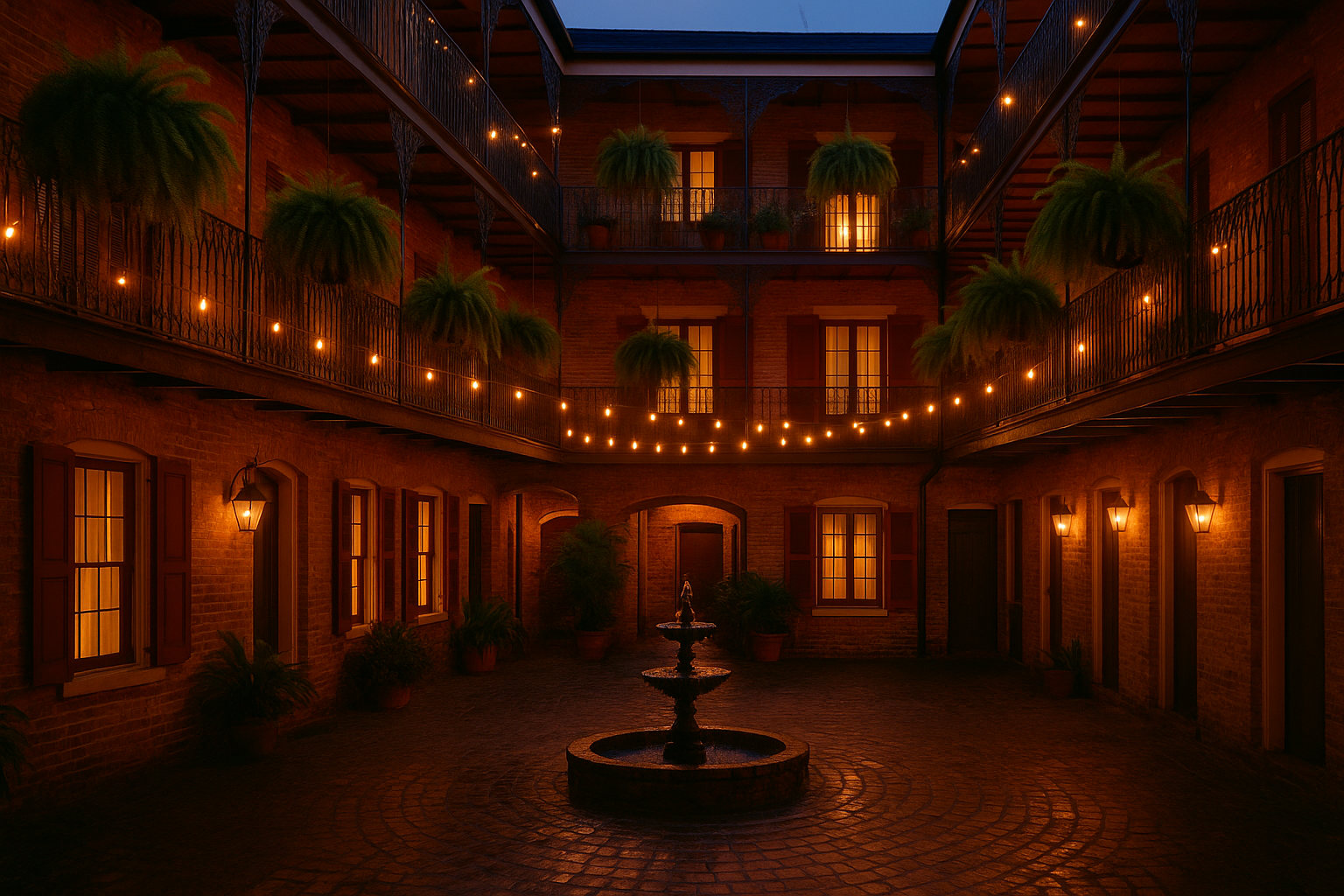
Historic boutique hotels dominate here, many housed in converted 18th and 19th century buildings with courtyards and wrought-iron balconies. Expect premium rates, especially during festival weekends, and book well ahead if your trip lines up with the best time to visit New Orleans for festivals.
Central Business District and Warehouse District: Best Overall Balance
The CBD and adjacent Arts/Warehouse District have become the pick for travelers who want French Quarter proximity without the noise. This is where most of the city’s larger hotel chains and modern boutique properties cluster, alongside the National WWII Museum and a growing gallery scene.
Walking to the French Quarter from most CBD hotels takes ten to fifteen minutes, and the streetcar line makes the trip even shorter. Evenings here are calmer than the Quarter but the area still has a real restaurant and bar scene of its own, particularly along Julia Street and around Lafayette Square.
This is generally the strongest pick for business travelers, conference attendees, and anyone who wants a predictable hotel experience over a historic one.
Garden District and Uptown: Quiet, Historic, and Walkable
The Garden District trades proximity for atmosphere. Live oak trees, antebellum mansions, and quiet residential streets make it one of the most photographed parts of the city, and it’s the neighborhood most visitors wish they’d booked once they’ve already committed to the Quarter.
Staying here means relying on the St. Charles Avenue streetcar or rideshares to reach the French Quarter, roughly a 20 to 25 minute trip. In exchange, you get genuinely quiet nights, walkable access to Magazine Street’s shops and restaurants, and a neighborhood feel that the tourist core doesn’t have.
Families and travelers staying four nights or longer get the most value out of basing themselves here, since the extra travel time matters less when it’s spread across a longer trip.
Marigny and Bywater: Local Music Scene Without the Crowds
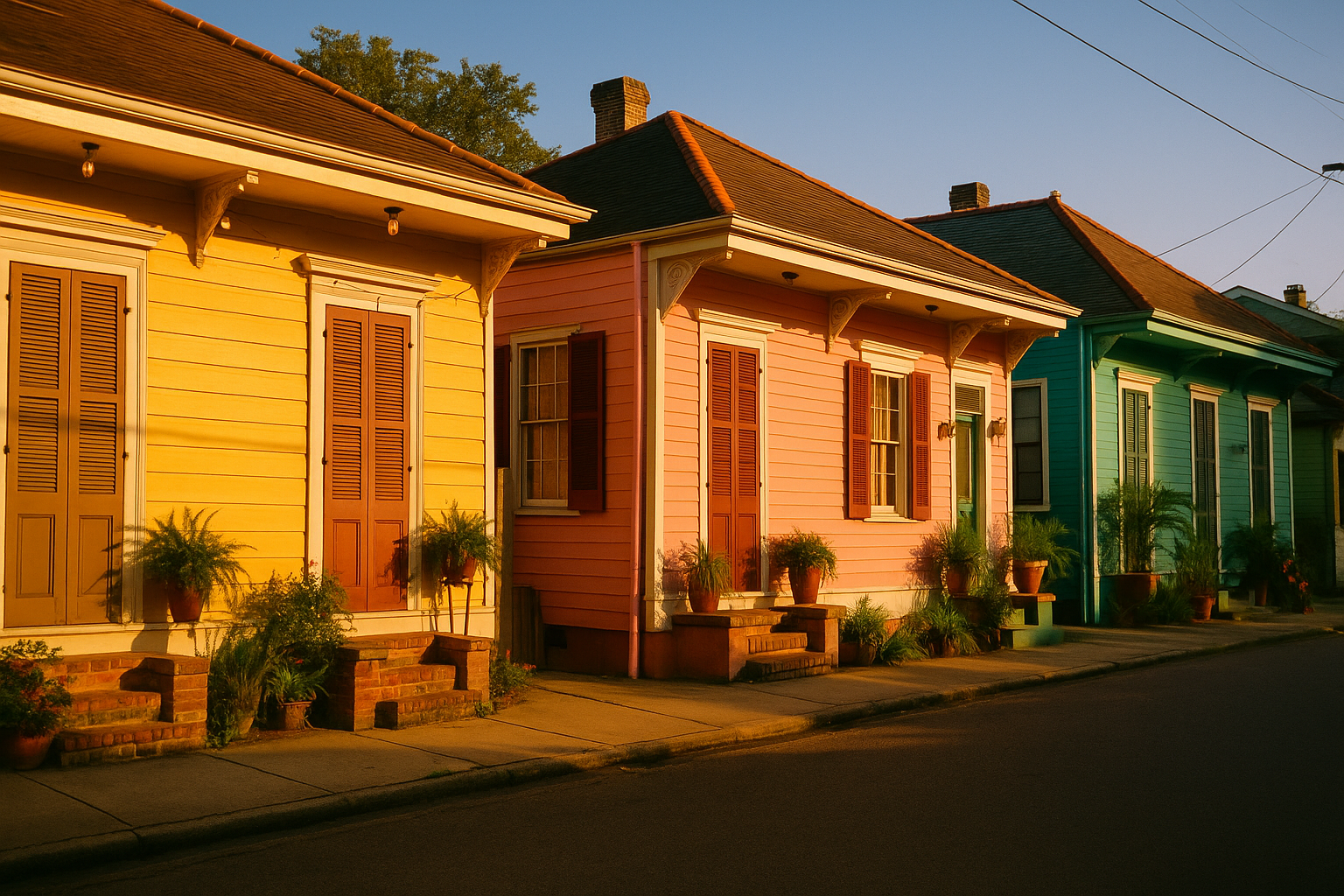
Just east of the French Quarter, Marigny and Bywater have become the default recommendation for repeat visitors who’ve already done the tourist checklist. Frenchmen Street carries the city’s live music scene without Bourbon Street’s frat-party reputation, and the neighborhoods themselves are full of colorful shotgun houses and neighborhood coffee shops.
It’s walkable to the French Quarter (Frenchmen Street sits right at the edge of it), but the residential blocks further in feel noticeably calmer once you’re a few streets back from the music venues. Short-term rentals outnumber hotels here, which suits travelers who want a kitchen and more space than a hotel room.
Mid-City: Budget-Friendly and Still Connected
Mid-City rarely makes it into first-timer guides, which is exactly why it’s worth mentioning. This residential stretch sits between the French Quarter and City Park, connected to downtown by streetcar and a short rideshare from most attractions.
Hotel and rental rates run noticeably lower here than in the Quarter or CBD, particularly during festival weekends when downtown prices spike hardest. The tradeoff is that you’re relying on transit or a car for most nightlife, and the neighborhood itself is quieter and more local than tourist-focused.
Things to Do in New Orleans near City Park, like the New Orleans Museum of Art and the botanical garden, sit right at Mid-City’s doorstep, which makes it a strong base if your trip leans toward those attractions over Bourbon Street.
What Nobody Tells You About Noise and Safety
Most where-to-stay guides list neighborhoods without addressing the two questions travelers actually ask once they’ve booked: how loud will it really be, and is it safe to walk back at night.
Noise in New Orleans is hyper-local. A hotel one block off Bourbon Street can be nearly silent, while one directly on it rarely quiets down before 2am on weekends. If noise matters to your trip, ask a hotel directly which side of the building your room faces before booking, not just which neighborhood it’s in.
On safety, the well-lit, busy corridors of the French Quarter, CBD, and Frenchmen Street are generally safe to walk late into the evening with normal city awareness. Quieter residential edges of the Marigny, Bywater, and Mid-City are safe but far less populated after dark, so a short rideshare back rather than a long walk is the more comfortable option once venues close.
Best Neighborhood by Traveler Type
| Traveler Type | Best Neighborhood | Why |
|---|---|---|
| First-time visitors | French Quarter | Everything is walkable, even with the noise tradeoff |
| Couples wanting quiet | Garden District | Historic charm without downtown noise |
| Music and food travelers | Marigny / Bywater | Frenchmen Street plus local restaurant scene |
| Families | Uptown or CBD | Space, streetcar access, calmer evenings |
| Budget travelers | Mid-City | Lower rates, still connected by streetcar |
| Business travelers | CBD | Modern hotels, walkable to Quarter, quieter nights |
Frequently Asked Questions
Is the French Quarter safe to stay in?
Yes, it’s one of the most walkable and well-lit parts of the city, though rooms near Bourbon Street stay loud until late on weekends.
What’s the best area to stay in New Orleans for first-timers?
The French Quarter or CBD both work well. Choose the Quarter for maximum walkability, or the CBD for a similar location with quieter nights.
Should I stay outside downtown to save money?
Mid-City and parts of Uptown offer lower rates than the Quarter or CBD, especially during festival season, as long as you’re comfortable relying on the streetcar or rideshares.
Is Marigny too far from the French Quarter?
No. Frenchmen Street sits right at the French Quarter’s edge, making Marigny one of the most walkable neighborhoods to the tourist core after the Quarter itself.
So Where Should You Actually Book?
If this is your first trip and you want to walk everywhere, the French Quarter earns its reputation, just pick a room away from Bourbon Street if you need sleep. If you’d rather trade a short streetcar ride for quiet, the CBD, Garden District, or Marigny all deliver that without pushing you far from the action.
Whichever neighborhood you land on, lock in your dates as early as you can if they overlap with festival season. Check Best Time to Visit New Orleans for the exact windows when rates spike, so you’re not choosing a neighborhood under pressure with half the city’s rooms already booked.