Sequoia National Park With Kids: The Honest Family Guide
Most families show up to Sequoia thinking the giant trees will be the highlight, then watch their kids get more excited about a hollow log they can crawl through and a meadow full of lizards. The trees are the reason you came, but they are rarely the part children remember. Knowing that ahead of time changes how you plan the day.
Sequoia National Park with kids works best when you keep the walking short, schedule the famous stops for early morning, and lean on the things built for them, like the free Junior Ranger program and the easy paved loops. This guide covers the family-friendly stops, realistic safety notes, what to pack, where the bathrooms are, and how to handle the parts of the park that frustrate parents most. For the bigger trail picture, families also look at our guide to the park’s best family-friendly hikes before deciding which ones suit their crew.
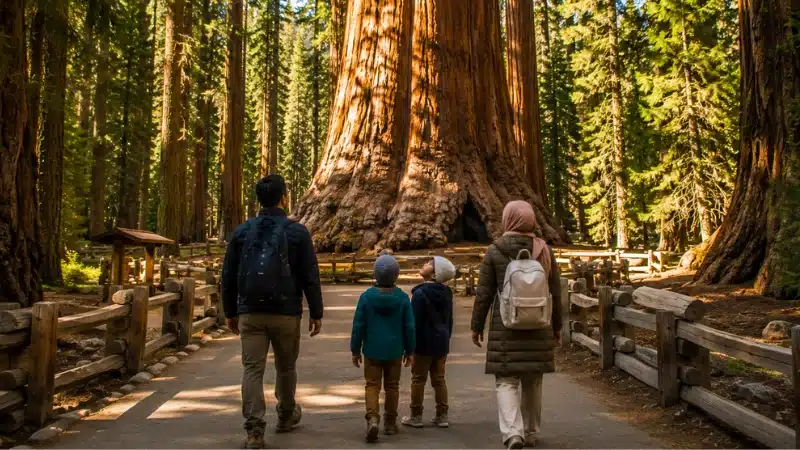
Is Sequoia National Park Good for Kids?
Yes, and more than most big parks. The headline attractions sit close to the road, the paved trails are manageable for little legs, and the scale of the trees genuinely impresses children in a way photos never prepare them for. Families who return regularly say the park rewards a slow pace far more than a packed schedule.
The catch is elevation and crowds. The Giant Forest area sits around 6,400 feet, so kids tire faster and sunburn quicker than parents expect. The popular stops also fill up by mid-morning, which turns a simple walk into a parking hunt. Plan around both and the park feels easy.
Best Things to Do in Sequoia With Kids
These are the stops that consistently land with families, ordered roughly by how easy they are with young children. If you want the wider list beyond the kid-focused picks, our rundown of the park’s most unforgettable stops covers Sequoia and Kings Canyon together.
General Sherman Tree. The world’s largest tree by volume, and the one stop nobody skips. The walk down is paved and gentle, but remember it is downhill to the tree and uphill on the way back, which is the part that wears kids out. Go first thing in the morning to beat the crowds and the heat. There is accessible parking closer to the tree if you have a stroller or a tired toddler.
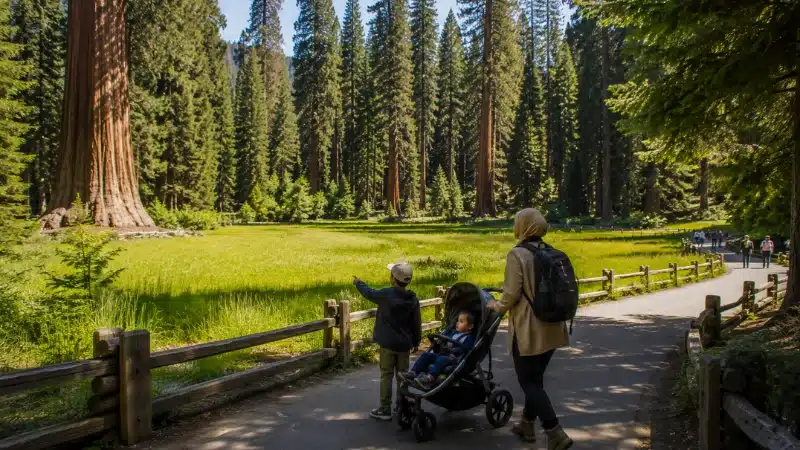
Big Trees Trail. A flat, paved loop around a meadow ringed by giant sequoias. This is the most stroller-friendly walk in the park and the one most families rank as their easiest win. Kids can spot wildlife in the meadow while you actually relax.
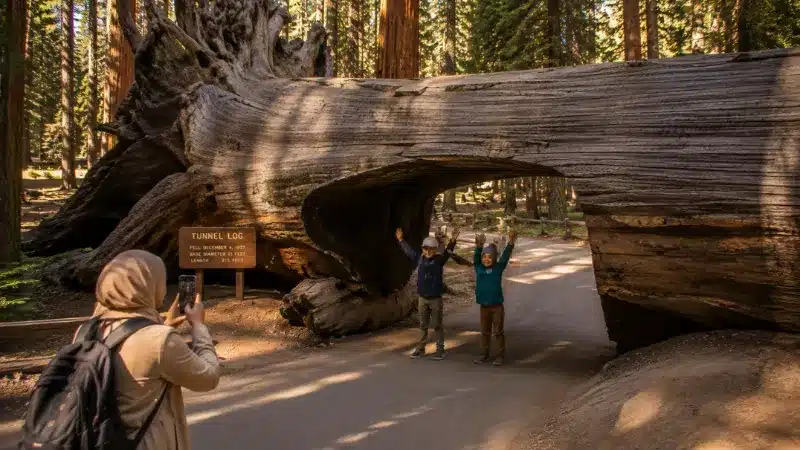
Tunnel Log. A fallen sequoia with a hole carved through it big enough to drive a car under. Kids love it, it takes five minutes, and it makes one of the best photos of the trip. There is a bypass for taller vehicles.
Crescent Meadow. An easy loop John Muir reportedly called the gem of the Sierra. Lizards, wildflowers in season, and a historic cabin built into a hollow sequoia at Tharp’s Log keep kids curious the whole way.
Moro Rock. A granite dome with staircase views over the park. Worth it for the payoff, but it is a steep set of steps with real drop-offs, so hold hands the entire way and skip it if you have a runner or anyone nervous about heights.
Crystal Cave. A marble cave seen only by guided tour, which you must book online ahead of time. Tours sell out, and the family-oriented option is the one to look for. Check current operating status before you build your day around it, since the cave does not always open on a fixed schedule.
The Junior Ranger Program
This is the single best free thing in the park for kids, and most first-time families don’t know it exists until they leave. Children pick up an activity booklet at any visitor center, complete a set of age-appropriate tasks while exploring, then return to be sworn in by a ranger and earn a badge. The Sequoia and Kings Canyon programs are combined, so one booklet covers both parks.
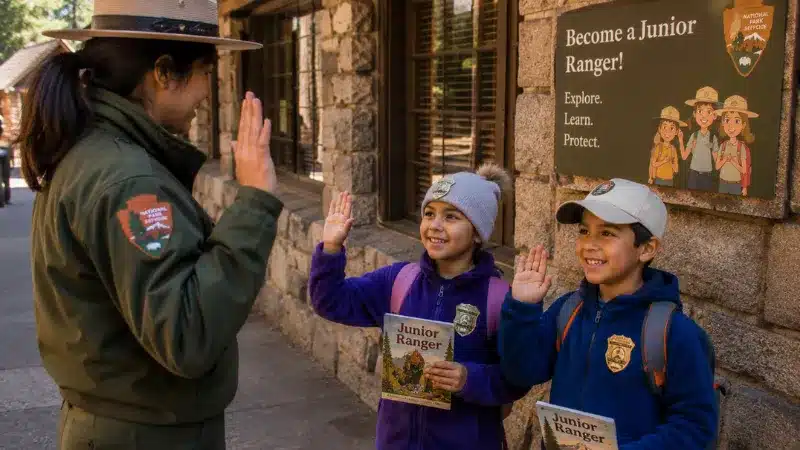
It does more than hand out a badge. The tasks quietly turn a walk into a treasure hunt, which is exactly what keeps a five-year-old moving past tree number four. Pick up the booklet the moment you arrive so kids have all day to work through it.
Safety and Practical Tips for Families
A few things catch parents off guard here, and most are easy to plan around.
The altitude is real. At 6,000 feet and up, kids dehydrate and tire faster, so carry more water than feels necessary and build in more snack breaks than you would at sea level. Sun is stronger too, so hats and sunscreen matter even on cool days.
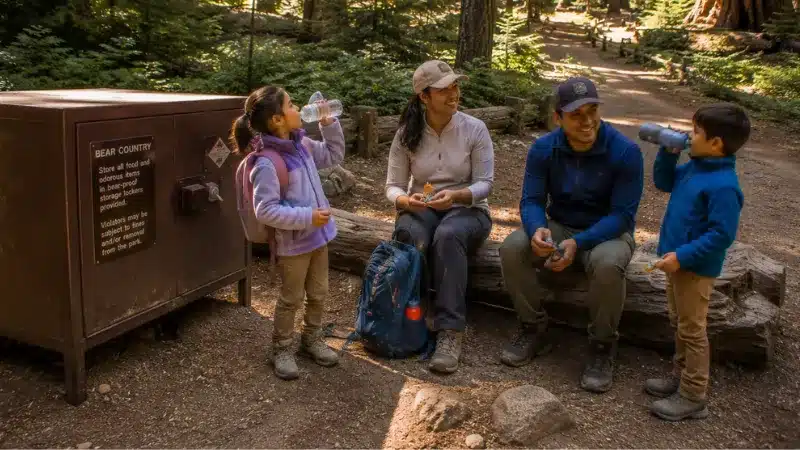
This is bear country. Food must go in the bear-proof lockers at trailheads and campgrounds, never left in the car. Kids find this genuinely exciting once you explain why, and it becomes part of the adventure rather than a chore.
There is no gas inside the park and cell service is patchy to nonexistent. Fill up in Three Rivers on the way in, download your maps offline, and don’t count on a phone to bail you out mid-drive. Roads are winding, so pack motion-sickness remedies if your kids are prone to it.
What to Pack for Sequoia With Kids
You don’t need much, but a few items make the difference between a smooth day and a meltdown.
| Item | Why it matters |
| Extra water | Altitude dehydrates kids fast |
| Favorite snacks | The single best meltdown insurance |
| Layers | Mornings are cold, afternoons warm |
| Sun hats and sunscreen | High elevation, strong sun |
| Carrier for toddlers | The Sherman uphill return is rough on little legs |
| Offline map | No reliable cell service in the park |
Where to Stay With Kids
Most families base themselves either inside the park at Wuksachi Lodge or just outside in the town of Three Rivers, which sits near the southern entrance and has cabins, vacation rentals, and riverfront restaurants. Three Rivers gives you kitchens and more space for the same money, while staying in the park saves you the daily morning drive up the mountain. Families weighing both options usually start with our full breakdown of where to base yourself near the park before booking.
How Many Days Do You Need With Kids?
One full day covers the headline stops if you start early, but families with young kids almost always wish they had two. A second day lets you space out the same sights, hit the busy spots in the quieter morning and evening windows, and add a slow stop like a swimming hole without rushing anyone. If you’re mapping out the hours, our day-by-day Sequoia trip plan lays out one, two, and three day versions you can adapt for a slower family pace.
Frequently Asked Questions
What is the best age to take kids to Sequoia?
Any age works, but the park is easiest with kids old enough to walk short paved trails on their own, roughly four and up. Toddlers do fine too with a carrier for the uphill stretches.
Are the trails stroller-friendly?
Some are. Big Trees Trail and the paved approach to General Sherman work with a stroller. Most other trails are dirt and uneven, so a carrier is the safer bet.
Is there a Junior Ranger program?
Yes. It is free, combined with Kings Canyon, and one of the best parts of the trip for kids. Grab the booklet at any visitor center when you arrive.
Do we need to worry about bears with kids?
Bears live in the park but attacks are extremely rare. Store all food in the provided lockers, never in your car, and you will likely only see one from a safe distance, if at all.
Can we visit Sequoia and Kings Canyon in one day with kids?
You can, but most families regret it. With children, one full day per park keeps the pace manageable and the meltdowns down.