Sequoia National Park Itinerary (1, 2 & 3 Days)
The biggest mistake people make at Sequoia isn’t picking the wrong trail. It’s pointing their car the wrong direction and burning two hours backtracking on a road where the speed limit rarely tops 35. The park’s headline stops sit close together, but the drive in from the entrance to the giant trees takes about 45 minutes to an hour on its own, so the order you do things in matters more than how many things you do.
This Sequoia National Park itinerary lays out exactly how to spend one, two, or three days, with each stop placed in driving order so you never double back. One day covers the icons. Two days adds the quieter hikes and a slower pace. Three days lets you fold in neighboring Kings Canyon. Below each plan you’ll find the timing, route, and logistics that actually decide whether your trip runs smooth or stalls in a parking line.
How Many Days Do You Need in Sequoia?
One full day is genuinely enough to see the park’s signature sights: the General Sherman Tree, the Congress Trail, Moro Rock, and the Giant Forest. If your whole reason for coming is to stand under the giants, a single well-planned day delivers.
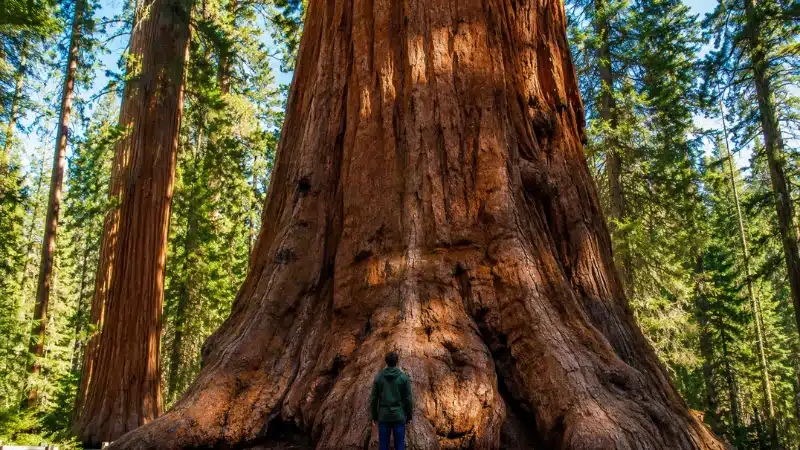
Two days is the sweet spot for most people. You see everything from the one-day plan without rushing, add a waterfall hike or a meadow loop, and leave room for the slow moments that make the trees worth the drive.
Three days is the move if you want Kings Canyon too. The two parks share an entrance fee and sit right next to each other, so a third day opens up Grant Grove, the canyon scenic drive, and the longer trails without cramming. If you’re visiting in winter, plan for one to two days only, since the Moro Rock road and several higher areas close with snow.
Here’s the quick version:
| Days | Best for | What you’ll cover |
| 1 day | First-timers, day-trippers, winter visits | General Sherman, Congress Trail, Moro Rock, Giant Forest |
| 2 days | Most travelers | Day 1 highlights plus Tokopah Falls and Crescent Meadow |
| 3 days | Adding Kings Canyon | Everything above plus Grant Grove and the canyon drive |
One Day in Sequoia National Park
This is built around the Giant Forest and Lodgepole area, where the best trees and viewpoints cluster together. Enter through the Ash Mountain entrance on Highway 198, near Three Rivers, and drive up to the Giant Forest first. Aim to be at the entrance gate by 8 a.m. The lots fill by mid-morning in summer, and getting ahead of that single hour changes your whole day.
Start at the Giant Forest Museum. It’s a quick orientation stop and a good place to confirm which roads and shuttles are running that day. From here you’re walking distance to the Big Trees Trail, a flat loop around a meadow ringed with sequoias that’s the easiest way to feel their scale.
Next is General Sherman and the Congress Trail, the one stop nobody skips. The walk down to General Sherman is paved and short, roughly 1.2 miles round trip, but it’s a real climb back up. If you have the legs, keep going onto the full Congress Trail, about 2.9 miles through a quiet grove where the crowds thin out fast. It’s one of the easier trails worth doing first if you’re deciding which Sequoia hikes match your energy level. Doing this early or late in the day means you might have the largest tree on Earth nearly to yourself.
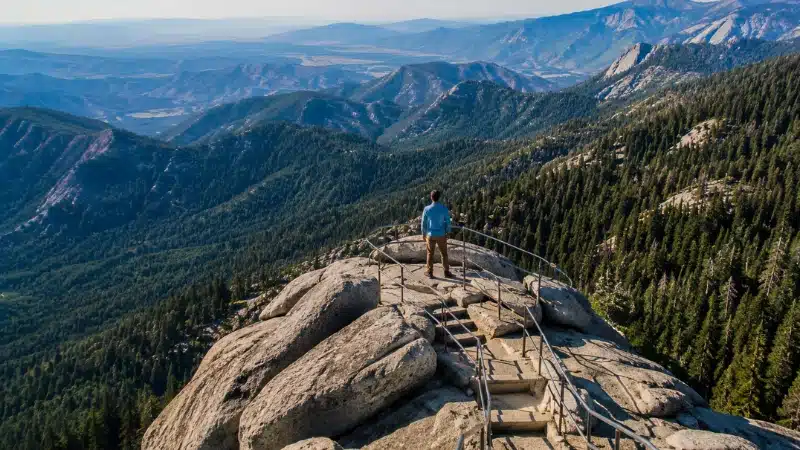
Then climb Moro Rock, a granite staircase of just over 350 steps, for a wide view across the Sierra Nevada. It’s short but steep, and there’s only one way up and down, so expect to wait behind people on busy afternoons. Important: in summer the Moro Rock and Crescent Meadow road closes to private cars on weekends, and you’ll take a shuttle from the Giant Forest Museum instead. On weekdays you can usually drive it yourself.
Finish on the same road at Tunnel Log, where you drive your car straight through a fallen sequoia, the park’s most photographed quick stop. Crescent Meadow nearby is a calm loop where wildlife, including black bears, often turns up at the edges. Keep your distance and treat any sighting as a reason to back away, not approach.
If you’re piecing together the bigger picture before you go, the full things to do in Sequoia and Kings Canyon rundown covers the attractions this one-day plan has to leave out.
Two Days in Sequoia National Park
Day one follows the plan above. Day two slows the pace and trades icons for the experiences that get rushed when you only have 24 hours.
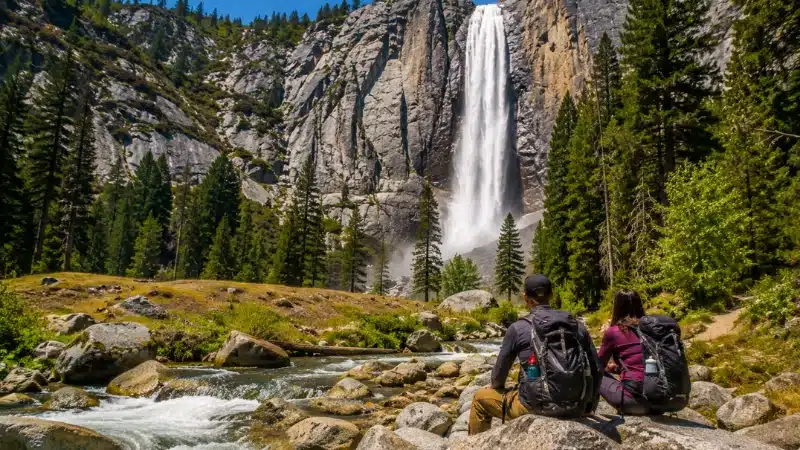
Start your morning at Tokopah Falls while it’s cool and quiet. The trail runs about 3.4 miles round trip from near the Lodgepole campground, following the Kaweah River past boulders and meadows to a tall waterfall that runs strongest in late spring and early summer. Bears are spotted along this trail often, so stay alert and store any scented items properly. For a fuller look at how it stacks up against the park’s other waterfall and summit routes, weigh the distances before you lock in your day-two hike. If you camp at Lodgepole, you can walk straight to the trailhead.
By midday, take a second pass at the Giant Forest. With a full day in hand, go back for the groves you skimmed on day one. Walking the Congress Trail at a slower pace, or exploring side paths off the main loop, is where a lot of repeat visitors say the park finally clicks.
In the afternoon, consider Crystal Cave, but book it ahead. This marble cavern is a guided-tour-only experience and a genuine highlight, but you cannot just show up. Tickets sell through the Sequoia Parks Conservancy, they routinely sell out weeks in advance for July and August, and the 2026 season runs May 22 through November 1. Allow at least 90 minutes to drive from the entrance to the cave parking lot, and dress for a steady 50°F inside even on a hot day. If you’d rather not commit a half day to it, swap in more time at the meadows instead.
For figuring out which season suits your plans, the best time to visit guide breaks down the trade-offs between summer crowds, fall quiet, and winter closures.
Three Days in Sequoia and Kings Canyon
A third day is your cue to cross into Kings Canyon, which shares the entrance fee and sits a short drive north along the Generals Highway. It’s the quieter of the two parks, and most travelers find half a day to a full day there is plenty.
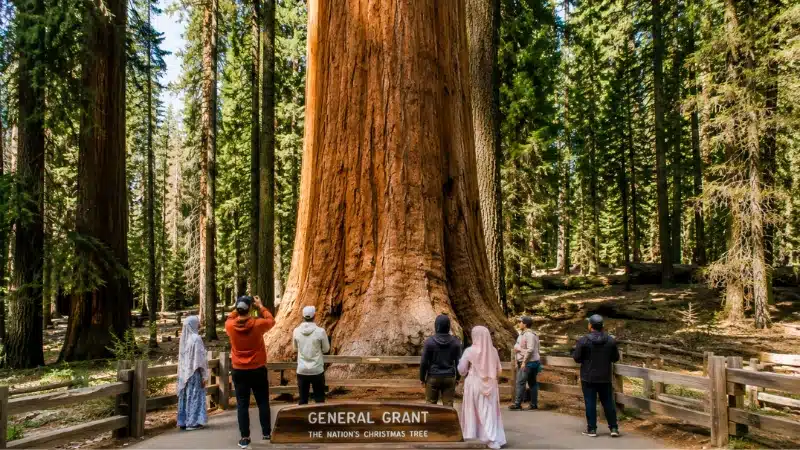
Start at Grant Grove and the General Grant Tree, the second-largest tree in the world and nicknamed the Nation’s Christmas Tree. The loop trail here is short and mostly flat, an easy contrast to Sequoia’s steeper climbs.
If the road is open, drive the Kings Canyon Scenic Byway down into the canyon itself, which is the reason to spend a full day. It descends past overlooks toward Cedar Grove, where the canyon walls and the river make for a completely different landscape than the high groves. Cedar Grove is seasonal and closed in winter, so check conditions before you commit the drive.
One fuel note: there is no gas inside either park. Fill up before you enter or at Stony Creek along the Generals Highway, because the distances between stops add up quickly and the last thing you want on a canyon road is a low tank.
Logistics That Make or Break a Sequoia Trip
A few practical things decide whether any of these plans run smoothly.
Entry is $35 per private vehicle and is valid for seven days across both Sequoia and Kings Canyon. It’s $30 per motorcycle and $20 per person on foot or bike. The park is cashless, so bring a card. If you’re hitting several national parks in a year, the America the Beautiful pass at $80 can pay for itself.
The closest airport is Fresno Yosemite International, about 1.5 hours away. You’ll want a car, since public transit into the park is effectively nonexistent. The drive in from the entrance to the Giant Forest is slow and winding, so download offline maps before you lose cell service.
In summer, free park shuttles connect the main Giant Forest and Lodgepole stops, and on weekends they’re the only way up the Moro Rock and Crescent Meadow road. Using them spares you the parking scramble at the busiest lots.
The Giant Forest sits above 6,700 feet. Even in summer, mornings and evenings run cold and afternoon storms roll through, so pack layers and a rain shell regardless of the forecast.
The park has a large black bear population, and food storage rules are backed by federal law. Anything with a scent, including toiletries, goes in the bear lockers, not your car. Bear spray is not allowed in California national parks.
Frequently Asked Questions
Can you see Sequoia National Park in one day?
Yes. One full day is enough to see General Sherman, the Congress Trail, Moro Rock, and the Giant Forest if you arrive by 8 a.m. and stick to the Giant Forest and Lodgepole area.
What’s the best order to do the stops?
Enter at Ash Mountain in the south and work north toward Kings Canyon. This keeps you moving in one direction and avoids backtracking on slow mountain roads.
Do you need a reservation to enter Sequoia?
No. Sequoia and Kings Canyon do not require an entry reservation. You only need a reservation for specific activities like the Crystal Cave tour.
Is Crystal Cave worth adding to the itinerary?
It is, but only if you book ahead. Tickets sell out weeks in advance in peak summer, the tour is guided-only, and the drive plus walk takes a half day, so plan it deliberately.
Should I visit Kings Canyon on the same trip?
If you have three days, yes. It shares the entrance fee, sits right next door, and offers quieter trees and a dramatic canyon drive that round out the Sequoia experience.