35 Best Things to Do in San Francisco: A First-Timer’s Complete Guide (With Hidden Gems)
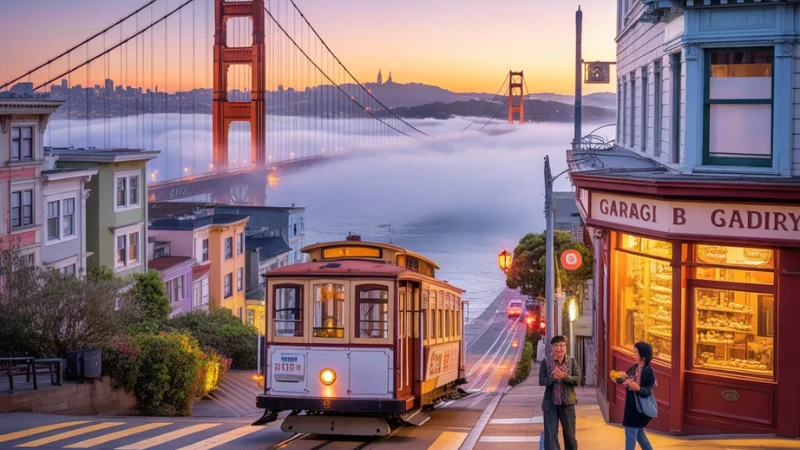
There is a moment, just before the fog rolls in, when San Francisco looks like it was painted rather than built.
The Golden Gate Bridge floats half-hidden in silver mist. Cable cars clang their way up hills so steep they shouldn’t exist. The scent of sourdough drifts out from a bakery on a corner where a mariachi band is playing, three blocks from a Michelin-starred restaurant, two blocks from the Pacific Ocean.
This is San Francisco, a city that somehow fits the wild, the wealthy, the weird, and the wonderful into just 49 square miles. It exceeds every expectation and this guide will make sure you miss none of it.
If you’re planning a full US trip, you should also explore Things to Do in Charlotte NC for a completely different city experience.
Plan Your Trip to San Francisco
Before you start booking tours and making lists, a few things are worth knowing upfront because San Francisco is not quite like any other American city, and a little preparation goes a long way.
Best Time to Visit San Francisco
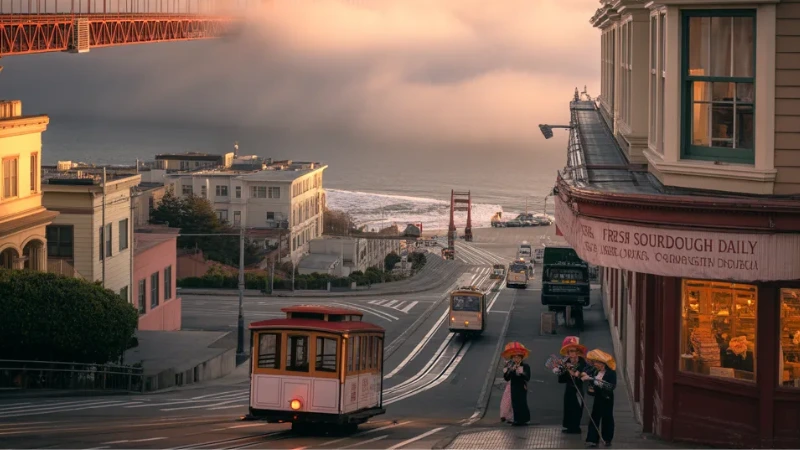
Here is the thing nobody tells you until you land in July wearing shorts: San Francisco’s summer is cold.
The city runs on its own climate, entirely separate from the rest of California. While Los Angeles bakes in 35°C heat, San Francisco wraps itself in fog; locals even have a name for it, Karl the Fog, who has his own Instagram account with hundreds of thousands of followers.
The best months to visit are September and October, when the fog clears, the skies turn brilliant blue, and the city is warm enough to actually enjoy without a jacket. March through May is the second-best window with fewer tourists than peak summer, pleasant temperatures, and the parks are green and beautiful.
If you want the best weather: Visit in September or October. If you want the fewest crowds: Visit in November or February hotels are cheaper too, just pack an umbrella. If you must visit in summer: Bring layers. A light jacket is non-negotiable, even in June.
One practical note: the fog is thickest in the morning and tends to burn off by early afternoon. If seeing the Golden Gate Bridge without cloud cover matters to you, plan your visit there for after noon.
How Many Days Do You Need?
San Francisco rewards as many days as you can give it — but here is an honest breakdown:
1 day: You can hit the absolute highlights of Golden Gate Bridge, Fisherman’s Wharf, Lombard Street, and a cable car ride. It is a full day with no room to breathe, but entirely doable. Jump straight to the 1-day itinerary in Section 08.
2 days: The sweet spot for a first visit. You get the iconic sights on day one, Alcatraz and a neighborhood on day two, and enough time to actually sit down and eat a meal without rushing.
3 days: Ideal. Add Golden Gate Park, a hidden gem or two, and a day trip to Muir Woods or Sausalito and you will leave feeling like you actually know the city.
4+ days: For people who want to go deeper into museums, farmers markets, more neighborhoods, day trips to Napa Valley or the coast.
How to Get Around San Francisco
San Francisco has a complicated relationship with cars and as a visitor, you probably do not need one.
Should you drive? Honestly no, at least not within the city. Parking is expensive, limited, and car break-ins are a genuine problem. Locals in some neighborhoods leave their car windows rolled down so thieves can see there is nothing worth stealing inside. Leave your rental at the hotel.
Public transport (Muni): The city’s Muni network covers buses, streetcars, and the historic F-Line, the vintage trolleys that run along Market Street and the Embarcadero for just a couple of dollars. It is cheap, reliable, and an experience in itself. A Clipper card or the MuniMobile app makes it seamless.
BART: The regional rail connects San Francisco Airport to downtown in about 30 minutes, and is the easiest way to arrive in the city. Within SF, it is useful for reaching the Mission District and a few other neighborhoods.
Cable cars: Iconic, yes but treat them as an attraction, not a commute. The Powell-Hyde line is the most famous and the most crowded. If you want the cable car experience without a 45-minute queue, try the California Street line, which has the same historic charm, far fewer tourists.
Rideshare (Uber/Lyft): Reliable and easy, especially for Alcatraz ferry connections, Coit Tower (which closes at 4pm — you will want to be quick), and anywhere with steep hills that defeat even enthusiastic walkers.
Bikes: One of the best ways to explore. Cycling across the Golden Gate Bridge is a genuine bucket-list experience, and bike rentals are affordable and widely available near the bridge and Fisherman’s Wharf.
Walking: San Francisco is wonderfully walkable but prepare for the hills. They are genuinely steep, particularly in Russian Hill and Nob Hill. Comfortable shoes are not optional.
Budget Breakdown
San Francisco is not a cheap city but it does not have to break the bank either.
| Budget | Mid-Range | Splurge | |
| Accommodation | Hostel $50–80/night | Hotel $180–280/night | Boutique $350+/night |
| Food | $15–25/day (tacos, sourdough, markets) | $60–90/day | $150+/day |
| Attractions | Many are free — see Section 09 | $30–60/day | $100+/day (Alcatraz + tours) |
| Transport | $5–10/day (Muni) | $20–40/day (mix) | Uber everywhere |
Money-saving tip: The San Francisco CityPass bundles entry to several top attractions
including Alcatraz, the California Academy of Sciences, and the Aquarium of the Bay at a significant discount. If you plan to visit three or more paid attractions, it is worth calculating whether it saves you money.
A Quick Word on Safety
San Francisco is a safe city for tourists with a few things worth knowing.
The neighborhoods covered in this guide Fisherman’s Wharf, the Embarcadero, North Beach, the Mission, Haight-Ashbury, Golden Gate Park are all comfortable to walk around in the day and evening. Use the same common sense you would in any large city.
Car break-ins are the most common issue tourists encounter. Never leave anything visible in a parked car not a bag, not a charger, not even a jacket on the back seat.
A few neighborhoods, particularly Tenderloin and parts of SoMa are worth avoiding if you are unfamiliar with the city, especially at night. They are not on most tourist itineraries anyway.
Otherwise: explore freely, walk confidently, and enjoy one of America’s most interesting cities.
Top Things to Do in San Francisco: The Must-See Attractions
Some cities have one or two iconic landmarks. San Francisco has an embarrassment of them and the remarkable thing is that almost all of them live up to the hype. Here is where to start.
1. Golden Gate Bridge Free
There is no single image more associated with San Francisco than this one — and standing in front of it for the first time, you understand why.
The Golden Gate Bridge stretches 1.7 miles across the bay, painted in a shade officially called International Orange, chosen because it works beautifully against both blue sky and grey fog. It is one of those rare landmarks that is more impressive in person than in photographs.
How to experience it:
The most satisfying way is to walk or cycle across the pedestrian path that is open daily, and the round trip on foot takes around 90 minutes. Most people walk a third of the way across, take their photographs, and turn back and that is perfectly fine. You do not need to complete the crossing to feel the scale of it.
If you are short on time, the south side viewpoint at the Golden Gate Bridge Pavilion gives you a strong view plus access to a café and gift shop. For the most dramatic angle the full bridge framed against the Marin Headlands cross to the north side and find Battery Spencer. This is where every stunning photograph you have seen was taken.
Fog tip: The bridge is most dramatically fog-free between noon and late afternoon. Morning visits are beautiful in their own misty way but if you want clear blue sky behind the bridge, go after lunch.
Pro Tip: Do not pay to drive across. The toll applies to vehicles only, walking and cycling are always free and the view from the bridge itself, looking down at the bay, is worth every step.
Looking for a tropical escape after exploring the city? Check out our complete guide on Things to Do in Maui, Hawaii.
2. Alcatraz Paid — Book in Advance
Of all the things to do in San Francisco, Alcatraz is the one you absolutely cannot leave without booking well ahead. Tickets sell out days, sometimes weeks in advance, and there is no way to buy them at the door.
The island sits 1.5 miles offshore in San Francisco Bay, and for 29 years it housed some of America’s most dangerous criminals including Al Capone and Machine Gun Kelly. Today it is one of the most visited national park sites in the country, and for good reason: the experience is genuinely unlike anything else.
The ferry departs from Pier 33 on the Embarcadero and takes about 15 minutes each way. The ride alone is worth it for the views of the city skyline from the water.
The audio tour included in your ticket is narrated by former guards and inmates. It is one of the best audio tours anywhere in the world. Wear headphones and give it your full attention.
Beyond the prison: Most visitors rush through the cellblock and head back to the ferry. The ones who slow down discover that the island itself has surprisingly beautiful wildflowers, sweeping bay views, historic military buildings, and a remarkable garden restored by volunteers over decades.
Day tour vs. night tour: The daytime tour gives you more time on the island and better views. The night tour running on select evenings has a completely different atmosphere. The cellblock is dimly lit, the bay is black, and the audio tour takes on a different weight. If you can get night tour tickets, take them.
Pro Tip: Book the moment your travel dates are confirmed at least two weeks ahead in summer, at least one week ahead in shoulder season. Visit the official National Park Service site at recreation.gov for tickets to avoid third-party resellers charging markups.
3. Fisherman’s Wharf + Pier 39 Free
Fisherman’s Wharf is unapologetically touristy souvenir shops, street performers, crowds and entirely worth visiting anyway. It is the waterfront heart of the city, and it has earned its place on every itinerary.
The real attraction at Pier 39 is not the shops or the carousel. It is the sea lions.
In 1989, a colony of California sea lions simply arrived and claimed the floating docks as their own. Nobody asked them to leave. Today, hundreds of them, sometimes over a thousand pile on top of each other, bark loudly, argue over the best spots, and occasionally topple each other into the water. It is completely free to watch and quietly one of the most entertaining things in the city.
Best viewing: Head to the far end of Pier 39 and turn left through the walkway behind the buildings. Follow the sound you will hear long before you see them. The largest colonies appear between March and May, and again from August through October.
While you are here: Pick up a bread bowl of clam chowder from one of the vendors along the wharf. It is a San Francisco institution sourdough bread hollowed out and filled with thick, creamy chowder and it tastes exactly as good as it sounds.
Pro Tip: Visit Fisherman’s Wharf in the morning before the crowds arrive, or in the early evening when the light on the bay turns gold. Midday is when it gets genuinely overwhelming.
4. Lombard Street Free
Eight hairpin turns are packed into a single block, lined with hydrangeas and framed by beautiful wooden houses. Lombard Street is exactly as photogenic as its reputation suggests.
The fun fact is worth knowing: Lombard Street is not actually the crookedest street in San Francisco. That title belongs to Vermont Street in Potrero Hill, which has a sharper overall curve. Lombard Street simply has better PR and better flowers.
Walking down is the right way to experience it. Start at the top on Hyde Street and make your way down the zigzag on foot, pausing to appreciate the gardens and the view of the bay at the bottom. Driving is possible but slow queues of cars back up significantly in peak season, and you see far less from inside a vehicle.
Best time to visit: Early morning, before 9am, when the street is nearly empty and the light is soft. Midday in summer can mean a 20-minute wait just to walk down.
Pro Tip: For the most famous photograph looking straight down the curves from above stand at the top of the hill on Hyde Street before you descend. This is the angle on every postcard.
5. Cable Cars Paid
San Francisco’s cable cars have been running since 1873, making them the oldest continuously operating cable car system in the world. They are a National Historic Landmark — and riding one is genuinely one of the most enjoyable ways to move through the city.
The Powell-Hyde line is the classic choice; it runs from Powell Street near Union Square up over Nob Hill and down to Hyde Street near Ghirardelli Square, with views that open up dramatically as you crest each hill. This is the line with the longest queues.
The California Street line is quieter, shorter, and still passes through some beautiful parts of the city. If you want the experience without the wait, start here.
A single ride costs $8. Buy your ticket before boarding from the machines at major stops, or use a Clipper card.
Pro Tip: Hang off the outside running board if you are confident this is the iconic cable car image, and the gripmen are used to tourists doing it. Hold on firmly. The hills are steeper than they look from the ground.
6. Painted Ladies Free
Six Victorian houses lined up along Alamo Square Park, with the San Francisco skyline rising behind them the Painted Ladies are one of those images you have seen so many times that seeing them in person feels slightly surreal.
They have appeared in dozens of films and television shows, most famously in the opening credits of Full House. The actual Full House house is a short walk away on Broderick Street worth a detour if you are a fan.
The best view is from the park itself, from the lawn that slopes up away from the houses. Arrive in the morning for soft light and fewer people. By midday on weekends the park is busy, but there is always space to find your angle.
Pro Tip: Bring coffee and sit on the grass for a while. The Painted Ladies are one of those spots that rewards slowing down the view and keeps improving the longer you look at it.
7. Coit Tower Paid (exterior free)
Standing on top of Telegraph Hill, Coit Tower offers some of the best 360-degree views in San Francisco, the bay, Alcatraz, the Golden Gate Bridge, and the city spreading out in every direction.
Inside, the ground floor is covered in murals painted in the 1930s by local artists as part of a Depression-era public works project. They show scenes of California life: farmers, factory workers, library patrons and they are genuinely beautiful, worth taking time to study before you go up.
Getting there is half the experience. The Filbert Street Steps climb steeply up through wild gardens and are home to a flock of wild cherry-headed conure bright green parrots with red heads that have lived on Telegraph Hill for decades. They are loud, charismatic, and entirely unafraid of people.
Important: Coit Tower closes at 4pm daily. Plan your visit accordingly, and consider taking a rideshare rather than walking if you are coming from Fisherman’s Wharf the walk is beautiful but eats time you may not have.
Pro Tip: The exterior viewing area around the base of the tower is free. The elevator to the top costs around $13 for adults. Both are worth it — but if you have to choose, the murals inside plus the base views give you most of the experience.
8. The Embarcadero Free
San Francisco’s historic waterfront boulevard stretches 1.3 miles from the Ferry Building to Pier 39 and walking it is one of the most enjoyable hours you can spend in the city.
Along the way: the Ferry Building Marketplace, where artisan food producers, coffee roasters, and specialty grocers have set up permanent shops alongside a farmers market on Tuesday, Thursday, and Saturday mornings. It is the best single place in San Francisco to understand what the city eats.
Also along the route: Pier 14, which offers the finest bay views of the Bay Bridge, and Pier 33, where ferries to Alcatraz depart.
Pro Tip: Do the Embarcadero walk on a Saturday morning when the farmers market is running. Pick up breakfast from one of the food stalls, eat it by the water, and take your time.
Hidden Gems: The San Francisco Spots Most Tourists Miss
The landmarks in the previous section deserve every bit of their fame. But San Francisco saves some of its best surprises for the people who wander a little further off the obvious path. These are the places locals love and guidebooks often skip.
9. Sutro Baths and Lands End Trail Free
At the far western edge of the city, where the land meets the Pacific, sit the ruins of what was once the largest indoor swimming complex in the world.
Adolph Sutro built his bathhouse here in 1896. It held seven saltwater pools under a vast glass roof and could accommodate 10,000 visitors at a time. It burned down in 1966, and what remains today are the concrete foundations, slowly being reclaimed by the ocean and the ice plant that covers the coastal hills.
Walking through the ruins feels genuinely cinematic. The waves crash against the rocks below, the salt air is sharp, and on foggy afternoons the whole place takes on an eerie, beautiful quality that photographs cannot quite capture.
The Lands End Trail connects directly to the ruins and follows the coastline for about 3.5 miles. The path winds through cypress trees and opens up to sweeping views of the Golden Gate Bridge and Marin Headlands. About halfway along, look for the stone labyrinth that appears on a rocky outcrop above the water. Someone rebuilds it whenever the waves wash it away.
Getting there: The Lands End Lookout visitor center has a small café and free parking, and the trailhead starts right outside.
Pro Tip: Go on a weekday morning. On weekends the trail gets busy, but on a quiet Tuesday it feels like you have the whole coastline to yourself.
Prefer a quieter nature-focused trip? Don’t miss our guide on Things to Do in Luray VA.
10. 16th Avenue Mosaic Steps Free
In the Inner Sunset neighborhood, a staircase climbs the hillside that most visitors to San Francisco never find. All 163 steps are covered in handmade ceramic tiles fish and birds, sun and moon, waves and stars created by more than 300 local residents over two years.
The tiles shift and change as you climb, moving from an underwater world at the bottom through the earth and sky to the cosmos at the top. At the summit there is a small open space with a panoramic view of the city and the ocean beyond.
It takes about 15 minutes to walk up. It is the kind of place that makes you stop every few steps.
Getting there: The steps are at 16th Avenue and Moraga Street in the Inner Sunset. They are a 10-minute drive from Golden Gate Park.
11. Wave Organ Free
Walk past the Golden Gate Yacht Club at the Marina, continue out along the breakwater jetty, and at the very end you will find one of the strangest and most delightful installations in the city.
The Wave Organ is a sculpture made of 25 organ pipes embedded in the stone of the jetty. As the tides move in and out, water pushes through the pipes and produces sounds. On a good day with a strong swell it sounds genuinely musical. On a calm day it sounds like the ocean breathing.
Either way, the walk out to it is worth doing for the views alone. From the end of the jetty you can see the Golden Gate Bridge, Alcatraz, and the full sweep of the bay.
It is completely free, open at all times, and almost no one knows it exists.
Pro Tip: Visit at high tide for the best sounds. Check a tide chart before you go.
12. Fort Point Free
Most people see Fort Point from above, looking down from the Golden Gate Bridge. Very few actually go inside.
The fort was built between 1853 and 1861, before the bridge existed. When engineers designed the Golden Gate Bridge in the 1930s, they could have demolished Fort Point to make room. Instead, chief engineer Joseph Strauss redesigned the south arch specifically to preserve it. The fort now sits directly beneath one of the most famous structures in the world, framed by the bridge’s steel arch overhead.
Inside there are Civil War era exhibits, original cannon emplacements, and some of the most unusual views of the Golden Gate Bridge you will find anywhere. Looking straight up from the fort’s courtyard, the bridge towers directly above you.
Entry is free. Parking is limited near the fort itself, but it is an easy 15-minute walk down from the Golden Gate Bridge Pavilion parking area.
13. Bernal Heights Park Free
Ask a San Franciscan where to find the best views in the city and they will probably say Twin Peaks. Ask them where they actually go themselves and some will tell you Bernal Heights.
The hill rises in the heart of the Mission neighborhood, and the short walk to the summit takes less than 20 minutes from the base. At the top there are 360-degree views of the entire city. The Bay Bridge, the downtown skyline, the hills of the East Bay, the ocean to the west. On a clear afternoon it is breathtaking.
The neighborhood around the park is one of the most pleasant in the city for a wander. Independent coffee shops, small restaurants, and bookstores line Cortland Avenue at the base of the hill.
Pro Tip: Go in the late afternoon when the light is warm and the city is glowing before sunset.
14. Golden Gate Fortune Cookie Factory Free to Enter
Tucked into a narrow alley in Chinatown, this small family-run factory has been making fortune cookies by hand since 1962. The folding machines are original, the space is barely larger than a living room, and the whole operation produces thousands of cookies a day.
You can watch through the doorway as workers fold the cookies while they are still warm and pliable. Entry is free, though a small tip is appreciated, and you can buy a bag of freshly made cookies to take away.
The cookies are also available with custom fortunes, which makes for a genuinely good souvenir.
Getting there: The factory is on Ross Alley, just off Jackson Street in Chinatown.
15. The Yoda Fountain at Lucasfilm Free
At the Presidio, just off Letterman Drive, a life-size bronze statue of Yoda stands at the entrance to the Lucasfilm campus. He sits cross-legged on a stone, surrounded by a small fountain, gazing out at whoever passes by.
The building behind him is the actual Lucasfilm headquarters. During weekday working hours the lobby is open, and inside there is more Star Wars memorabilia than most fans will manage to look at calmly, including a full-size Darth Vader.
It is a five-minute detour from the main Presidio walking trails and is worth it entirely.
16. The Golden Fire Hydrant Free
At the corner of 20th Street and Church Street in the Mission neighborhood, one fire hydrant is painted gold every year on April 18th.
On that date in 1906, the earthquake that destroyed much of San Francisco also broke the city’s water mains. Almost every fire hydrant in the city ran dry. This one, for reasons still not entirely understood, kept working. It supplied water to the firefighters who saved the Mission neighborhood while the rest of the city burned.
The hydrant gets a fresh coat of gold paint every year on the earthquake’s anniversary. It is easy to walk past without noticing. Now you will not.
Best Neighborhoods to Explore in San Francisco
San Francisco is really a collection of villages, each with its own personality, its own food, its own crowd. The distance between them is small but the difference in feeling is enormous. These are the ones worth your time.
The Mission District
The Mission is the neighborhood that gets under your skin.It runs along Valencia and Mission Streets in the eastern part of the city, and it is loud and colorful and alive in a way that feels completely different from the tourist waterfront a few miles away. The population is largely Latino, and the food reflects that directly. The taquerias here are the real thing, not a tourist approximation of Mexican food. Lines form outside the best ones at lunch and dinner, which is the only recommendation you need.
Walk along Balmy Alley, a narrow street between 24th and 25th Streets, where almost every garage door and wall surface has been painted by local artists. The murals change regularly and cover everything from neighborhood history to immigration politics to simple portraits of people who lived on this street. It is one of the most honest pieces of public art in any American city.
Dolores Park anchors the northern end of the neighborhood. On a sunny weekend afternoon half the city seems to end up here, spread across the grass with food from the nearby taquerias and coffee from Tartine Manufactory around the corner. The park has views of the downtown skyline, a playground that children love, and a relaxed, welcoming atmosphere that makes it easy to spend two hours doing nothing in particular.
What to eat: Taquerias on Mission Street for burritos, Bi-Rite Creamery on 18th Street for ice cream, Tartine Bakery for pastries that people genuinely travel to San Francisco specifically to eat.
Haight-Ashbury
In the summer of 1967, somewhere between 50,000 and 100,000 young people arrived in this neighborhood looking for something. The neighborhood they found became one of the most written-about places in American cultural history.
Walking through Haight-Ashbury today, the spirit of that moment is still present, if considerably more commercialized. Independent record shops sit next to vintage clothing stores. A shop selling crystals and incense is neighbors with a café serving excellent coffee. The painted Victorians that line the streets are some of the most beautiful in the city.
It is a neighborhood that rewards slow walking. The architecture is extraordinary when you look up at the upper floors rather than the shop fronts at street level. Haight Street itself runs for about a mile between Masonic Avenue and Golden Gate Park, and walking the whole length takes less than 30 minutes. But stop often.
Alamo Square Park sits a few blocks away and is where you will find the Painted Ladies, the row of Victorian houses covered in the previous section. The combination of the park, the houses, and the neighborhood around them makes for a very good morning.
What to eat: Breakfast at one of the cafés along Haight Street before the neighborhood wakes up properly. The early crowd is locals, the late crowd is everyone else.
North Beach
North Beach is San Francisco’s Italian neighborhood, though calling it simply that undersells what it actually is.
It is the neighborhood where the Beat Generation happened. Lawrence Ferlinghetti opened City Lights Bookstore here in 1953, and it became the place where Allen Ginsberg, Jack Kerouac, and the writers around them published, argued, drank coffee, and changed American literature. The bookstore is still open, still independent, still sells poetry on the ground floor and literature upstairs. It is worth an hour of anyone’s time.
Caffe Trieste on Vallejo Street opened in 1956 and is the oldest espresso café on the West Coast. Francis Ford Coppola reportedly wrote parts of The Godfather screenplay at one of the tables near the back. The coffee is excellent, the atmosphere is irreplaceable, and the prices are reasonable.
For pizza, Tony Gemignani’s pizzeria on Vallejo Street is as serious about the craft as anywhere in the country. Gemignani was the first American to win the World Pizza Championship in Naples. He makes ten different styles of pizza daily, each cooked in a different oven at a different temperature. There is usually a wait, and the wait is worth it.
The neighborhood is about a 20-minute walk from Fisherman’s Wharf, making it an easy addition to a waterfront afternoon.
What to eat: Espresso and a pastry at Caffe Trieste in the morning, pizza at Tony Gemignani’s for lunch.
Chinatown
San Francisco’s Chinatown is the oldest in North America, established in 1848, and it remains one of the most densely populated neighborhoods in the country.
Enter through the Dragon Gate on Grant Avenue at Bush Street, the traditional entrance, and the city shifts entirely. The street fills with roast duck hanging in windows, stalls selling produce you may not recognize, herbalists with jars of dried ingredients floor to ceiling, and bakeries producing char siu bao and egg tarts through the day.
Grant Avenue is the tourist-facing street, busy and colorful. Stockton Street, one block over, is where the neighborhood actually shops. The difference is immediate and worth experiencing. Stockton Street has the better food shops, the better produce, and none of the souvenir T-shirts.
The Golden Gate Fortune Cookie Factory on Ross Alley sits within Chinatown and was covered in the hidden gems section. If you have not added it to your list, do so now.
What to eat: Dim sum at one of the restaurants on the side streets, egg tarts from any of the bakeries, and a bowl of congee if you are there in the morning.
Japantown
One of only three officially designated Japantowns remaining in the United States, San Francisco’s version occupies a few blocks around the Japan Center mall and the Peace Plaza.
It is smaller and quieter than the other neighborhoods in this section, which is precisely what makes it pleasant. The Japan Center has Japanese grocery stores, ramen restaurants, bookshops, and shops selling everything from anime merchandise to high-end ceramics. The Peace Pagoda in the plaza outside was a gift from the city of Osaka in 1968.
If you are visiting in April, the Cherry Blossom Festival fills the streets with food stalls, taiko drumming, and traditional performances. It runs for two weekends and draws large crowds, but the atmosphere is genuinely festive and worth timing your trip around if you can.
What to eat: Ramen for lunch, mochi ice cream from one of the small shops in the Japan Center.
Union Street
Between the Marina and Pacific Heights, Union Street is the neighborhood to visit if you want to see how a certain prosperous, young San Francisco actually lives day to day.
The street is lined with boutiques, independent coffee shops, brunch restaurants, and wine bars. On weekend mornings the pavements fill up with people eating eggs outside in light jackets. By early evening the same tables have switched to aperitivo hour.
It is not a neighborhood with major attractions. It is a neighborhood for walking, eating, and sitting somewhere pleasant with a good coffee or a glass of Californian wine. Every city needs a street like this, and Union Street is San Francisco’s version.
What to eat: Brunch at any of the restaurants with outdoor seating. Order whatever comes with eggs and take your time.
Where to Eat in San Francisco
San Francisco takes food seriously in a way that few American cities match. The combination of extraordinary local produce, a strong culture of independent restaurants, and decades of culinary innovation means that eating well here is not difficult. Eating badly is almost harder.
This is not an exhaustive restaurant guide. These are the places worth knowing about, organized by meal and budget, so you can plan without overthinking it.
Breakfast and Brunch
Zazie SF on Cole Street in Cole Valley is the kind of neighborhood breakfast spot that every city wishes it had. The room is small, the menu is focused, and the eggs Benedict and French toast are as good as anything you will find in the city. There is usually a queue by 9am on weekends. Put your name on the list, walk around the block, and come back. It is worth it.
Tartine Bakery on 18th Street in the Mission opens at 8am and runs through the afternoon. The morning bun is a spiral of laminated dough rolled in orange sugar and cinnamon that has been written about more than almost any other pastry in the country. The croissants are outstanding. Arrive early because the best things sell out.
Caffe Trieste in North Beach is for the mornings when you want coffee and atmosphere more than a full meal. Espresso, a cornetto, a marble table, and 70 years of history on the walls around you. Some mornings that is exactly the right thing.
For something more casual, the Ferry Building Marketplace runs a farmers market on Tuesday, Thursday, and Saturday mornings. Walk through with no plan, eat what looks good, drink a coffee from Blue Bottle at the counter by the window, and watch the bay. It is one of the most enjoyable hours you can spend in San Francisco and it costs almost nothing.
Lunch
Tony Gemignani’s on Vallejo Street in North Beach was covered in the neighborhoods section, and it deserves a second mention here because the pizza genuinely earns it. Go for lunch before the dinner crowds arrive. The Margherita, made with San Marzano tomatoes and cooked in a wood-fired oven, is the one to order on a first visit.
For something faster and cheaper, the taquerias along Mission Street are where San Francisco actually eats lunch. El Farolito at 24th and Mission is open late and consistently excellent. The super burrito, wrapped in foil and heavy as a small dumbbell, costs around $12 and is one of the best lunches in the city at any price.
Boudin Bakery on Fisherman’s Wharf is a tourist institution that genuinely deserves its reputation. The clam chowder served in a hollowed sourdough bread bowl is the thing to order. Watch the bakers through the window on the upper floor before you eat. The bread is made fresh all day and you can taste it.
Dinner
Scoma’s has been on Pier 47 at Fisherman’s Wharf since 1965. It is not trendy and it does not try to be. What it does is serve locally caught fish and seafood cooked well, in a room with views of the water, at prices that are high but not unreasonable for what you get. The cioppino, a rich San Francisco seafood stew, is the dish to order. Make a reservation.
Tadich Grill on California Street opened in 1849, making it the oldest restaurant in California. The menu has barely changed in decades, which is meant as a compliment. The oysters, the grilled fish, the shellfish stew with sourdough bread. The room is long and narrow with wooden booths and white tablecloths. There is almost always a line and they do not take reservations, which means the bar fills up with people waiting and having a drink, which is a fine way to spend 30 minutes in a city like this.
For a more contemporary dinner, the Mission District has some of the most interesting cooking in the city. Lazy Bear on 19th Street is a ticketed dinner experience, more like a dinner party than a restaurant, and requires advance booking. Flour and Water on 20th Street is more accessible and makes some of the best pasta in San Francisco.
Budget Eating
San Francisco has a reputation for being expensive, and in many contexts that reputation is earned. But eating cheaply and eating well are not mutually exclusive here.
The Mission taquerias remain the best value in the city. A large burrito from El Farolito or La Taqueria costs around $12 and is more food than most people can finish.
Chinatown offers some of the most affordable meals downtown. Dim sum restaurants along the side streets charge prices that feel like a different decade. A full dim sum lunch for two rarely costs more than $25.
The Ferry Building on a Saturday morning allows you to eat very well for very little if you pick strategically. A cup of coffee, a pastry, a piece of artisan cheese, a bag of fruit from one of the produce stalls. It adds up to an excellent morning for under $20.
Bi-Rite Market on 18th Street in the Mission sells prepared sandwiches and salads from their deli counter that are outstanding. Take your food across the street to Dolores Park and eat on the grass. This is exactly how a lot of San Franciscans spend their lunch hour on a good day.
Ice Cream and Sweets
Ghirardelli Square near Fisherman’s Wharf is the classic choice, and the hot fudge sundae has been served here since 1852. The square itself is pleasant to walk around and the chocolate shop gives out free samples when you walk in.
Bi-Rite Creamery on 18th Street in the Mission makes ice cream in flavors that are genuinely interesting without being gimmicky. The salted caramel and the honey lavender are the two to try. The line stretches down the block on warm afternoons, which in San Francisco means October.
Humphry Slocombe on Harrison Street takes ice cream in stranger directions. Secret Breakfast, their most famous flavor, is bourbon and cornflakes. They also have a counter inside the Ferry Building if you are already there on a Saturday morning.
Coffee
San Francisco has one of the strongest independent coffee cultures in the country, and the standard at most cafés is high enough that ordering a bad espresso is genuinely difficult.
Blue Bottle Coffee started in Oakland and now has locations across the city. The Ferry Building counter, with its view of the bay and the morning farmers market outside, is the best place to drink it.
Sightglass Coffee on 7th Street in SoMa has a beautiful space in a converted industrial building and takes its sourcing and preparation seriously.
Caffe Trieste in North Beach has been mentioned twice already in this guide and will be mentioned again if given the opportunity. It is the oldest espresso café on the West Coast and the atmosphere alone is worth the visit.
Golden Gate Park: A Full Day in San Francisco’s Backyard
Most visitors treat Golden Gate Park as the place you pass through to reach somewhere else. That is a mistake.
The park stretches three miles from the Haight-Ashbury neighborhood to the Pacific Ocean, covers 1,017 acres, and contains more things worth doing than most entire cities. It is larger than Central Park in New York. On Sundays, the main road through the park closes to cars entirely and fills instead with cyclists, roller skaters, families, and dogs. It is one of the great urban spaces in the country and deserves at least half a day of your time, ideally a full one.
Japanese Tea Garden
The Japanese Tea Garden is the oldest public Japanese garden in the United States, established in 1894 for the California Midwinter International Exposition and never dismantled.
Walking through the gate feels like stepping sideways out of San Francisco. The garden has koi ponds, a drum bridge that arches steeply over the water, a pagoda that survived the 1906 earthquake, stone lanterns, carefully shaped maples, and a teahouse where you can sit with a pot of tea and look out over the pond in a silence that feels genuinely rare in a city.
The fortune cookie was invented here, or so the story goes, served to visitors during the original exposition. Whether that is entirely true is debated, but the cookies are still served in the teahouse, which is reason enough to order them.
Entry costs around $13 for adults on weekdays. On the first and third Monday of the month before 10am, entry is free.
Pro Tip: Visit in late March or early April when the cherry blossoms are at peak bloom. The garden during blossom season is one of the most photographed places in San Francisco, and the photographs do not exaggerate.
California Academy of Sciences
Under one roof on the Music Concourse: a natural history museum, a planetarium, a living coral reef aquarium, a four-story rainforest dome, and a 2.5-acre living roof planted with native wildflowers that you can walk across.
The rainforest dome is the thing that surprises people most. You walk inside a glass sphere, climb through four floors of tropical vegetation as the humidity rises with each level, and arrive at the top surrounded by free-flying tropical butterflies. Then you take a glass elevator back down through the center. It is the kind of exhibit that makes adults feel like children again, which is the best possible recommendation.
The planetarium shows run throughout the day and are worth building your visit around. The evening NightLife events on Thursday nights are adults-only, feature a DJ, a cash bar, and access to the entire museum, and are one of the better things to do in San Francisco if you happen to be visiting mid-week.
Entry costs around $40 for adults. Book online in advance to skip the ticket line.
de Young Museum
Across the Music Concourse from the Academy of Sciences, the de Young holds the city’s collection of American art from the 17th through 21st centuries alongside significant holdings of textiles, art from the Pacific Islands, and rotating international exhibitions.
The building itself is worth seeing. The copper-clad tower rises above the tree canopy and has a free observation deck at the top with panoramic views across the park toward the ocean. The tower is free to access even if you are not visiting the museum.
On Saturday mornings the museum runs free family art activities, usually connected to whatever is currently on display. If you are visiting with children it is worth checking the program in advance.
General admission costs around $30 for adults. The first Tuesday of every month is free for all visitors.
Conservatory of Flowers
Near the eastern entrance to the park on JFK Drive, the Conservatory of Flowers is a Victorian greenhouse built in 1879 and still operating as one of the oldest and most beautiful public conservatories in the country.
Inside there are over 2,000 species of plants across five galleries: lowland tropics, highland tropics, aquatic plants, potted plants, and a special exhibitions gallery. The giant Victoria water lilies in the aquatic gallery can grow large enough to support the weight of a small child. The carnivorous plant collection has a devoted following.
Entry costs around $13 for adults. Children under five are free.
Stow Lake
Near the center of the park, Stow Lake is a circular reservoir with a wooded island in the middle called Strawberry Hill. You can walk the loop around the lake in about 20 minutes, cross one of two stone bridges to the island, and climb the hill to a waterfall and a view across the park.
The boathouse rents rowboats, pedal boats, and electric boats by the hour, which is an entirely pleasant way to spend an afternoon if the weather is cooperating. Rates start at around $25 per hour.
The Buffalo Paddock
In the northwest corner of the park, near the windmills on the ocean end of JFK Drive, a small herd of American bison lives in a fenced paddock.
They have been here since 1890, when the park acquired a pair to preserve the species at a time when bison were being hunted toward extinction across North America. The herd now numbers around a dozen animals and lives quietly in a surprisingly generous stretch of grassland.
Most visitors to Golden Gate Park have no idea the bison are there. That is part of what makes them worth finding.
Sundays in the Park
On Sundays, JFK Drive closes to cars from Kezar Drive all the way to the ocean. The road fills instead with cyclists, skaters, families with strollers, and people doing absolutely nothing in particular at a pace that the rest of the week does not allow.
Rent a bike from one of the shops near the Haight entrance to the park and ride through to the ocean. Stop at the tea garden, loop around Stow Lake, find the bison. It takes two or three hours at a relaxed pace and is one of the most enjoyable ways to spend a Sunday morning in the city.
The Golden Gate Park Band performs free concerts at the bandshell near the Music Concourse on Sunday afternoons from April through October. The concerts have been running continuously since 1882, which makes them one of the longest-running free concert series in the world.
Getting to Golden Gate Park
The park runs along Fulton Street to the north and Lincoln Way to the south. The easiest approach from downtown is the N-Judah Muni streetcar, which runs along the southern edge and drops you near the de Young Museum and the Academy of Sciences. From the Haight-Ashbury neighborhood it is a short walk to the eastern entrance on Stanyan Street.
The Best San Francisco Itineraries
Planning a San Francisco trip is easy to overcomplicate. Here is exactly what to do depending on how many days you have.
One Day in San Francisco
Start the morning at the Golden Gate Bridge. Walk partway across, take your photographs, then walk down to Fort Point underneath it. From there, a drive or rideshare to the Palace of Fine Arts for a quick stop of ten minutes is enough — before heading to Fisherman’s Wharf for a clam chowder bread bowl at Boudin.
After lunch, walk the Embarcadero toward Pier 39 to see the sea lions. Grab a rideshare to Coit Tower before it closes at 4pm. Then walk down through the Filbert Steps, find the parrots in the gardens, and make your way to Lombard Street for the late afternoon when the crowds thin.
End the day with a cable car ride from Hyde Street down to Ghirardelli Square for ice cream as the sun goes down.
What to skip if you are running behind: Palace of Fine Arts and the Embarcadero walk. The bridge, sea lions, Coit Tower, Lombard Street, and cable car are non-negotiable.
Two Days in San Francisco
Day one: Follow the one-day plan above.
Day two: Book the morning Alcatraz ferry, which departs from Pier 33. Allow three to four hours for the island including the audio tour. In the afternoon, head to the Mission District — walk Balmy Alley, eat at one of the taquerias on Mission Street, and finish at Dolores Park with food from Bi-Rite Market.
Evening: walk through Haight-Ashbury to the Painted Ladies at Alamo Square for the last light of the day.
Three Days in San Francisco
Day one and two: As above.
Day three: Spend the morning in Golden Gate Park — Japanese Tea Garden, de Young Museum or California Academy of Sciences, and a bike ride through the park to the ocean. In the afternoon, explore North Beach — City Lights Bookstore, espresso at Caffe Trieste, pizza at Tony Gemignani’s for dinner.
If you have energy left, add a half-day trip to Muir Woods or Sausalito across the bridge. Both are within 30 minutes of the city and feel like a completely different world.
What to Skip If Time Is Short
Lombard Street and the Palace of Fine Arts are beautiful but not essential. If Alcatraz tickets are sold out, replace that morning with Golden Gate Park. The California Street cable car is faster and cheaper than Powell-Hyde with half the queue. Use that one if you are in a hurry.
The one thing that is truly non-negotiable: book Alcatraz the moment your dates are confirmed. Everything else in San Francisco you can figure out on the day. Alcatraz you cannot.
Free Things to Do in San Francisco
San Francisco has a reputation for being expensive. That reputation is deserved in some areas and completely wrong in others. An enormous amount of the best things to do in the city cost nothing at all.
Golden Gate Bridge is free to walk or cycle across. The views from both ends cost nothing. Fisherman’s Wharf and the sea lions at Pier 39 are free. Lombard Street, the Painted Ladies, the Embarcadero walk, Fort Point, Bernal Heights Park, the Wave Organ, the Mosaic Steps, Sutro Baths, Lands End Trail, the Fortune Cookie Factory in Chinatown, the Yoda Fountain at the Presidio, and the Golden Fire Hydrant — all free.
Golden Gate Park itself is free to enter and walk through. The buffalo paddock, the Sunday road closure, the park band concerts from April through October free. The de Young Museum tower observation deck is free even when the museum is not.
Several paid attractions have free days worth planning around. The de Young Museum is free the first Tuesday of every month. The Japanese Tea Garden is free on the first and third Monday of the month before 10am. The California Academy of Sciences has periodic free days to check their website before you visit.
The Ferry Building Farmers Market on Tuesday, Thursday, and Saturday mornings costs nothing to walk through. Eating there costs something, but not much if you choose wisely.
For a free concert, the Golden Gate Park Band has performed free Sunday afternoon shows at the bandshell since 1882. The free reggae and jazz concerts at the Spreckels Temple of Music in the park run throughout the year and draw genuine crowds of locals rather than tourists.
Free museum days change monthly across the Bay Area. A full updated schedule is maintained at sfmoma.org and bayfamilies.com — worth checking before your trip so you can time visits accordingly.
If you are visiting multiple paid attractions, the San Francisco CityPass bundles Alcatraz, the California Academy of Sciences, the Aquarium of the Bay, and the Blue and Gold Fleet Bay Cruise at a combined discount. If you plan to do three or more of those, run the numbers before you buy individual tickets.
The honest truth about San Francisco is that you could spend three full days here without paying for a single attraction and still leave having seen some of the most remarkable things the city has to offer.
You can also explore relaxing coastal destinations like Things to Do in Pawleys Island.
Practical Tips and Frequently Asked Questions
Is San Francisco safe for tourists?
Yes. The main tourist areas are all comfortable to walk in the day and evening. The one real issue is car break-ins never leave anything visible in a parked car, anywhere in the city.
How far in advance should I book Alcatraz?
At least two weeks ahead in summer, one week in spring and autumn. Book directly at recreation.gov to avoid third-party markups.
What is the best viewpoint for the Golden Gate Bridge?
Battery Spencer on the Marin Headlands gives the most dramatic full-bridge angle. From the city side, Baker Beach is the best option. Both are free.
Do I need a car?
No. Muni and rideshare handle everything within the city. A car is only useful for day trips to Muir Woods or Napa.
What should I pack?
Layers and comfortable walking shoes. San Francisco summers are cold and foggy, the hills are steep, and distances add up fast.
Is San Francisco good for kids?
The sea lions, Alcatraz, the Academy of Sciences rainforest dome, the Fortune Cookie Factory, cable cars, and the buffalo in Golden Gate Park all work brilliantly with children.
Best day trips?
Muir Woods for ancient redwoods (30 minutes north), Sausalito by ferry for waterfront charm (20 minutes), and Half Moon Bay for dramatic coastal cliffs (45 minutes south).