Best Time to Visit Kanab, Utah (By Season + What to Expect)
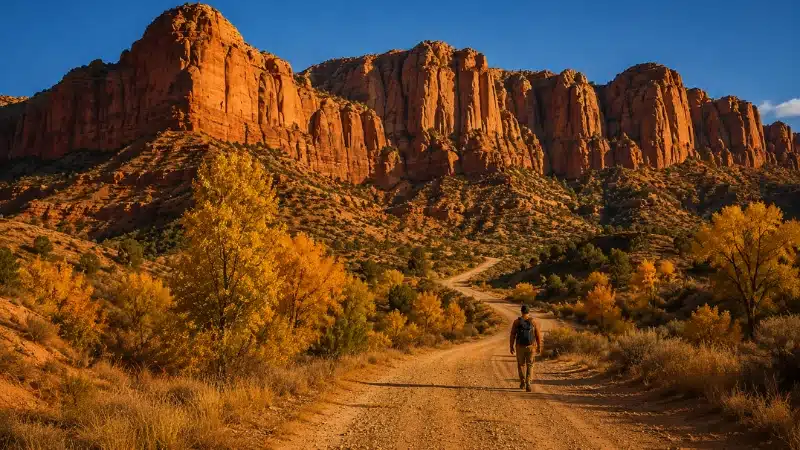
Most people assume spring is always the answer for Southern Utah travel. In Kanab, that’s only half true. Spring brings perfect hiking temps and busy roads, but it also brings muddy clay trails, surprise snowmelt, and the most expensive lodging rates of the year. The best time for your trip depends entirely on what you’re planning to do once you get there.
The short answer: fall (late September through October) is the overall sweet spot for most visitors — mild temperatures, thinner crowds than spring, and beautiful light for photography. That said, spring runs a close second, summer works if you’re strategic about timing, and winter is genuinely underrated for travelers who want Kanab almost to themselves.
What’s the Weather Like in Kanab, Utah?
Kanab sits at roughly 5,000 feet elevation in the high desert of southern Utah. The area averages around 256 days of sunshine per year, so chances are solid that you’ll see blue skies regardless of when you visit. The catch is that desert temperatures swing hard. A 40-degree temperature spread in a 12-hour period is not unusual, so packing layers matters no matter the season.
Kanab averages 15 inches of rain per year, spread fairly evenly throughout, with June being the driest month and March the wettest. That low rainfall is good news for hikers most of the year, but the summer monsoon pattern changes things significantly for slot canyon visitors — more on that below.
Spring in Kanab: Great Weather, Bigger Crowds
Spring (roughly March through May) is the peak tourism season in Kanab. The busiest month for tourism is May, followed by June and April, and hotel prices reflect that — this is when lodging books out fastest and rates peak.
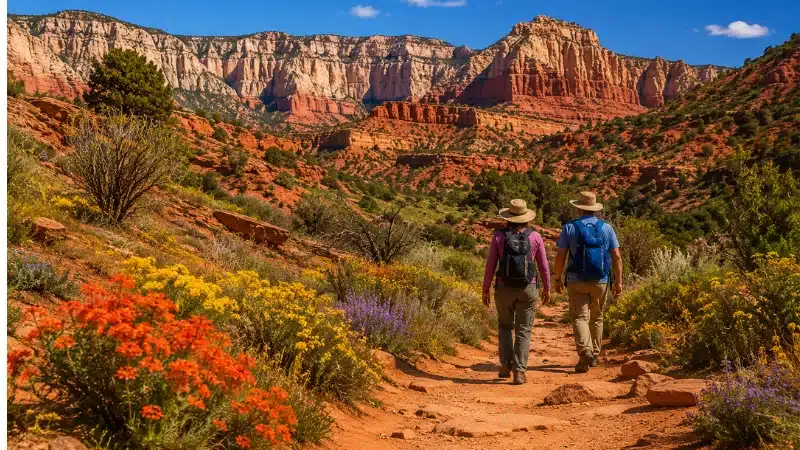
Daytime temperatures climb from cool and crisp in early March to comfortable hiking weather by late April and May. You’ll find wildflowers on some trails and reliable warmth without the punishing heat of summer. The catch: a lot of the best hikes in the area require navigating rougher dirt roads, which can be impassable after rain. Spring snowmelt can leave certain backcountry routes muddy and closed. Always check road conditions before heading out to any trailhead.
Spring is ideal for families, first-time visitors, and anyone who wants the full Kanab experience. Just book lodging early and factor dirt road conditions into your hiking plans.
If you’re weighing where to base yourself for a Southern Utah trip, Kanab vs. Page, AZ breaks down exactly which town makes more sense depending on your itinerary — worth reading before you commit to either.
Summer in Kanab: Hot but Manageable with the Right Strategy
Summer brings the second busiest tourism period and the most challenging weather. Temperatures from June through August regularly hit 100°F and can sometimes push past 110°F. That’s genuinely hot, and midday hikes on exposed trails become uncomfortable fast.
The key to enjoying Kanab in summer is timing. Frequent visitors are on trails by 7am and finished by 11am before the heat peaks. Crowds thin noticeably in late August and September as families head home after back-to-school season, making that window easier to navigate than peak July.
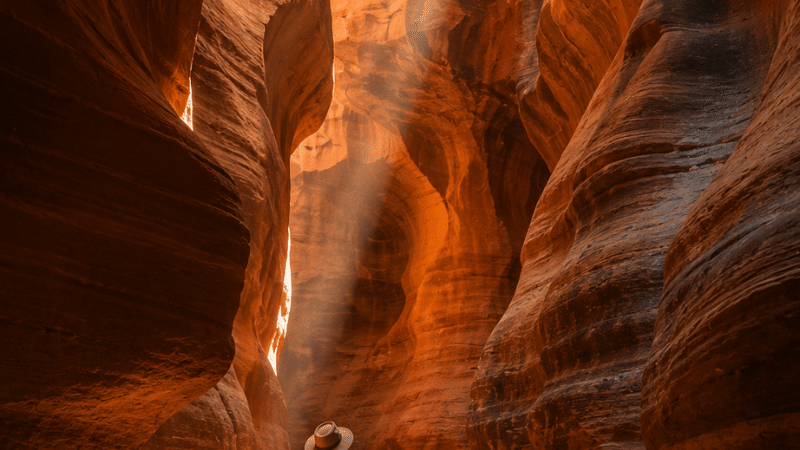
The bigger concern for summer visitors planning slot canyon hikes: monsoon season. Flash floods have the highest probability of occurring from mid-July through mid-September. A storm miles upstream can trigger dangerous conditions in a slot canyon even when skies above you look completely clear. Before any canyon hike in summer, check the regional weather forecast across the whole watershed, not just the Kanab local forecast. Hiring a local guide during monsoon season is worth it for peace of mind.
On the upside, Lake Powell is an easy summer escape from the heat. Higher-elevation day trips to Bryce Canyon and the North Rim of the Grand Canyon also run significantly cooler than the valley floor in Kanab.
If you haven’t nailed down where to sleep yet, check out Best Hotels in Kanab Utah — summer rates are more flexible than spring, and some properties have pools worth booking around.
Fall in Kanab: The Best Overall Window
For most travelers, late September through October is the sweet spot. Right around Labor Day, summer heat breaks and comfortable fall weather sets in. October averages a high around 71°F, and even November offers plenty of good hiking days in the 50s.
Crowds are lighter than spring, lodging prices drop from their peak, and the light quality for photography is exceptional. Experienced visitors consistently point to mid-September through October as the ideal window — the red rock landscape looks its best in lower-angle fall sun and the trailheads feel like a different place compared to May.
One caveat worth knowing: fall can bring flash flood risk from tropical storm systems moving in from the Pacific Coast, so even in September and October, slot canyon hikers should check regional weather before heading out. This risk fades considerably by late October.
By November, you’re looking at daytime temps in the 50s, shorter days, and a noticeable drop in tourist activity. That’s appealing if solitude matters to you, though some seasonal businesses start winding down.
Winter in Kanab: Underrated and Worth Considering
Winter is the least-visited season, and it’s more approachable than most people expect. It generally snows only two or three times per year, and snow rarely sticks around long. Daytime temperatures typically range from 49 to 55°F — cool, but manageable with the right gear.
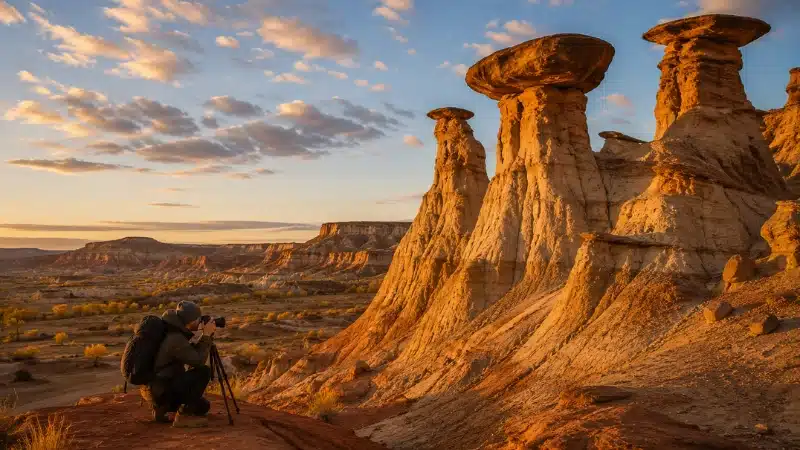
Kanab’s canyons, caves, and toadstool formations stay accessible in mild winter weather, and the absence of crowds makes trailheads feel entirely different. Repeat visitors who’ve done summer or spring often say a winter trip is their favorite version of Kanab. You get more solitude, better lodging deals, and a pace that lets you actually breathe.
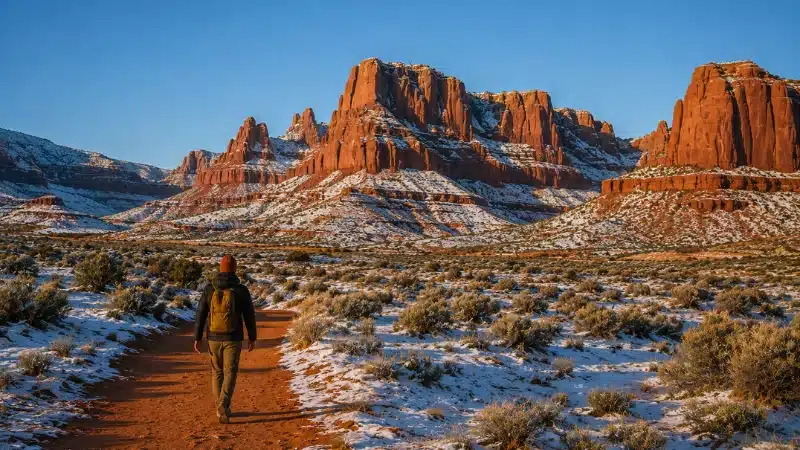
What to watch for: the North Rim of the Grand Canyon closes in late November and doesn’t reopen until mid-May, so that day trip is off the table in winter. A few smaller local businesses reduce hours or close seasonally. December sees the fewest tourists of any month, which translates to the most competitive lodging prices of the year.
Winter is a strong pick for photographers, couples, and anyone who values solitude over warm temps.
Quick Season Comparison
| Season | Temps (Day) | Crowds | Prices | Best For |
| Spring (Mar–May) | 55–80°F | High | High | First-timers, families |
| Summer (Jun–Aug) | 95–110°F | Moderate–High | Moderate | Early-morning hikers, Lake Powell |
| Fall (Sep–Oct) | 65–80°F | Moderate | Moderate | Most visitors, photographers |
| Winter (Nov–Feb) | 49–55°F | Low | Low | Solitude-seekers, budget travelers |
Flash Flood Safety: What Every Kanab Visitor Should Know
This deserves its own section because it directly affects planning decisions. Kanab is the gateway to some of the most spectacular slot canyons in the country — Buckskin Gulch, Peekaboo Slot Canyon, and others inside Grand Staircase-Escalante. These are not places you want to be caught in a flood.
Flash flood risk is highest during monsoon season, running from mid-July through mid-September. But floods can occur any time heavy rain falls somewhere upstream in the watershed. You should never enter a narrow or slot canyon if storms are threatening anywhere in the region, even if skies look clear where you’re standing.
Before any canyon hike, check the National Weather Service flash flood outlook for southern Utah and stop by the Kanab BLM Visitor Center for current local conditions. The safest windows for slot canyon hiking are late October through May, when the monsoon pattern has passed and storm risk is lowest.
A Few More Things to Know Before You Book
North Rim timing: The North Rim of the Grand Canyon is only open from approximately mid-May through late November. If that’s a priority day trip, winter visits rule it out.
Dirt road conditions: Many of the best backcountry hikes around Kanab require unpaved roads. These can become impassable after heavy rain in any season. Check conditions locally the morning of your hike rather than relying solely on weather forecasts.
Nearby parks: Zion National Park’s east entrance is about 35 minutes from Kanab. Bryce Canyon is roughly 80 minutes away. Both follow similar crowd patterns to Kanab — spring and fall peak, winter quiet. Factor that in when building your broader itinerary.
For a day-by-day plan that works across seasons, the Best 2-Day Kanab Itinerary is a solid starting point. And when you’re ready to map out what to do while you’re there, Things to Do in Kanab Utah and Best Restaurants in Kanab Utah cover the full picture.
Frequently Asked Questions
What is the best month to visit Kanab, Utah?
October. Temperatures are in the 65–75°F range, crowds have thinned from their spring and summer peak, and the red rock landscape looks its best in the lower fall light. Late September runs a close second.
Is summer in Kanab worth it despite the heat?
Yes, if you’re strategic. Get on trails by 7am before the heat builds. The bigger concern in summer is flash flood risk in slot canyons during monsoon season (mid-July through mid-September) — check regional weather before any canyon hike.
How crowded does Kanab get?
April and May are the busiest months by far. Fall is noticeably calmer. Winter is the quietest season with almost no competition for trailheads or parking.
Is Kanab good for a winter trip?
More than most people expect. Snow falls only a few times a year and rarely lasts. Daytime temps (49–55°F) are fine with layers. The North Rim of the Grand Canyon is closed November through mid-May, but nearly everything else around Kanab stays accessible.
When is the safest time to hike slot canyons near Kanab?
Late October through May is the safest window, when monsoon season has passed. During summer, always check the National Weather Service flash flood outlook for southern Utah — not just the local Kanab forecast — before entering any slot canyon.
Conclusion
Kanab doesn’t have a bad season — it has a wrong season for the wrong type of traveler. For most people, late September through October gives you the best combination of weather, manageable crowds, and fair lodging prices. If spring is your only window, go in April rather than May and book accommodations early. Summer works with discipline around early morning starts and genuine awareness of monsoon-related flash flood risk. And if you’ve written off winter, reconsider — Kanab in January or February is one of the quietest, most atmospheric corners of Southern Utah you’ll find.
Whatever season you pick, check road conditions before any backcountry drive, watch the regional weather forecast (not just the Kanab local report), and give yourself an extra day if you can. The canyons and red rock scenery that make this part of Utah worth the trip aren’t going anywhere.