Luray Caverns Visitor Guide: Tickets, Tips and Photos (2026)
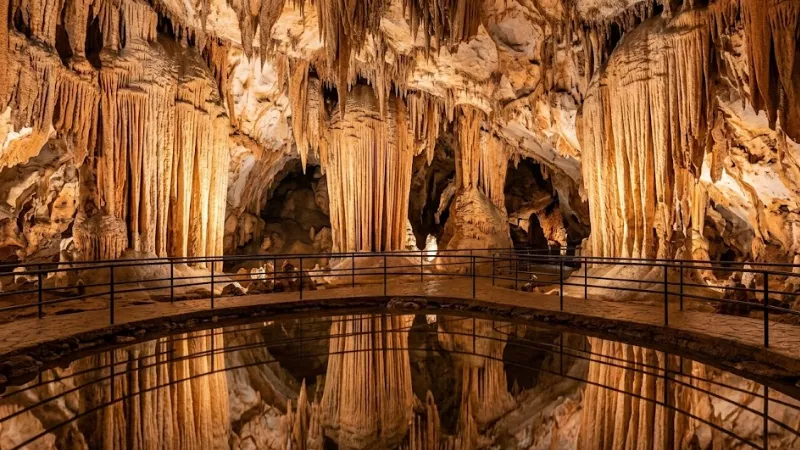
It takes 120 years for a single inch of stalactite to form at Luray Caverns. The room you walk into first has formations older than civilization. That is the simple sales pitch, and it holds up. I have been to Mammoth Cave in Kentucky, Carlsbad Caverns in New Mexico, and a few smaller tourist caves in Pennsylvania and Tennessee. Luray is the one I would send a friend to first.
This guide covers what you actually need before you go: current 2026 ticket prices verified the day this was written, the difference between the two tours so you do not overpay, photography settings that work in low light, and the small annoyances nobody mentions until you are standing there. If you want the wider picture of what else fills a weekend in town, our Things to Do in Luray VA guide covers downtown shops, the Shenandoah River, hiking trails, and the seasonal events worth timing your trip around. If you are short on time, scroll to the Quick Facts table or jump to the section you need.
Quick facts at a glance
| Detail | What to know |
| Address | 101 Cave Hill Road, Luray, VA 22835 |
| Phone | 540 743 6551 |
| Open | 365 days a year, including holidays |
| Hours | 9 AM to 6 PM most of the year, longer in summer, shorter Nov to March |
| Cave temperature | A constant 54°F (feels closer to 65°F because of humidity) |
| Walking distance | 1.25 miles, fully paved, step free entry |
| Tour length | Around 1 hour for the cave, 2 to 3 hours for everything included |
| Adult ticket | $36 standard self guided, $65 Discovery Tour |
| Photography | Allowed and encouraged, no flash |
| Wheelchair access | Yes, step free entry; some moderate slopes |
| Pets | Allowed on grounds leashed; small dogs in a carrier inside the cave |
| Reservations | Not needed for the standard tour, required for the Discovery Tour |
| Distance from Washington D.C. | About 90 miles, roughly two hours by car |
Luray Caverns ticket prices (2026)
There are two ways into the caverns: the standard self guided tour that runs all day, and a single Discovery Tour led by a guide in 1870s costume that goes once daily at 8:30 AM. Both include the same four extra attractions on the property. The Garden Maze, Rope Adventure Park and Gem Sluice are separate tickets.
These prices were verified directly from luraycaverns.com on the day this guide was published. The site does occasionally update rates, so it is worth a quick check before you buy.
Standard self guided tour
This is what most visitors pick, and for good reason. You walk the paved 1.25 mile path at your own pace with a numbered pamphlet that explains each major formation. Pamphlets are available in ten languages, including Arabic, Hindi, Mandarin, Korean and Spanish.
| Ticket | Price |
| Adults (13 and up) | $36 |
| Seniors (62 and up) | $34 |
| Children (6 to 12) | $18 |
| Children under 6 | Free |
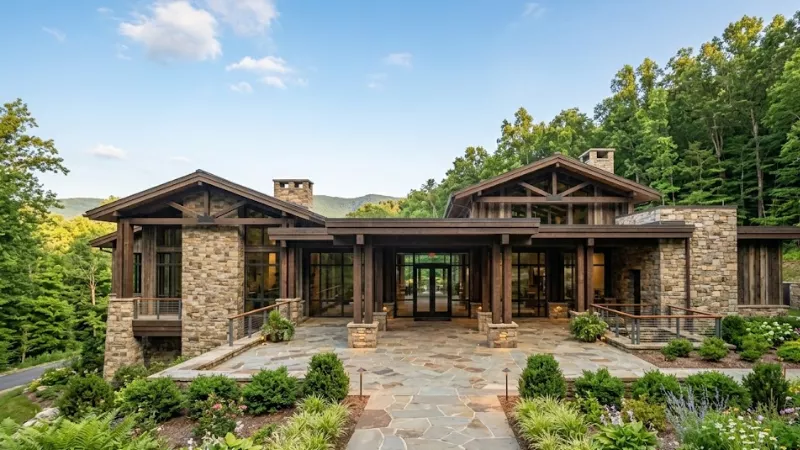
You do not need to book ahead. Tickets are available at the new Welcome Center and the staff confirm they never sell out, even on holiday weekends.
Special Discovery Tour
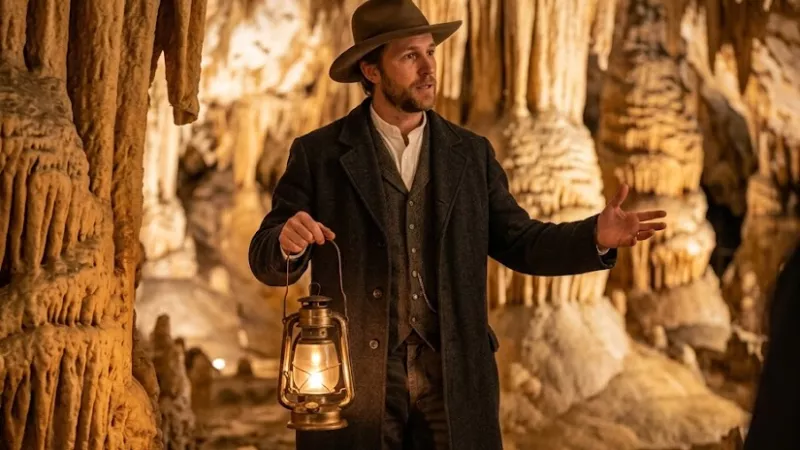
The Discovery Tour is a one hour guided walk led by an interpreter dressed in 1870s clothing, telling the story of the men who first found the cave. It runs only at 8:30 AM, only once per day, with space capped at 30 people. You also get a souvenir ticket and a printed copy of the Story of Luray Caverns.
| Ticket | Price |
| Adults (13 and up) | $65 |
| Children (6 to 12) | $35 |
| Children under 5 | Free |
Reservations are required because of the cap. No discounts (AAA, military, Giant card) apply to this tour.
Is the Discovery Tour worth $29 more?
Honest answer for most visitors: no. A family of four with two kids over twelve would pay $260 instead of $144, an extra $116, for what is essentially the same path with more storytelling. If your group of four self guides at 9 AM and you have done a bit of reading first, the experience will be 90 percent the same.
Where the Discovery Tour does earn its price tag:
- You enter the cave 30 minutes before general admission, so the first chambers feel almost empty. For photography this is a noticeable difference.
- You hear the discovery story properly told, with details the pamphlet skips.
- Solo travelers or couples who like guided history tours get more out of it than families.
If you are passionate about history, take the Discovery Tour. If you want to see the cave with kids and not break the budget, take the standard tour and arrive at 9 AM sharp.
What is included with every ticket
Whether you pay $36 or $65, your ticket also covers four other attractions on the property at no extra charge:
- Car and Carriage Caravan Museum, with more than 75 historic vehicles including an 1897 Mercedes Benz
- Shenandoah Heritage Village, a seven acre 1700s and 1800s recreated farming community
- Toy Town Junction, a vintage toy and train museum that kids actually love
- Luray Valley Museum, inside the Heritage Village
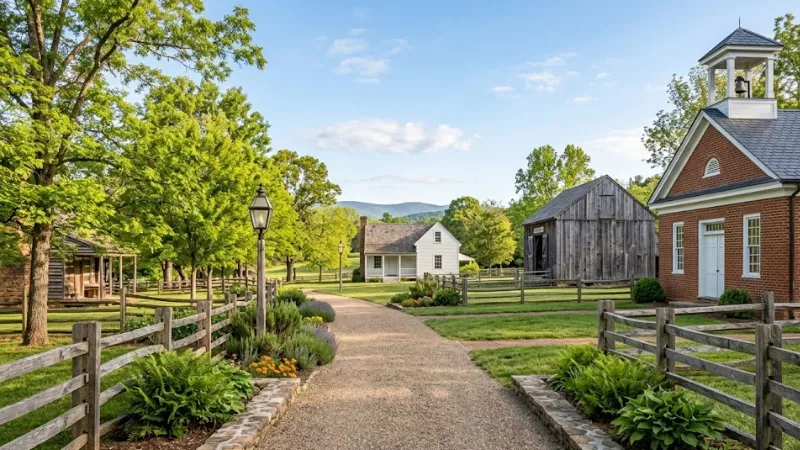
You can knock all four out in about 90 minutes if you move briskly.
Add on attractions (separate tickets)
Three things on the property cost extra. Tickets are sold at the booth or online.
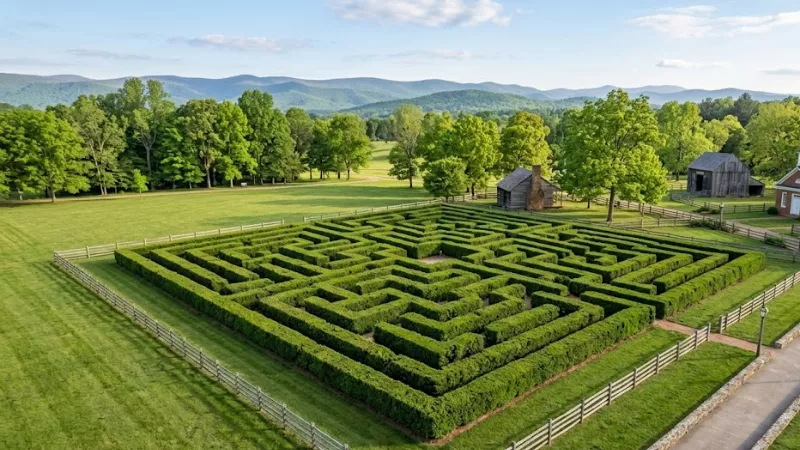
- Garden Maze, the largest evergreen hedge maze in the Mid Atlantic, half a mile of pathways through 1,500 hedges
- Rope Adventure Park, two ropes courses, one low for younger kids and one high for older ones
- Gem Sluice, a hands on mining flume where you sluice for gemstones and fossils
These are all kid driven. If your group is mostly adults, you can skip the maze, ropes and sluice and not feel like you missed anything.
Group rates
Groups of 20 or more can book at lower rates by calling at least 14 days in advance.
- Adults: $26
- Children 12 and under: $13
- Students on a school sponsored trip: $11
Group rates can include food packages and access to the Gem Sluice, Garden Maze and Rope Adventure Park if you ask.
Discounts at the ticket booth
A few discounts only work if you ask in person at the on site booth and not when buying online:
- AAA members
- Giant or Martin’s BonusCard holders
- Active military with ID
- Students with ID
Worth asking even if you are not sure if you qualify.
Best time to visit Luray Caverns
The caverns themselves are 54°F all year, so the weather inside never changes. Outside is a different story, and so are the crowds.
By season
Spring is mild and quieter than summer. The Festival of Spring runs in town. Wildflowers along Skyline Drive are starting up. Outdoor temperatures are in the 60s and 70s with occasional rain, so bring a light jacket.
Summer is the busiest time of year. School is out, families are road tripping, and the cave at 54°F is a welcome break from 90°F humidity outside. The trade off is bigger tour groups and a harder time getting clean photos. If you visit in July or August, plan to be at the gate by 8:45 AM.
Fall is the sweet spot. Crowds drop after Labor Day, the Shenandoah Valley turns orange and yellow in October, and the weather is comfortable. If you can pick one season, pick fall.
Winter is the calmest of all. Highs in the 40s outside mean the cave actually feels warm at 54°F. There are no school field trips, no tour buses, and on a Tuesday morning in February you can have entire chambers to yourself. Carolers sing inside the cave during the holiday season, which is genuinely strange and lovely.
For a fuller month-by-month breakdown that includes weather averages, lodging price patterns, and the local events worth planning around, see our Best Time to Visit Luray VA guide.
By day and time
Tuesday, Wednesday and Thursday mornings are the calmest windows. Saturdays during peak season can mean walking shoulder to shoulder with school groups or scout troops. Rainy days draw bigger crowds because everybody who planned to hike Skyline Drive ends up underground instead.
If you are stuck visiting on a weekend, get there when the doors open at 9 AM. By 11 AM the parking lot fills, and from noon to 3 PM is the heaviest stretch.
The first hour playbook
If you arrive at 8:45 AM with a standard ticket:
- Buy your ticket at the new Welcome Center the moment the doors open
- Walk straight to the cave entrance, do not stop at the gift shop
- Move through the first chambers (Entrance Hall, Washington Column, Dream Lake) before the 9:30 wave catches up
- Slow down at Saracen’s Tent and the Cathedral when most people will already have moved past
- Hit the Car and Carriage Museum and Heritage Village afterward when the cave is jammed
This sequence gives you about 30 minutes of light traffic in the most photogenic chambers. It works.
How to get to Luray Caverns
The cave sits on the eastern edge of the Shenandoah Valley, about ten miles from the Skyline Drive entrance to Shenandoah National Park.
From Washington D.C.
Around 90 miles. Take I 66 west to I 81 south, then US 211 east into Luray. Without traffic the drive is about 1 hour 50 minutes. Beltway traffic in either direction can stretch that to two and a half hours, so leaving D.C. before 7 AM or after 10 AM helps.
From Shenandoah National Park
Ten miles. If you are already on Skyline Drive, take the Thornton Gap entrance and follow US 211 east into Luray. Easy day combo: morning at the cave, afternoon on Skyline Drive, dinner in town.
From Harrisonburg or Charlottesville
Harrisonburg is 45 minutes south on US 211 west. Charlottesville is about 75 minutes east on US 33.
Parking
Free. The lot is large, takes RVs without issue, and is signposted off Cave Hill Road. There is no public transit option, so you need a car or a tour bus.
What to expect inside the caverns
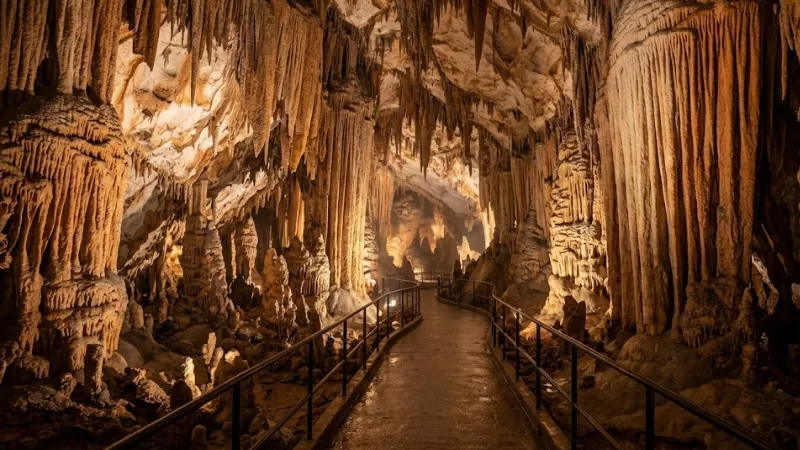
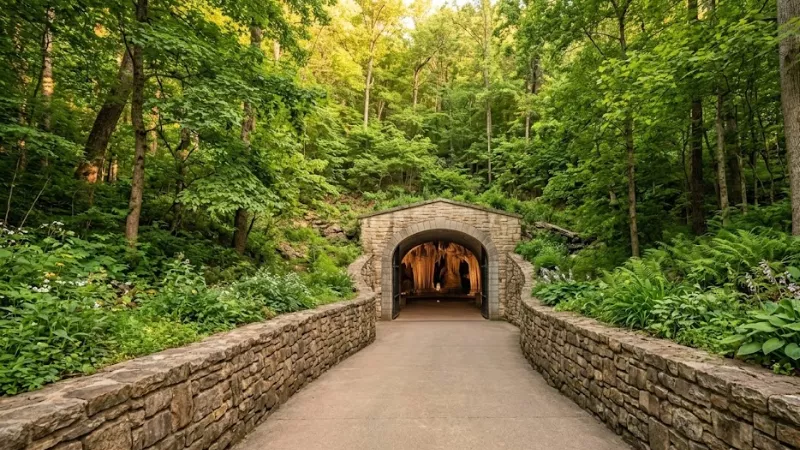
The new entrance is step free, which is a recent change. Older guides still mention stairs down into the cave; those are gone. Once inside, the path is paved and well lit with sturdy railings. Most of it is gently sloped rather than flat, but there are no stairs anywhere on the route.
The cave runs 1.25 miles total. At an average pace it takes about an hour. If you stop to read every pamphlet entry and take photos, plan for 90 minutes. The path is a loop, so you exit roughly where you entered.
Sound carries. When the Cathedral chamber is busy you hear voices echoing for a long way. The Stalacpipe Organ plays at scheduled times during your tour, mostly when groups bunch up in the Cathedral. If you walk through too fast you can miss it. If you walk through too slow you might hear it twice.
There are no bathrooms inside the cave. Use the ones at the Welcome Center before you start.
Top formations to see (with photo notes)
Nineteen named stops are marked on the self guided tour, but a handful are the ones people travel here for. These are the ones worth slowing down at.
Dream Lake
The first big payoff, about ten minutes in. The pool is only about 20 inches deep, but it reflects the stalactites above so cleanly that the floor looks like an upside down forest of stalagmites. Stand at the railing on the right hand side of the path and let your eyes adjust before you raise your camera.
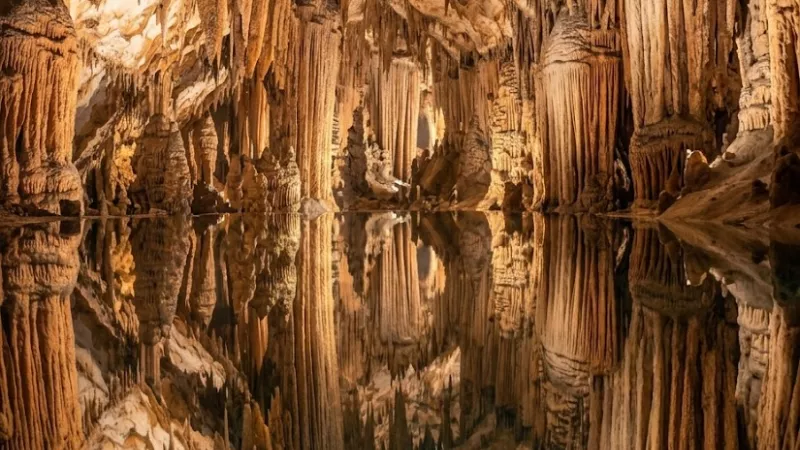
Camera notes: ISO 1600, shutter 1/30 second, brace your elbows on the railing. With a phone, switch to night mode and hold for the full three seconds. Do not use flash, it will burn out the reflection completely.
Saracen’s Tent
National Geographic called these draperies the best example in the world. The folds of the rock look like a curtain frozen mid pour. The shape carries best in photos when you shoot from below looking up.
Camera notes: get low, almost crouching, and aim up. ISO 3200 if your camera handles it, shutter 1/15 second, wide aperture if you have one. Phones do well here because the formation is close enough that night mode locks focus easily.
The Great Stalacpipe Organ
The largest musical instrument in the world by area, covering 3.5 acres of the Cathedral chamber. It works by gently striking stalactites tuned to musical notes. The sound is faint at first, then surprisingly full. The organ plays for groups passing through, so you may need to wait a few minutes for it to start.
The instrument itself looks like a wooden console pressed against the cave wall. The interesting photo is not the console, it is the chamber it plays in.
Giant Redwood
Forty feet tall, 120 feet around, and roughly seven million years old. Flowstone takes 300 years to grow a single inch, which gives you a sense of scale. The whole formation looks like a melted column of orange wax in the lighting.
Double Column
The tallest formation in the cave at 47 feet, found in Giant’s Hall. It is technically two formations, a stalactite and a stalagmite, that grew side by side without ever fusing. The chamber it sits in is the deepest point of the tour, 164 feet underground.
For scale, ask a person in your group to stand at the base. Without a human reference the photo loses the size.
Titania’s Veil
Pure white calcite, named after the fairy queen in A Midsummer Night’s Dream. The whiteness is rare, most cave formations have iron staining that turns them rust or amber. This one is the cleanest white in the whole tour. It photographs well against the warmer brown formations around it.
Pluto’s Ghost
A pale, vertical formation that earned its nickname from its color. Smaller than the others on this list but striking in person.
The Wishing Well
Six feet deep, the deepest body of water in the cave. Visitors have thrown about $1 million in coins and bills into it over the years, all of which goes to local charities. You can see the coins clearly through the water.
Fallen Stalactite
A massive piece of ceiling that came down 7,000 years ago, presumably during an earthquake. It still lies where it landed. Standing next to it gives you a slight pause about the ceiling overhead, even though the staff will tell you the cave has been seismically calm since.
Fried Eggs and Seasonal Formation
Two smaller named features near the end of the tour. The Fried Eggs are stalagmites that were broken off during the original 1880s walkway construction; what remains looks exactly like sunny side up eggs. The Seasonal Formation is a stalagmite the staff describe differently in each season: a Christmas tree in winter, an ice cream cone in summer.
The Cathedral
The largest chamber in the cave and the home of the Stalacpipe Organ. Weddings happen here. The space is big enough that the lighting cannot reach all the corners, which gives the photos a moody, shadowed look that works in your favor.
Photography tips for Luray Caverns
This is the section the rest of the internet skips. Most guides will tell you photos are allowed and that flash is not. That is the start, not the whole story.
Camera settings that work
Manual mode if you have it. Auto exposure tends to overcorrect in the warm cave lighting and turns photos either too bright or too dim.
- ISO: 1600 to 3200. Modern sensors handle this without much noise.
- Shutter speed: 1/30 second handheld is your floor. Anything slower and you need to brace against a railing or use a tripod (and tripods are not allowed during group tours).
- Aperture: as wide as your lens goes. f/2.8 or f/4 if you have it.
- White balance: tungsten or auto. Daylight makes the cave look unnaturally orange.
- Focus: single point, centered. Auto focus struggles in low light, so prefocus on something with edge detail before composing.
Why no flash
Two reasons. First, repeated flash damages the bacteria and fungi growing on the formations, which the cave is trying to protect. Second, flash flattens everything and washes out the warm cave lighting that makes the photos interesting in the first place. The cave’s installed lighting is more flattering than your camera flash will ever be.
Phone camera tips
Modern phones handle low light better than expected. The trick is steadiness.
- iPhone: tap to set exposure, swipe down to lower brightness, switch on Night Mode and let it hold for the full three seconds
- Pixel: Night Sight will automatically engage; do not move during the count
- Samsung: Pro mode, ISO around 1600, shutter at 1/30, manual focus
Press your phone or your shoulder against the railing for stability. Ten or fifteen seconds of steadying before each shot makes a real difference.
Five spots that always photograph well
- Dream Lake from the right side railing, framed to include the reflection
- Saracen’s Tent from the lowest point on the walkway, shot upward
- The Cathedral wide, with a person in frame for scale
- Double Column with a friend standing at the base
- The Wishing Well looking straight down through the water at the coins
What you cannot do
Tripods are not allowed on guided group tours, but you can use a small tabletop tripod or a beanbag. If you self guide and go through twice (your ticket allows this within the same day) you can move slower on the second pass and use a small support. Drones are not allowed anywhere on the property. Touching the formations is forbidden because skin oils permanently damage them.
What to wear and what to bring
Dress for 65°F more than for 54°F. The high humidity makes the actual temperature feel warmer than the number suggests.
Clothing
In summer, a tank top or t shirt with a light long sleeve in your bag is plenty. In winter, you will likely peel off layers within ten minutes of being underground. Long pants beat shorts in any season because you brush against railings and walls.
Footwear
Closed toe shoes with grip. Sneakers, hiking shoes, or any flat soled shoes with traction work. Avoid heels, flip flops or smooth leather soles. Parts of the path stay damp from drips, so even a small amount of grip matters.
What to bring
- Phone with a charged battery (cold drains it faster)
- A small bag or pocket for your pamphlet
- Water for after the tour, not during (no eating or drinking inside)
- Cash for the wishing well, optional
- A jacket or fleece in winter for after the cave when you step back outside
What to leave in the car
- Tripods (for group tours)
- Large strollers (small umbrella strollers are fine)
- Drinks and snacks (no food in the cave)
- Backpacks larger than a daypack
Free with your ticket: the on property attractions
Plan an extra 90 minutes for these. They are not afterthoughts, they are genuinely worth the visit.
Car and Carriage Caravan Museum
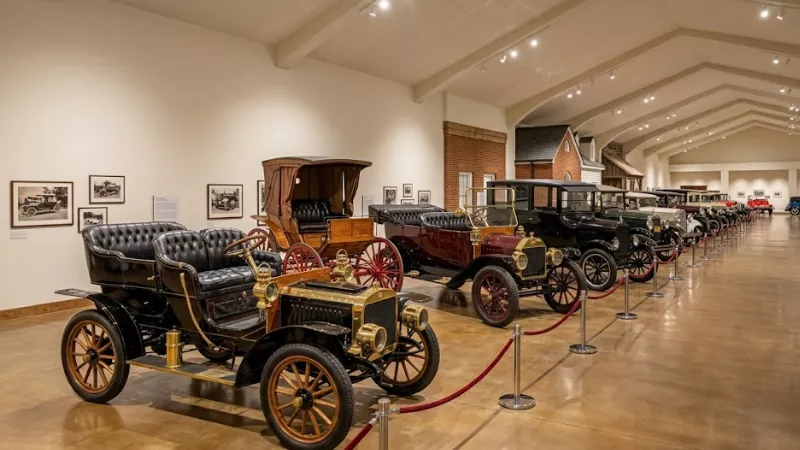
More than 75 vehicles, including an 1897 Mercedes Benz that still runs, a pre Civil War bicycle, and the oldest carriage on the continent. Even people who do not care about cars find this one engrossing because the staff have written clear plaques explaining each piece. Allow 30 to 45 minutes.
Shenandoah Heritage Village
A seven acre recreation of an 1800s farming community, including a one room schoolhouse, a meetinghouse, a blacksmith shop, and a small vineyard. The Luray Valley Museum sits inside the village. Worth a slow walk through, especially in spring and summer when the gardens are planted.
Toy Town Junction

Trains, dolls, mechanical toys and tin soldiers from the late 1800s through the mid 1900s. Smaller than the Car and Carriage Museum but a guaranteed hit if you have kids under ten. Twenty minutes is enough.
The Singing Tower
A 117 foot bell tower at the edge of the property, officially the Belle Brown Northcott Memorial Carillon. It holds 47 bells and gives free recitals on a regular schedule. You do not need a ticket to walk up to it. The schedule is posted at the Welcome Center.
Add on attractions: are they worth the extra cost?
Three attractions cost extra. Honest take on each.
Garden Maze
Worth it if your group includes kids ages five through twelve. Half a mile of paths through evergreen hedges with cooling mists in summer. Most kids enjoy it for 30 to 45 minutes. Adults travelling without kids can skip.
Rope Adventure Park
Worth it for active kids ages seven and up. Two courses, low and high, with safety harnesses on the high one. Skip if your group is mostly adults or younger toddlers.
Gem Sluice
Worth it for kids under ten. They scoop a bag of “rough” into a sluice flume, swirl until the gems and fossils show up, and keep what they find. The bag of rough costs around $15. Adults can do it too but the experience is built for kids.
Heartpine Cafe and Stalactite Cafe
Two on site eating options. Heartpine is the slower sit down option in the Heritage Village, with a patio, beer, wine and a bistro style menu. Stalactite is fast casual closer to the cave entrance. Heartpine is the better food. Stalactite is faster.
Visiting with kids, pets and mobility needs
This is one of the easier major attractions to visit with mixed needs in your group.
With kids
The cave path is fully paved and stroller friendly. Small umbrella strollers handle the slopes fine. Most kids ages four and up enjoy the cave. Kids under three may get bored after the first ten minutes. The free attractions outside (Toy Town, the maze, the gem sluice) keep kids engaged for longer.
Bathrooms at the Welcome Center before you start. Snacks in the picnic area outside, not inside the cave.
With dogs
Dogs on a leash are allowed anywhere on the grounds, including the picnic area, the maze (small dogs only) and the path between attractions. Inside the cave itself, only small dogs in a carrier or backpack are allowed. There is no kennel or boarding on site, so if you bring a larger dog, plan for one person to wait outside while the others tour.
With wheelchairs and mobility aids
The entrance is step free since the renovation. The 1.25 mile path is paved with some moderate slopes. Most manual wheelchair users will want a companion to help on the descents. Power wheelchairs handle the route fine on their own.
There are no restrooms inside the cave. The official site notes that the path is not formally rated as fully accessible, which is a careful way of saying that while there are no stairs, there are slopes that may require assistance. Phone the visitor center if you want to ask about your specific situation.
Senior visitors
The senior rate is $34. The pace is comfortable, benches are spaced along the route, and most older visitors handle the loop without trouble. The humidity inside catches some people off guard, so a layer you can shed quickly is helpful.
Day trip itineraries
Two solid options depending on how much time you have.
One day from Washington D.C.
Leave the city by 7 AM to beat traffic. Arrive at Luray for the 9 AM opening. Spend two and a half hours at the cave and the included attractions, then drive ten minutes into Luray town for lunch at Moonshadows or Broad Porch Coffee. Take Skyline Drive south for an hour or two on your way home, stopping at the Hawksbill summit if you want a short hike. You will be back in D.C. by dinner.
Two days combined with Shenandoah National Park
Day one: drive Skyline Drive from north to south, stopping at viewpoints and one of the easy hikes (Stony Man or Hawksbill). Stay overnight in Luray or Stanley.
Day two: morning at Luray Caverns, afternoon at the Garden Maze and on property attractions if you have kids, or in Luray town if you do not. Drive home in the late afternoon.
For an hour-by-hour version of this plan with specific viewpoints, trail picks and where to grab lunch between stops, see our Weekend in Luray: 2-Day Shenandoah Itinerary.
Where to stay
Hotels and B and Bs in Luray town are walking distance to restaurants and ten minutes from the cave. The Mimslyn Inn is the historic option. For most weekend visitors though, a cabin in the hills around Luray is the better pick because of the views, hot tubs, and the quiet you cannot get from a hotel parking lot. Our Best Cabins in Luray VA guide breaks down 12 properties by traveler type (couples, families, pet owners, large groups) and ranks them by drive time to the Skyline Drive entrance.
If you are still deciding whether Luray is the right base or one of the neighboring gateway towns might suit you better, our Luray vs Front Royal vs Harrisonburg: Best Shenandoah Base comparison covers each town’s drive times to the park entrances, lodging mix, and which type of traveler each one suits.
Where to eat in Luray town
- Moonshadows on Main, dinner with a wine list
- Broad Porch Coffee, breakfast and lunch
- The Valley Cork, wine bar with small plates
- Hawksbill Brewing, local beer and pub food
A short history of Luray Caverns
The cave was found on August 13, 1878 by three local men: Andrew Campbell, his nephew William Campbell, and Benton Stebbins. They had been searching the hillside for a cave because of a cool draft coming up from a sinkhole, which is a sign of underground space below. After about five hours of digging at loose rocks, they widened the opening enough to slide down on a rope. They explored by candlelight.
What they found was a section of the largest cave in Virginia, and one of the largest on the East Coast.
The Smithsonian Institution sent a team in 1880 and concluded that no other cave in the world was more completely decorated with stalactites and stalagmites. National Geographic later called the draperies at Saracen’s Tent the best in the world. In 1974 Luray Caverns was designated a U.S. Natural Landmark, which prevents any new construction inside the cave (such as colored lighting or expanded paths) and limits visitors to designated walkways covering only about a third of the total cave system.
The site has been open every single day since the first Grand Illumination on November 9, 1878. It now sees roughly half a million visitors a year. In 2025 it was featured on Bloomberg’s “World’s Greatest” list of underground attractions.
Frequently asked questions
Is it cold inside Luray Caverns?
The cave stays at 54°F year round, but the high humidity makes it feel closer to 65°F. A light layer is enough most of the year. In summer you may not need a jacket at all.
Can I take photos? Is flash allowed?
Photography is allowed and encouraged. Flash is not allowed because it damages the bacterial growth on the formations. The cave’s existing warm lighting works well for photos if you can shoot at ISO 1600 to 3200.
Do I need to book ahead?
For the standard self guided tour, no. The cave never sells out. For the Discovery Tour at 8:30 AM, yes, because it is capped at 30 people per day.
How long does the tour take?
The cave loop is about an hour at a normal pace. Allow 2 to 3 hours total to see the cave and the four included attractions.
Are dogs allowed at Luray Caverns?
Yes, on a leash, anywhere on the grounds. Inside the cave itself, only small dogs in a backpack or carrier are allowed. Larger dogs must wait outside with a member of your group.
Is Luray Caverns wheelchair accessible?
The entrance is step free and the 1.25 mile path is paved. Some moderate slopes mean manual wheelchair users may want a companion. There are no bathrooms inside the cave.
Are tripods allowed?
Not during group tours. If you self guide and stay back from the main flow, small tabletop tripods or beanbag supports are tolerated. Drones are banned.
Can I bring food and drinks?
No food or drinks inside the cave. The picnic area outside is shaded and pleasant. The on site cafes and the gift shop sell drinks and snacks.
How much is parking?
Free, including for RVs.
How far is Luray Caverns from Washington D.C.?
About 90 miles, or roughly two hours by car. There is no public transit; you need a car or a tour bus.
What is the difference between Luray Caverns and Shenandoah Caverns?
Luray is much larger and more visited. Shenandoah Caverns (about 30 miles south) is smaller, less commercial and quieter. Luray is the better first visit, Shenandoah is the better quiet visit.
Are there bathrooms inside the cave?
No. Use the ones at the Welcome Center before you start. The loop takes about an hour, so plan accordingly.
Final verdict: who should visit?
Luray Caverns is worth the trip for almost anyone who can spare half a day. Photographers, families with kids over four, history travelers, and anyone within a two hour drive of the cave will get full value out of a visit. Older visitors and people with mobility limitations are well served by the step free entrance and the paved path.
The tourists who come away unimpressed tend to be either jaded people who have seen many caves and find this one too commercial, or people who arrive expecting something quieter and find a busy summer afternoon instead. The fix for the second group is to come on a Tuesday in October.
If you are picking between Luray and Shenandoah Caverns, choose Luray. If you are picking between Luray and Skyline Drive, do both, they take a single afternoon together.
Plan the rest of your trip
The cave is one piece of a Shenandoah weekend. A few related guides that pair well with this one:
- For everything else to do in town beyond the cave: Things to Do in Luray VA
- For the best place to stay: Best Cabins in Luray VA for Shenandoah Visits
- For an hour-by-hour weekend plan: Weekend in Luray: 2-Day Shenandoah Itinerary
- For choosing between Luray and the neighboring gateway towns: Luray vs Front Royal vs Harrisonburg: Best Shenandoah Base
- For deciding which season to visit: Best Time to Visit Luray VA